


How Does a Cable Protector Ramp Match Project Needs?
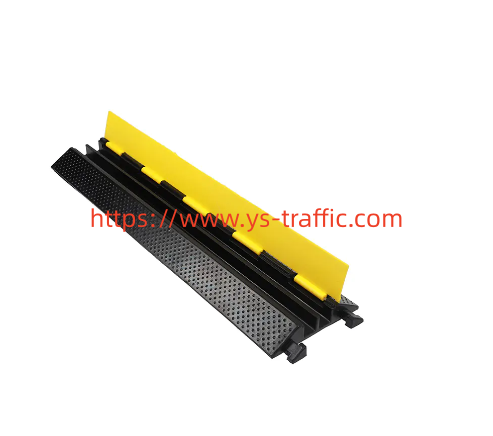
Cable Protector Ramp purchasing should start with a project specification rather than a simple product comparison. Contractors, distributors, event suppliers, and industrial buyers often work with different installation conditions, traffic patterns, and equipment layouts. A suitable model needs to fit the actual site requirements, not just the dimensions shown in a catalogue. Before requesting a quotation, buyers should prepare several details and discuss them with the manufacturer.
Prepare a Clear Project Requirement List
The first step is to describe the intended application. A temporary exhibition, warehouse entrance, road maintenance area, and factory workshop may require different product configurations. Buyers should explain whether the equipment will be used indoors or outdoors and whether people, carts, cars, or industrial vehicles will pass over it.
It is also helpful to estimate the installation length and the number of crossing points. These details allow the supplier to understand the project scale and recommend a suitable quantity of connected sections.
For distributors handling several customer groups, preparing a basic requirement sheet for each application can make future purchasing more organized. It also helps prevent confusion when comparing quotations from different manufacturers.
Check the Technical Drawing Before Comparing Prices
A product photograph cannot show every dimension that matters. Request a technical drawing or specification sheet and review the overall length, width, height, internal channel dimensions, and connection structure.
Pay particular attention to the usable internal space. The outside dimensions describe the product body, while the channel dimensions determine whether the intended lines and hoses can fit inside. Measure the outside diameter of round lines, including their protective jackets. For flat profiles, record both width and height.
If a project involves several different line sizes, provide the measurements to the manufacturer before selecting a model. This gives both parties a clear basis for checking fit and discussing possible configurations.
Understand the Load Rating and Its Test Basis
Load capacity should be evaluated according to the vehicles and equipment expected at the installation site. A pedestrian crossing and a vehicle access route place different demands on the product structure.
Ask the manufacturer whether the stated rating refers to a wheel load, axle load, or total vehicle weight. These figures describe different loading conditions and should not be compared as though they were identical.
Buyers should also identify the heaviest vehicle that may pass through the area, including occasional delivery or maintenance vehicles. Crossing frequency, speed restrictions, and ground conditions may also affect the suitability of a particular model.
Do not select a unit based only on a general weight figure. Confirm the permitted application and operating conditions in the manufacturer's documentation.
Compare Material Properties for the Site Environment
Material selection affects product handling, flexibility, weight, and resistance to environmental exposure. Rubber and thermoplastic materials, for example, have different characteristics and may suit different project conditions.
For outdoor use, ask about exposure to sunlight, rain, temperature changes, and contact with common site substances. For indoor projects, consider floor contact, cleaning procedures, and whether the product needs to be moved frequently.
The surface design is also worth reviewing. A textured upper surface can provide additional grip, while contrasting colours can make the crossing area easier to notice. Buyers should compare these details with the lighting, floor colour, and traffic conditions at the intended location.
Review Connection Design and Maintenance Access
Projects covering a wide entrance or long passage may require several sections joined together. Check how the units connect, whether the connection is compatible across the required quantity, and whether separate end pieces are needed.
The opening design deserves attention as well. Some products use a hinged cover, allowing authorized personnel to access the internal space for inspection or repositioning. Buyers should ask how the cover is opened and secured, and whether tools are required.
Maintenance planning should include routine checks for cracks, worn surfaces, loose connections, and movement during use. A clear inspection procedure can help site managers identify changes before they affect daily operations.
Ask About Samples, Customization, and Quality Checks
When standard specifications do not fully match a project, ask whether the manufacturer can review drawings or discuss customized dimensions, channel arrangements, and colours. Provide technical information early so the production team can assess the request before an order is confirmed.
Sample evaluation can also help buyers review material feel, dimensions, surface texture, and assembly details. For larger orders, confirm whether the approved sample will serve as a reference for production inspection.
At ys-traffic, buyers can communicate their application requirements and discuss available product configurations with the supplier. Sharing drawings, measurements, and expected quantities helps make technical discussions more specific and supports clearer order confirmation.
Confirm Order Details Before Production
Before approving a purchase, check the quotation against the final specification. Confirm the model, dimensions, channel quantity, colour, material, accessories, packaging method, order quantity, and delivery terms.
For overseas orders, clarify the shipping arrangement, carton or pallet information, product identification, and documents required for customs or warehouse receiving. Buyers should also agree on how specification changes will be handled after production has started.A written confirmation is useful for both the purchasing team and the manufacturer. It creates a shared reference for production, inspection, packing, and delivery, reducing the possibility of misunderstandings.For distributors, contractors, and project procurement teams planning a new order, a detailed requirement sheet can make supplier communication more efficient. To review product specifications, discuss customization, or request a quotation, visit https://www.ys-traffic.com/ and contact ys-traffic with your project details.

 English
 Arabic
 French
 Spanish
 Deutsch
 Turkish
 Dutch
 Italiano
 Russian
 Romaian
 Portuguese (Brazil)
 Greek
