


Is Nonsurgical Rhinoplasty Safe for First-Time Patients?
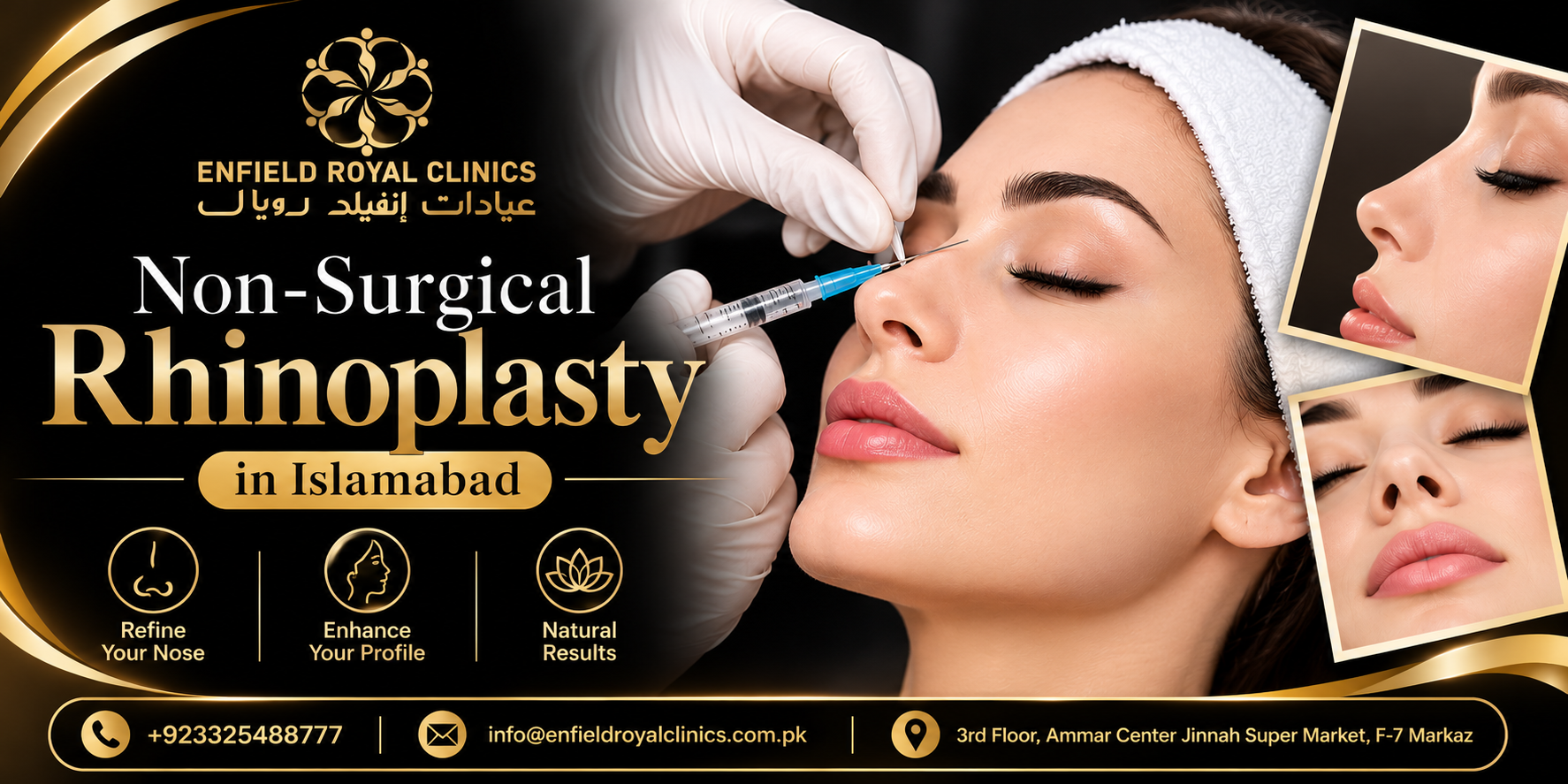
Considering a cosmetic treatment for the first time can bring both excitement and uncertainty. Many people want to improve the appearance of their nose but feel hesitant about undergoing surgery. Nonsurgical rhinoplasty has become an option for individuals who want to refine selected nasal features using injectable dermal fillers instead of traditional surgery. However, first-time patients often have an important question: Is the procedure actually safe?
Nonsurgical Rhinoplasty in Islamabad may be suitable for carefully selected individuals when performed by an appropriately qualified and experienced medical professional. The treatment generally involves injecting filler into specific areas of the nose to improve its appearance. Although it does not require surgical incisions, it is still a medical procedure with potential complications that should never be overlooked.
Understanding how the treatment works, who may benefit, what risks are involved, and how to prepare can help first-time patients make informed decisions.
1. Understanding How Nonsurgical Rhinoplasty Works
Nonsurgical rhinoplasty, sometimes called liquid rhinoplasty, uses dermal fillers to make selected changes to the appearance of the nose. Hyaluronic acid-based fillers are commonly used because they can add temporary volume and help improve certain surface irregularities.
During the procedure, a qualified practitioner assesses the nasal structure and identifies areas where carefully placed filler may create a smoother contour. Depending on the patient's anatomy, the treatment may help:
-
Smooth minor irregularities along the nasal bridge.
-
Improve the appearance of small indentations.
-
Create a more continuous nasal profile.
-
Refine selected areas of the nasal tip.
-
Make certain minor asymmetries less noticeable.
Unlike traditional rhinoplasty, the treatment does not involve removing cartilage, reshaping nasal bones, or reducing the physical size of the nose. It works by adding volume to selected areas.
This distinction is especially important for first-time patients. Someone who wants a smaller nose or correction of a major structural concern may not achieve the desired result through fillers.
2. Is the Procedure Safe for People Having It for the First Time?
Nonsurgical rhinoplasty can be performed on suitable first-time patients, but being a beginner does not automatically make someone a good candidate. Safety depends on several factors, including nasal anatomy, medical history, filler selection, injection technique, and the practitioner's experience.
The nose is a particularly sensitive treatment area because it contains blood vessels connected to important facial and eye structures. If filler accidentally enters or compresses a blood vessel, it can interrupt blood supply and cause serious complications.
For this reason, nasal filler injections require advanced anatomical knowledge and specific experience with this procedure. A practitioner should also be prepared to recognise and manage complications immediately.
First-time patients should not choose a treatment simply because it is advertised as quick or nonsurgical. A detailed consultation, transparent discussion of risks, and careful assessment are essential parts of responsible treatment.
When considering Nonsurgical Rhinoplasty in Islamabad, patients should verify the practitioner's medical qualifications, experience with nasal fillers, and emergency management arrangements before proceeding.
3. Who May Be a Suitable Candidate?
Not everyone needs or benefits from nonsurgical rhinoplasty. The treatment is generally intended for individuals who want subtle cosmetic improvements rather than major changes to their nasal structure.
A suitable candidate may include someone who:
-
Has a minor bump or irregularity on the nasal bridge.
-
Wants to improve selected contour differences.
-
Prefers a temporary cosmetic option.
-
Understands that fillers add volume rather than reduce nasal size.
-
Has realistic expectations about the possible results.
-
Is medically suitable after professional assessment.
On the other hand, individuals with significant nasal deviation, breathing difficulties, major structural concerns, or a desire to make the nose smaller may need an evaluation for surgical rhinoplasty or another appropriate treatment.
Previous nasal surgery or filler treatment also needs to be discussed during consultation. Changes in tissue structure and blood supply may affect treatment planning.
A proper assessment helps determine whether the procedure is appropriate or whether another approach would better address the patient's concerns.
4. What Should First-Time Patients Expect During Treatment?
Knowing what happens during the procedure can reduce uncertainty for people who have never received cosmetic injections.
The process usually begins with a consultation. The practitioner reviews the patient's concerns, examines the nose, discusses medical history, and explains what filler treatment can realistically achieve. Different angles of the nose may be assessed to understand its existing shape and proportions.
If the patient is considered suitable, the treatment area is prepared according to appropriate clinical protocols. A topical numbing product may be used when appropriate, although comfort measures vary.
The practitioner then places small amounts of filler in selected areas using an appropriate injection technique. The exact placement depends on the nasal anatomy and intended correction.
Treatment may take relatively little time compared with surgery, but speed should never be the main measure of quality. Careful planning and controlled placement are more important than completing the procedure quickly.
After injection, some swelling, redness, tenderness, or bruising may occur. The practitioner should explain what is expected and provide clear instructions for the recovery period.
5. What Are the Possible Risks and Side Effects?
Although nonsurgical rhinoplasty avoids surgical incisions, it is not a risk-free procedure. First-time patients should understand both common temporary effects and rare but serious complications.
Common temporary effects may include:
-
Mild swelling around the injection area.
-
Redness or tenderness.
-
Bruising.
-
Temporary sensitivity.
-
Minor unevenness while initial swelling settles.
These effects often improve over time, although their duration varies between individuals.
Serious complications can include:
-
Vascular occlusion, where filler blocks blood flow in a vessel.
-
Skin injury or tissue death caused by reduced blood supply.
-
Infection or inflammatory reactions.
-
Visual disturbances or, in rare cases, permanent blindness.
Nasal filler injections require particular caution because vascular complications in this area can have severe consequences. Hyaluronic acid filler may sometimes be treated with an enzyme called hyaluronidase if a complication occurs, but reversal is not guaranteed to prevent all damage.
Severe or increasing pain, pale or unusual dusky skin, unexpected skin discoloration, or any change in vision after treatment requires immediate emergency medical attention. Patients should never wait for these symptoms to disappear on their own.
6. How Can First-Time Patients Prepare for a Safer Experience?
Preparation helps patients understand the procedure and make decisions based on accurate information rather than unrealistic promises.
Before treatment, a patient should share relevant medical information, including allergies, medications, previous cosmetic injections, nasal surgery, and any history of bleeding or healing problems. The practitioner should also be informed about any active skin infection or illness near the treatment area.
A few important precautions can help:
-
Choose a properly qualified medical professional with specific nasal filler experience.
-
Ask about the filler product, its intended use, and its source.
-
Discuss possible complications and emergency treatment arrangements.
-
Review expected results and understand the limitations.
-
Follow medical advice about medications and supplements rather than stopping anything independently.
-
Avoid proceeding if important questions remain unanswered.
First-time patients should also be cautious about unusually low-cost offers, pressure to book immediately, or claims that the procedure is completely safe. Responsible treatment includes enough time for questions and informed consent.
7. What Happens After the Procedure?
Aftercare is an important part of the overall treatment experience. The practitioner should provide personalised instructions based on the filler used and the patient's response.
Patients may be advised to avoid unnecessary pressure on the nose, strenuous activity for a recommended period, and touching or massaging the treated area unless specifically instructed. Makeup and skincare products should be used according to the practitioner's guidance.
Some swelling may temporarily affect the appearance of the nose, so patients should avoid judging the final result immediately after treatment. A follow-up assessment may help the practitioner review healing and identify any concerns.
Results are temporary and commonly last around 6–18 months, depending on the filler, individual metabolism, and other factors. Maintenance is not automatically necessary; any further treatment should be based on a fresh assessment.
For individuals considering Nonsurgical Rhinoplasty in Islamabad, the safest approach is to understand the procedure fully, choose an experienced medical professional, and maintain realistic expectations. A nonsurgical option may offer subtle cosmetic improvements, but careful patient selection and awareness of serious risks remain essential.
For more information visit Enfield royal clinic in islamabad
Frequently Asked Questions
1. Is nonsurgical rhinoplasty painful for first-time patients?
Most patients experience some discomfort, pressure, or a brief pinching sensation during injections. Comfort measures may be used, but the experience varies depending on individual sensitivity and the treatment technique.
2. How long does nonsurgical rhinoplasty take?
The injection procedure is generally relatively quick compared with surgical rhinoplasty. However, the consultation and assessment are important and should not be rushed.
3. Can first-time patients return to normal activities after treatment?
Many patients can resume routine activities relatively soon, but temporary swelling, redness, or bruising may occur. The practitioner should provide individual aftercare advice and explain any activities that should be avoided.
4. Can nonsurgical rhinoplasty cause serious complications?
Yes. Although uncommon, complications such as blocked blood vessels, skin tissue damage, and vision loss can occur. This is why nasal filler treatment requires an appropriately qualified practitioner with specific experience and immediate complication-management capabilities.

 English
 Arabic
 French
 Spanish
 Portuguese
 Deutsch
 Turkish
 Dutch
 Italiano
 Russian
 Portuguese (Brazil)
 Greek
