


Sigma Power Tech Blast Sleeve and Conventional Sleeves
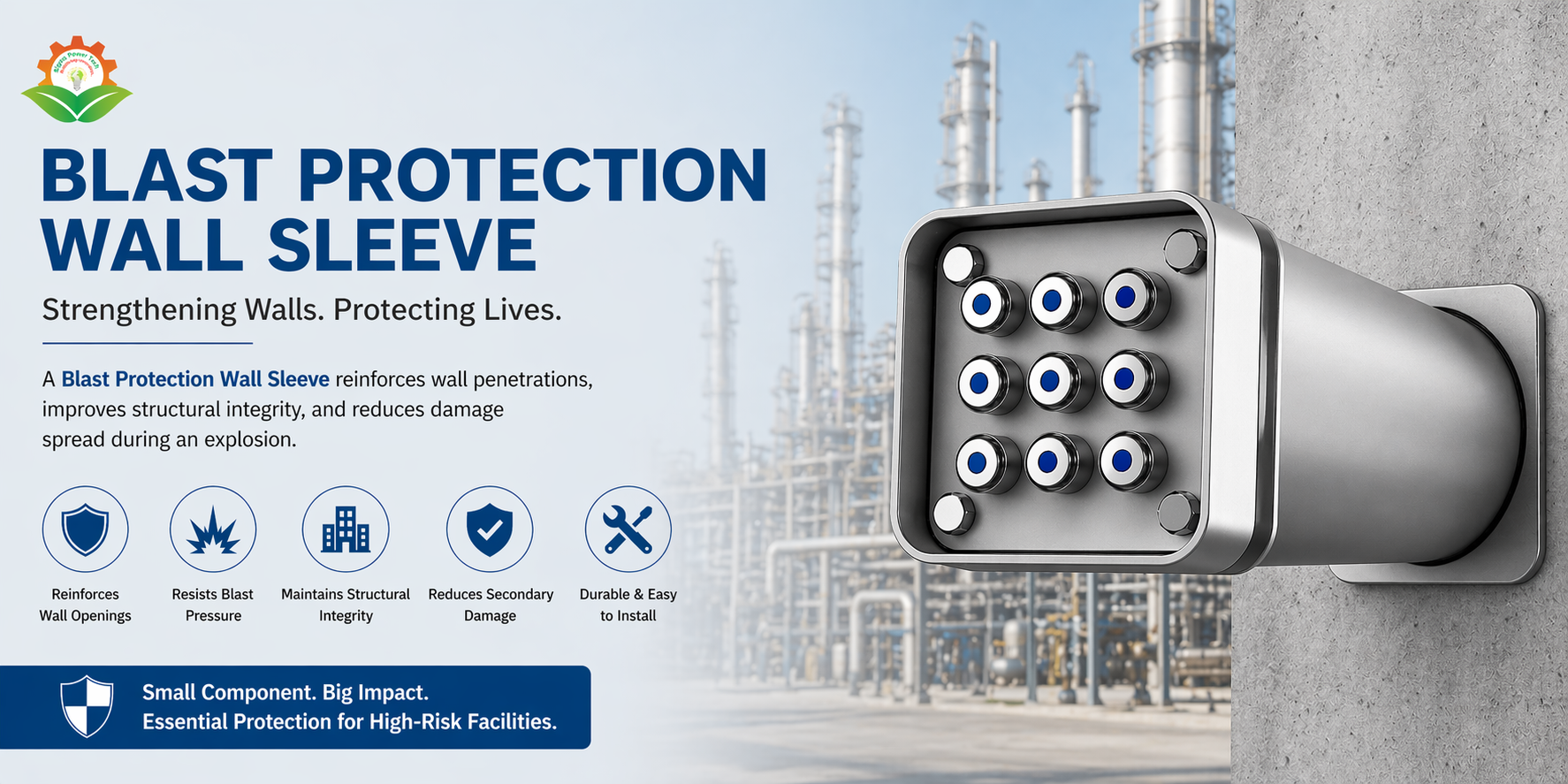
During the final inspection of a new fuel storage facility, engineers reviewed every element designed to protect the structure from potential blast events. The reinforced walls, blast-resistant doors, and emergency ventilation systems all met project specifications. However, several service penetrations had been installed with conventional wall sleeves instead of a Blast Protection Wall Sleeve. Although the difference was not obvious at first glance, engineers understood that standard sleeves were never designed to withstand explosion pressure. Replacing them before commissioning reinforced a critical lesson: in high-risk facilities, the right wall sleeve can make the difference between structural resilience and costly failure.
What is a Blast Protection Wall Sleeve?
A Blast Protection Sleeve is a specially engineered wall penetration system that allows pipes, cables, ducts, and conduits to safely pass through blast-resistant walls. Unlike conventional sleeves used in standard construction, it is designed to resist blast overpressure while preserving the integrity of the surrounding wall.
An Explosion Protection Sleeve strengthens one of the most vulnerable areas in blast-resistant construction. It reinforces service penetrations, reduces pressure leakage, and helps ensure the wall continues to perform under extreme conditions.
Although hidden inside the wall after installation, it plays a significant role in protecting people, equipment, and critical operations.
Sigma Power Tech Blast Sleeve vs Conventional Sleeves
While both products create openings for utility services, they are built for completely different purposes.
Conventional wall sleeves are intended for general construction. They provide a passage for pipes and cables but are not engineered to withstand the intense forces generated by an explosion.
A Sigma Power Tech Blast Sleeve, however, is specifically designed for blast-resistant infrastructure. It combines structural strength, engineered sealing, and pressure resistance to protect utility penetrations during high-pressure events.
This difference becomes critical in facilities where blast protection is essential rather than optional.
How Does It Perform During Explosion Pressure?
An explosion produces a high-pressure shock wave that places enormous stress on structural components. Utility penetrations are particularly vulnerable because they interrupt the continuity of reinforced concrete.
A Blast Resistant Sleeve distributes these forces into the surrounding structure while remaining securely anchored. Its sealing system also helps minimise pressure leakage, preventing blast effects from spreading into protected areas.
Conventional sleeves lack these engineering features and may deform or fail under similar conditions.
This is one of the primary reasons engineers specify dedicated blast protection wall sleeves for critical infrastructure projects.
Key Features That Set Blast Protection Sleeves Apart
When comparing engineered blast sleeves with standard construction sleeves, several performance differences become immediately apparent.
Superior Structural Strength
Blast protection sleeves are manufactured from heavy-duty steel capable of resisting dynamic blast loads without significant deformation.
Engineered Pressure Resistance
A Protective Blast Sleeve is selected according to project-specific blast design requirements, ensuring dependable performance during explosion events.
Reliable Sealing Performance
Effective sealing helps prevent pressure, smoke, dust, and hazardous contaminants from passing through wall penetrations.
Corrosion Resistance
Protective coatings improve durability in industrial environments exposed to chemicals, humidity, and varying temperatures.
Precision Manufacturing
Consistent fabrication, high-quality welding, and accurate dimensions contribute to dependable installation and long-term structural reliability.
Where Are Blast Protection Wall Sleeves Used?
Blast protection wall sleeves are installed wherever utilities pass through blast-resistant structures.
Typical applications include:
- Petrochemical facilities
- Oil and gas processing plants
- Chemical manufacturing units
- Defence installations
- Ammunition storage facilities
- Underground bunkers
- Emergency operation centres
- Power generation stations
- Critical infrastructure projects
These facilities require engineered wall penetrations that continue performing even under extreme blast loading conditions.
Factors Affecting Blast Protection Wall Sleeve Price
The price of a blast protection wall sleeve depends on several engineering considerations.
Important cost factors include:
- Required blast pressure rating
- Steel grade and material thickness
- Sleeve dimensions
- Corrosion-resistant coatings
- Gas-tight or pressure-tight sealing systems
- Custom engineering requirements
- Manufacturing precision
- Product testing and quality assurance
Although conventional sleeves generally have a lower purchase price, they are not intended for blast-resistant applications. Investing in engineered products often provides greater long-term value through improved safety and reduced maintenance.
How to Choose Blast Proof Wall Sleeve Manufacturers in India
Selecting an experienced manufacturer is just as important as selecting the right product.
Before purchasing, evaluate whether the manufacturer provides:
- Expertise in blast protection engineering
- In-house manufacturing capabilities
- Custom engineering support
- Documented quality assurance procedures
- Product testing and inspection
- Technical documentation
- Installation guidance
- Reliable after-sales support
Manufacturers specialising in blast protection understand the performance requirements of critical infrastructure and can recommend solutions that align with project-specific engineering needs.
Common Mistakes to Avoid
Many project teams unknowingly compromise facility protection by making avoidable mistakes.
One common error is using standard construction sleeves in blast-resistant walls.
Another is selecting products without verifying their blast pressure rating.
Some buyers also focus only on initial purchase cost instead of evaluating lifecycle performance, durability, and engineering quality.
Even a properly engineered Blast Shield Sleeve must be installed correctly to achieve its intended performance.
Regular inspections are equally important, particularly after facility expansions or utility modifications.
Why Engineering Quality Matters
Blast-resistant infrastructure depends on every component functioning as part of an integrated protection system. While reinforced walls and blast-resistant doors receive significant attention, service penetrations deserve the same engineering focus.
A Blast Guard Sleeve manufactured for high-risk environments provides significantly greater protection than conventional construction alternatives. The Sigma Power Tech Blast Sleeve reflects this approach by combining structural strength, precision manufacturing, and dependable sealing into a solution suitable for demanding industrial applications.
Choosing engineered wall penetration systems improves facility resilience, reduces operational risk, and supports long-term safety objectives.
Strengthen Your Protection Strategy
Protective infrastructure should be reviewed regularly as operational requirements evolve.
Take time to review your facility's safety setup and ensure all wall penetrations meet current engineering standards.
If your facility has expanded or undergone modifications, consider upgrading your protection systems to improve long-term resilience.
Engineers and project managers should also explore more safety insights to stay informed about advances in blast-resistant design and industrial safety.
Conclusion
Although conventional wall sleeves and blast protection sleeves may appear similar, their performance under explosion pressure is fundamentally different. A Blast Protection Sleeve is engineered to strengthen vulnerable wall penetrations, maintain structural integrity, and reduce the impact of blast forces on critical infrastructure.
By understanding these differences, selecting experienced manufacturers, and prioritising engineering quality over initial cost, organisations can make informed decisions that enhance safety and operational continuity.
For high-risk facilities where reliability is essential, choosing a Sigma Power Tech Blast Sleeve over a conventional sleeve is a practical investment in long-term protection, resilience, and peace of mind.

 English
 Arabic
 Spanish
 Portuguese
 Deutsch
 Turkish
 Dutch
 Italiano
 Russian
 Romaian
 Portuguese (Brazil)
 Greek
