


Handmade Dog Chews: Natural Treats for Happy, Healthy Dogs
Dogs love chewing, and providing them with the right treats can make this everyday habit more enjoyable. From keeping dogs occupied to offering a satisfying chewing experience, quality chews can become a useful part of a pet's routine. Pet owners looking for simple ingredients and thoughtfully prepared products often consider handmade dog chews as an alternative to heavily processed treats. Selecting suitable chews helps support a dog's natural instincts while giving owners greater control over the treats they offer.
What Are Handmade Dog Chews?
Handmade dog chews are treats prepared through hands-on processing methods rather than relying entirely on highly automated manufacturing. Depending on the product, they may be made from animal-based ingredients, natural hides, or other dog-safe materials. Their texture, shape, and preparation method can vary according to the ingredients used.
Some handmade chews contain a single ingredient, while others combine several ingredients. For pet owners who prefer straightforward treat options, single-ingredient products can make it easier to check the ingredient list and avoid unnecessary additives. However, handmade does not automatically mean healthier or safer. Ingredient quality, hygiene, processing standards, and suitability for an individual dog remain important considerations.
Benefits of Offering Natural Dog Chews
Chewing is a normal canine behavior. Suitable chew treats can provide enrichment and help dogs stay occupied during supervised downtime. The benefits depend on the dog's age, chewing style, health, and the type of product.
1. Encourages Natural Chewing Behavior
Dogs naturally use their mouths to investigate and interact with objects. Providing an appropriate chew can give them a designated outlet for this behavior. This may also help redirect attention away from household items when combined with training and adequate exercise.
Every dog has different chewing habits. Some gently nibble their treats, while others attempt to break off large pieces quickly. Owners should select products based on these habits rather than relying on product labels alone.
2. Provides Mental Enrichment
Chewing can keep a dog engaged and provide an activity during quiet periods. A suitable treat may help break up a repetitive daily routine and offer an enjoyable challenge.
Chews should complement other enrichment activities, including walks, interactive play, training, and food puzzles. They are not a replacement for physical exercise or social interaction.
3. Supports a Simple Treat Routine
Pet owners who prefer minimally processed products may appreciate chews with short ingredient lists. Single-ingredient treats can make it easier to identify what a dog is eating, particularly when owners are monitoring food sensitivities.
Nevertheless, check the complete product information and consult a veterinarian if your dog has allergies, digestive concerns, or dietary restrictions.
How to Select the Right Chews for Your Dog
Choosing an appropriate chew involves more than finding an appealing shape or texture. Consider the following factors before purchasing a product.
Consider Your Dog's Size
The dimensions of a chew should suit your dog's body size and chewing behavior. A treat that is too small may be swallowed whole, while an unsuitable shape can create a choking hazard. Follow the manufacturer's size guidance and supervise your dog throughout chewing.
Understand Texture and Firmness
Some chews are flexible, while others are extremely hard. Very hard products may damage teeth, particularly in powerful chewers. Avoid chews that cannot give slightly under pressure and ask your veterinarian which options are appropriate for your dog's dental health.
Review the Ingredient List
Look for clear ingredient information and follow the feeding instructions. If you prefer treats without artificial flavors or unnecessary fillers, review the label instead of assuming every handmade product has the same formulation.
Match the Treat to Your Dog's Age
Puppies, adult dogs, and senior dogs have different chewing needs. Puppies may have sensitive developing teeth, while senior dogs may have dental problems or reduced chewing ability. Consult your veterinarian when you are uncertain about an appropriate texture or product type.
Are Handmade Dog Chews Safe?
Safety depends on the ingredients, preparation, product design, and how your dog uses the chew. Handmade production alone does not guarantee that a treat is free from contamination or choking risks.
Before offering a chew, inspect it for unusual damage, sharp edges, or an unsuitable size. Watch your dog while chewing, and remove the treat if it develops sharp fragments or becomes small enough to swallow. Do not leave your dog unattended with a chew.
For animal-hide products, remember that pieces may soften, tear, or break apart during chewing. Dogs that gulp treats or aggressively bite off large sections may need a different type of enrichment. If your dog has a history of swallowing foreign objects, discuss suitable alternatives with your veterinarian.
Treats should also be included in your dog's daily calorie intake. As a general guideline, treats should account for no more than 10% of daily calories, with the remaining calories coming from a complete and balanced diet.
Why Consider Ugly Chews for Natural Treats?
When searching for natural dog chews, pet owners can consider Ugly Chews for products focused on straightforward ingredients and practical chewing experiences. The family-owned business emphasizes natural dog chews, single-ingredient dog treats, and the use of cattle hides sourced through ranch partners.
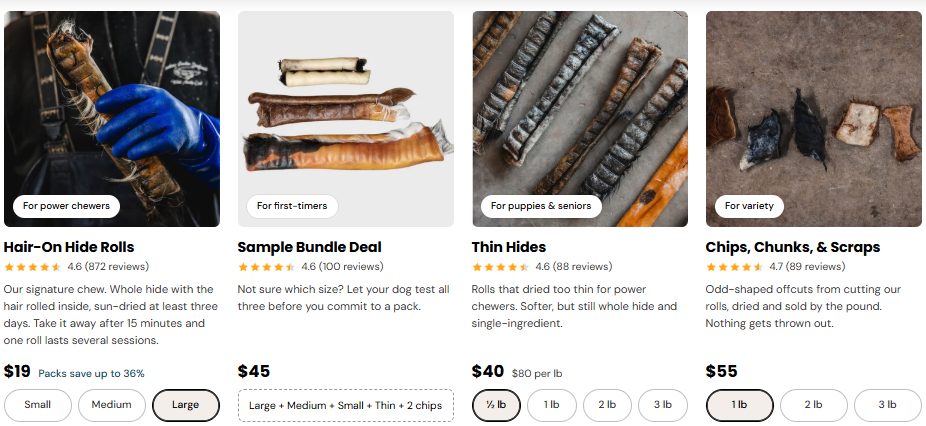
Its product range includes hair-on hide rolls, chips, chunks, and scraps, along with freeze-dried liver treats. These options provide different textures and formats for owners comparing treats for their dogs.
Ugly Chews also emphasizes using water for hide cleaning and direct sunlight for drying, alongside a zero-waste approach that makes use of different portions of cattle hides. These product and processing details may appeal to buyers who value simple ingredients and resource-conscious production.
Before purchasing any chew, check the specific product's ingredients, dimensions, feeding guidance, and suitability for your dog's chewing habits. No single chew is appropriate for every dog, and individual supervision remains essential.
How to Store Dog Chews Properly
Correct storage helps maintain product quality between uses. Follow the storage instructions supplied with each treat, since requirements can differ by ingredient and processing method.
-
Keep chews in a cool, dry place away from direct moisture.
-
Store products in suitable packaging that protects them from contamination.
-
Follow any instructions about airflow, refrigeration, or freezing.
-
Keep treats away from young children and other pets.
-
Discard products that develop mold, an unusual odor, or signs of contamination.
Natural products without preservatives may require particular care. Do not assume every chew has the same shelf life, and avoid feeding treats that appear spoiled.
Conclusion
Handmade dog chews can provide an enjoyable chewing activity when they are made with suitable ingredients and selected according to a dog's individual needs. Pet owners should prioritize clear labeling, appropriate sizing, reasonable texture, and responsible supervision instead of relying solely on claims such as handmade or natural.
For families seeking straightforward treats, Ugly Chews offers natural hide-based chews and other treat options to consider. Review the product details, select an appropriate option for your dog, and make chewing part of a balanced routine that includes exercise, training, fresh water, and a complete diet.

 English
 Arabic
 French
 Spanish
 Portuguese
 Deutsch
 Turkish
 Dutch
 Italiano
 Russian
 Portuguese (Brazil)
 Greek
