


Clipping Path with Shadow and Reflection: How to Create Realistic Product Images
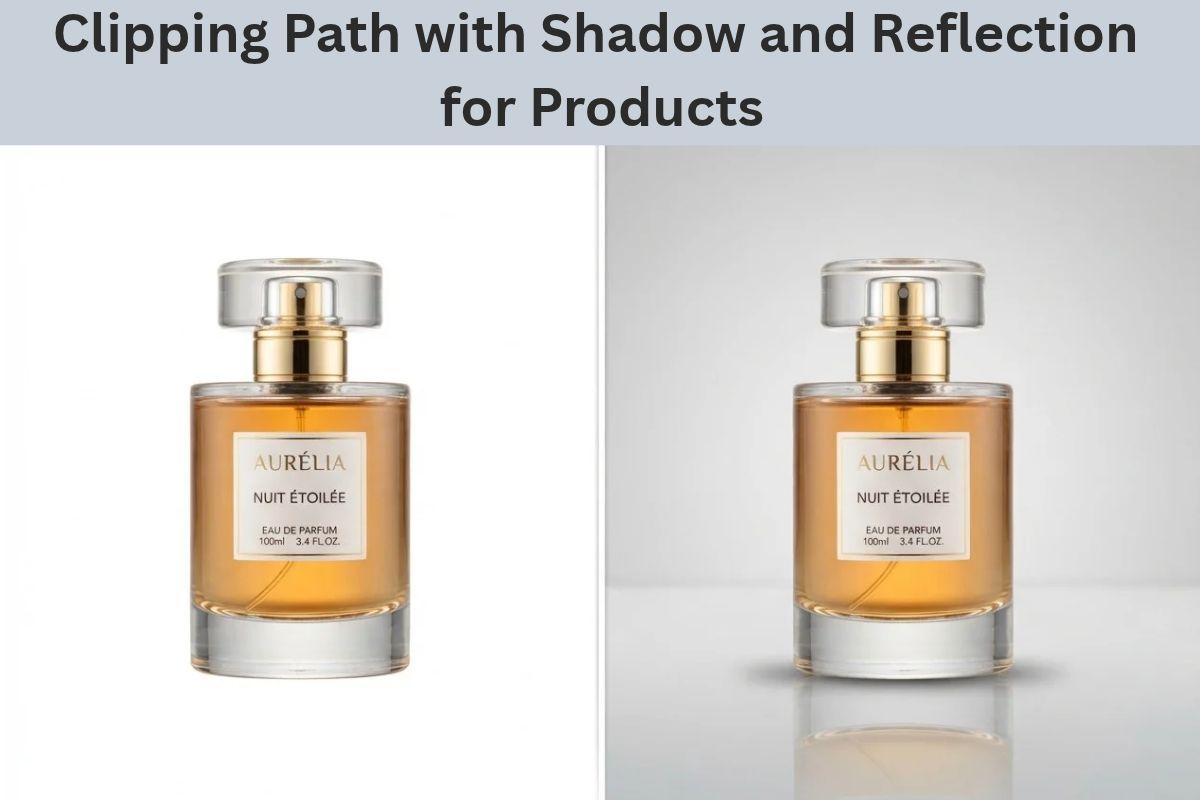
Product images are the lifelines of eCommerce. Customers viewing an online store will feel that they are seeing a plain white or neutral background, leaving them to concentrate solely on the product they are viewing. However, if you take the object completely out of the original photo, it can be a frequent issue that the product appears flat, floating or artificially pasted on to the page. To balance the extremes of background removal and realistic results, online brands opt for a professional clipping path service along with shadow and reflection restoration processes.
Commercial photo editors can preserve the soft 3D depth of the products, which makes them appear 'real' to shoppers, and can also ensure accurate proportions when isolating vectors and projecting ground shadows and mirror reflections.
What Is a Clipping Path and Why Does It Matter for Product Images?
In digital image editing, a clipping path is a closed vector path that is created around a desired object. Editors can follow the sharp contours of a product, and separate it from its context easily. This way, everything from a plain t-shirt to a complicated electronics device or shoe will have crisp lines.
A pure vector cutout will give accuracy, but will also remove the natural ambient light, points of contact with the floor, and imperfections such as shadows. Even the best photography can become intangible if put on a solid white canvas without post processing adjustments. A photo clipping service uses special technology to isolate the foreground from the background, so retouchers can reconstruct lighting cues, subtle gradients and floor contacts on the foreground alone. When your company has thousands of SKUs, it is very important to have a good clipping path service that will make certain that each photo has clear edges without sacrificing general realism.
How to Add Natural Drop Shadows to Clipped Product Images
One of the best methods of bringing realism back after performing a cutout path is to add a drop shadow. If there is no cast shadow under or behind an object, the brain processes that as lacking in real weight and appears to be synthetic.
During post-production, there are three main types of shadows applied:
-
Natural Shadows: Keep or recreate the original light source from the original photoshoot and preserve the original shadows while eliminating the distracting background noise.
-
Drop Shadows: These are produced digitally below the product to emulate a direct overhead or angled light source, ideal for shoes, boxes and packaged items.
-
Floating / Soft shadows: Shadows that hang or bow slightly away from the objects and surfaces they are cast upon, such as sunglasses and hanging accessories.
Shadows should never be a sharp, black rectangle if they are to be used for a natural appearance. The opacity, blur radius and color tones are carefully adjusted by the editors to reflect the light source, giving the transition from the product base to the background a soft and gradual effect.
How to Create Realistic Product Reflections After Background Removal
In certain high quality retail products—cosmetics, perfume bottles, watches, glassware, etc.—shadows can be the sole method of indicating quality of the material. In such cases, a subtle reflection under the cut-out photo gives a sophisticated and upscale studio appearance.
Reflections replicate the appearance of a product on a reflective surface like a gloss tile, glass or shiny acrylic. This can be done by copying the isolated object, flipping it up and down along the line of contact and reducing its transparency. A soft gradient mask is then applied to the image to naturally fade out the reflection farther away from the product base.
A subtle reflection effect combined with a precision cutout from an expert clipping path service creates a realistic shine effect that will make the product stand out on promotional banners and marketplace product pages.
Step-by-Step Guide to Preserving Natural Depth in Product Photos
When replacing background colors it is important to adopt a systematic approach to maintain the depth. An expert retouching artist will perform a highly accurate and detailed workflow with atmospheric light considerations in mind:
-
Path Creation: Create an accurate vector path around all edges of the product using pen tools – curved edges and complex cutouts should be smooth.
-
Background Isolation: Isolate the product from the original background on a separate layer.
-
Shadow and Reflection Layering: Create shadow and reflection layers specifically for contact shadows, cast shadows, and surface reflections.
-
Gradient and Feathering: Perform soft Gaussian blurring, edge feathering and gradient to the shadow layers to give the shadows a natural light dispersion instead of artificial light overlays.
-
Final Color and Light Harmony: Ensure color temperature of newly created depth effects matches the highlights and shadows in the product itself.
Why Professional Clipping Path Editing Matters for E-commerce
The challenge here is to keep every product catalog image technically consistent with each other, with the right visual balance. If there are too much shadows, too strong reflections or too rough cutouts at the edges, a potential buyer will be distracted by the imperfection rather than the features of the product.
By outsourcing the editing of complex catalogs to a dedicated team such as Visuals Clipping, e-commerce brands and photography studios can easily and efficiently scale their image post-processing. A good clipping path service will provide you with neatly separated product files and realistic shadow options that is suitable for various store templates. This systematic process guarantees uniformity in the way that every product on your store is lit, positioned in space and presented throughout all the marketing channels.
Final Thoughts
Working on clean backdrops doesn't compromise the natural texture and dimension of good photography. With exact vector cutouts combined with soft drop shadows and accurate surface reflections, online sellers can maintain their product photos from being skyheaded, appealing and lifelike. A specific clipping path service will ensure that your catalog images gain the trust of your clients and convert them to better rates.
Also Read: Clipping Path File Formats Guide

 English
 Arabic
 French
 Spanish
 Portuguese
 Turkish
 Dutch
 Italiano
 Russian
 Romaian
 Portuguese (Brazil)
 Greek
