


Strategy Consulting Market Helps Organizations Navigate Change and Make Informed Decisions
Understanding Strategy Consulting
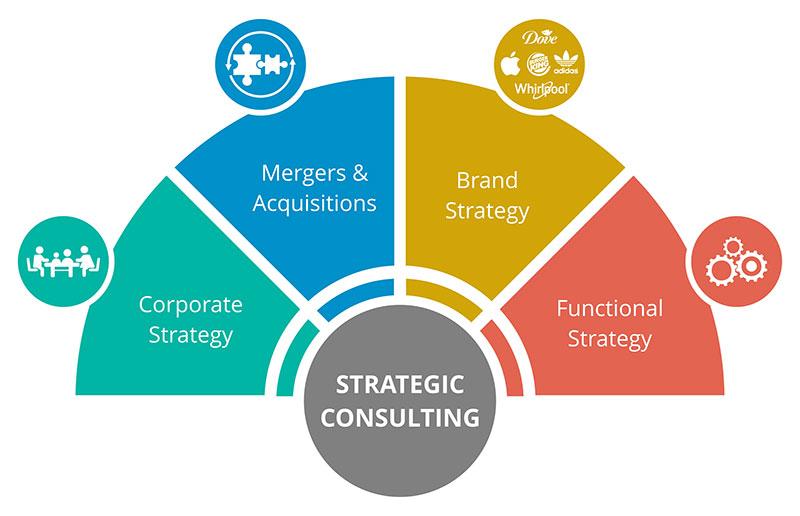
The Strategy Consulting Market includes advisory services that help organizations assess important decisions about their direction, resources, and competitive position. Consultants may support corporate planning, market entry, business model evaluation, mergers, organizational transformation, and growth initiatives. Their work typically combines research, financial analysis, interviews, and structured problem-solving. Clients range from established companies and investors to public organizations and growing businesses. A consulting engagement might help a manufacturer evaluate expansion into a new region or assist a retailer in reviewing its product portfolio. The advice should reflect the client’s objectives, operating environment, and available resources rather than rely on a generic framework. Strategy consulting differs from routine operational support because it often addresses decisions with long-term consequences and significant uncertainty. However, the boundary between strategy and implementation is not always fixed. Many clients also seek help translating recommendations into practical plans, assigning responsibilities, and monitoring progress after the initial analysis is complete.
Drivers of Market Demand
Demand for strategy consulting is influenced by competitive pressure, economic uncertainty, technology changes, and the need to allocate resources effectively. Organizations may seek external perspectives when entering unfamiliar markets, responding to new competitors, or evaluating a major acquisition. Consultants can bring industry experience, research capabilities, and temporary capacity to a problem that internal teams cannot address alone. Digital transformation has also created questions about investment priorities, business models, and organizational capabilities. At the same time, clients are more attentive to cost and expect a clear connection between advisory work and business decisions. A project that produces an attractive presentation without supporting action may have limited value. Firms must therefore understand the client’s constraints and provide evidence behind their recommendations. Demand can vary with economic conditions: uncertainty may increase the need for advice, but it can also cause organizations to postpone discretionary spending. Successful engagements begin with a well-defined question and agreement about the decisions the work will support.
Applications Across Industries
Strategy consulting serves organizations in financial services, healthcare, manufacturing, technology, retail, energy, and many other sectors. A bank may review its service portfolio or evaluate opportunities in digital channels. A healthcare organization may assess demand for services while considering regulatory and operational requirements. Manufacturers may examine supply chains, production footprints, and investment priorities. Retailers can use strategic analysis to understand customer segments, store networks, and digital commerce. Energy companies may evaluate changing demand, infrastructure needs, and emerging business models. Private equity investors often seek commercial due diligence before a transaction or strategic planning after an acquisition. Public organizations may use advisory support to assess policy implementation, service delivery, or organizational priorities. Each setting requires different evidence and specialist knowledge. Effective consultants work with internal teams to understand local conditions, verify assumptions, and identify practical constraints. Industry expertise is valuable, but recommendations must still be tailored to the individual organization.
Challenges and Client Expectations
Strategy consulting projects face challenges involving data quality, uncertain forecasts, stakeholder alignment, and implementation capacity. Clients may have incomplete information about customers, costs, or competitors, making it difficult to test assumptions. Different executives may also have conflicting views about priorities or acceptable risk. Consultants need to communicate uncertainty clearly and distinguish evidence from judgment. Confidentiality is essential because engagements can involve sensitive financial information, proposed transactions, or organizational changes. Clients increasingly expect teams to include relevant specialists rather than rely only on broad frameworks. They may also expect measurable milestones, practical recommendations, and support during execution. A strategy can fail if employees do not understand it or if the organization lacks the skills and resources to deliver it. Before commissioning work, clients should define the scope, decision rights, deliverables, timeline, and handling of sensitive information. Regular communication helps keep the engagement focused on decisions rather than unnecessary analysis.
Future Market Outlook
The strategy consulting market will continue to evolve as clients seek advice that combines analytical depth with practical execution. Artificial intelligence and advanced analytics may help consultants process information and explore scenarios, but outputs require verification and professional judgment. Firms are also likely to integrate industry specialists, technology experts, and operational teams into engagements where clients need broader support. Buyers can evaluate consultants by examining their understanding of the problem, relevant experience, proposed team, and approach to implementation. A strong engagement should identify assumptions, explain trade-offs, and establish how progress will be assessed. Clients should remain involved because outside advisers cannot replace internal accountability or knowledge of the organization. Long-term value comes from decisions that are well supported, realistic, and adaptable as conditions change. The most effective strategy work helps leaders understand uncertainty, prioritize resources, and build the capabilities required to act.
➤ In-Depth Market Studies by Market Research Future:

 English
 Arabic
 French
 Spanish
 Portuguese
 Deutsch
 Turkish
 Dutch
 Italiano
 Russian
 Portuguese (Brazil)
 Greek
