


How Does Rockv API Cast Steel Globe Valve Suit High Pressure
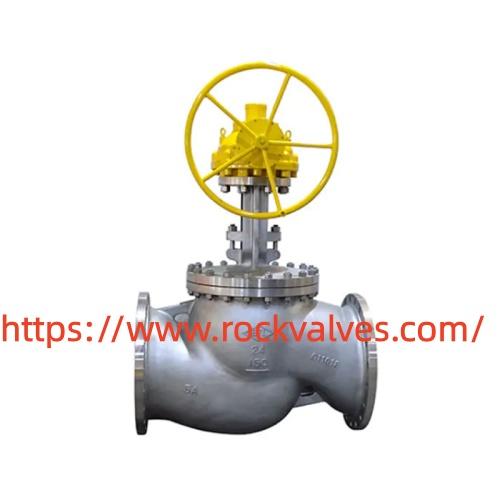
API Cast Steel Globe Valve selection for high pressure applications requires careful evaluation of material strength, operating temperature, process medium, and design specifications. Equipment used in refineries, chemical plants, and industrial processing facilities may experience changing pressure loads and demanding operating conditions. Choosing a suitable material is therefore not simply a matter of selecting a familiar grade. Buyers need to understand how different alloys respond to the actual service environment and whether the complete assembly meets the project requirements.
Carbon steel is commonly considered for general industrial applications involving water, oil, gas, and steam. ASTM A216 WCB is a widely used casting grade for pressure-containing components. It can be suitable for many conventional process conditions when corrosion and temperature requirements fall within its specified limits. However, buyers should not assume that this grade is appropriate for every high pressure application. Its pressure rating must be checked against the design temperature, material group, and applicable engineering standard.
When operating temperatures increase, low alloy materials may become relevant. ASTM A217 WC6 contains chromium and molybdenum, while WC9 has a different alloy composition with a higher chromium content. These additions influence the material response to elevated temperatures and long term mechanical loading. Such grades are used in certain steam and industrial process applications where temperature and pressure conditions require additional material consideration. The choice between them should be based on the approved design limits, process data, and project specification rather than a general assumption that one grade suits every installation.
For applications involving higher temperatures, engineers may also evaluate grades such as ASTM A217 C5 or C12. These materials contain additional alloying elements and are intended for particular service conditions. Their suitability depends on temperature exposure, mechanical requirements, corrosion characteristics, and the relevant pressure rating. In facilities with steam systems or thermal processing equipment, the material specification should account for operating cycles as well as normal steady conditions. Startup, shutdown, and temperature fluctuations can influence long term performance, so the design review should consider the complete operating pattern.
Another important factor is the relationship between material and pressure class. A pressure class marking does not represent one fixed allowable working pressure at every temperature. The permitted rating changes according to the material group and operating temperature. ASME B16.34 provides pressure and temperature rating information for applicable industrial products. Buyers should review the rating at the actual design temperature and confirm that it is suitable for the specified pressure. They should also check whether the project requires additional design conditions or supplementary inspection.
Material selection should cover the complete assembly rather than the main body alone. The bonnet, disc, stem, bolts, seating surfaces, and packing each have different functions and may require different material specifications. For example, the internal trim must be compatible with the process medium and should have suitable mechanical and wear properties. Bolting also needs to be matched to the pressure and temperature conditions. Buyers should request a material list that identifies the grade of each important component. This makes technical review easier and helps prevent misunderstandings during purchasing.
Corrosion is another issue that deserves attention. A material suitable for clean water or general hydrocarbon service may not be appropriate for fluids containing corrosive compounds. The process composition, concentration, moisture content, and possible contaminants can influence material compatibility. In some applications, stainless alloys or other corrosion-resistant materials may be considered for selected components. However, changing the body material alone may not address every corrosion concern. Engineers should review the body, trim, packing, and sealing arrangement together to determine whether the proposed configuration suits the medium.
Manufacturing quality also influences how the finished equipment performs. Casting control, heat treatment, machining accuracy, and assembly procedures all contribute to component consistency. Heat treatment should follow the relevant material specification, while inspection methods should reflect the project requirements. Buyers may request chemical analysis reports, mechanical test results, material certificates, dimensional inspection records, and non-destructive examination reports where specified. Pressure and seat leakage tests can provide further verification before shipment. The inspection scope should be agreed upon before production to ensure that the required documents and acceptance criteria are clearly defined.
A useful purchasing inquiry should include the process medium, design pressure, operating pressure, design temperature, normal temperature, nominal size, pressure class, connection type, and material requirements. It is also helpful to provide the applicable design standard, pipeline drawings, and any special inspection conditions. With these details, the manufacturer can assess the intended service and discuss suitable configurations. If operating data is incomplete, buyers should identify the missing information rather than rely on estimates.
Selecting materials for high pressure service involves balancing mechanical properties, temperature limits, corrosion resistance, manufacturing requirements, and project standards. Each grade has a defined application range, and the final decision should be supported by engineering review. Rockv provides industrial flow control products for different process applications, with material and configuration discussions based on project specifications. Buyers planning refinery, chemical processing, or other industrial projects can visit https://www.rockvalves.com/ to review the product range and discuss their technical requirements with the Rockv team.

 English
 Arabic
 French
 Spanish
 Portuguese
 Deutsch
 Dutch
 Italiano
 Russian
 Romaian
 Portuguese (Brazil)
 Greek
