


What is Biogas Plant Design?
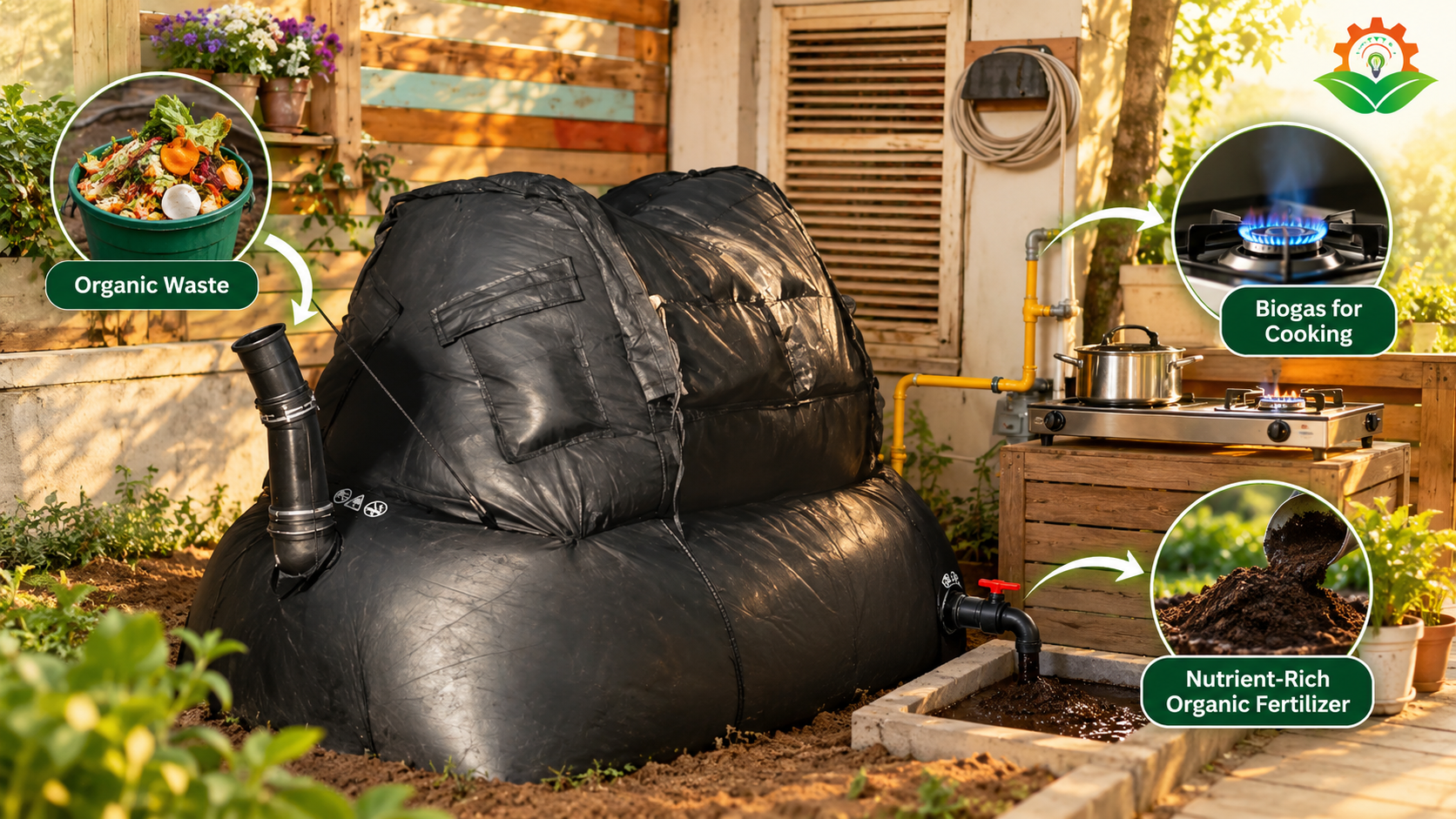
A dairy farmer struggling with rising LPG prices and mounting cattle waste faces two challenges every day—fuel costs and waste management. Instead of treating organic waste as a disposal problem, a properly designed biogas plant converts it into a reliable source of clean energy and nutrient-rich fertilizer. Whether installed for a rural household, livestock farm, or agricultural enterprise, an efficient biogas system delivers long-term savings while supporting sustainable waste management.
Anaerobic digestion is the core process behind every biogas plant. It transforms biodegradable waste into methane-rich gas without oxygen, reducing environmental pollution while generating renewable energy. A well-engineered system is designed not only to maximize gas production but also to ensure operational safety, durability, and consistent performance over many years.
What is a Biogas Plant and How Does It Work?
A biogas plant is a waste-to-energy system that converts organic materials into combustible gas through anaerobic digestion. Common feedstock includes kitchen waste, animal manure, agricultural residues, and food-processing waste.
Inside the digester tank, naturally occurring microorganisms break down organic matter in oxygen-free conditions. This biological process produces methane-rich biogas and nutrient-rich bio-slurry. The gas is collected and supplied for cooking, heating, or electricity generation, while the slurry becomes an excellent organic fertilizer for crops.
The efficiency of biogas plant systems depends on proper engineering, feedstock consistency, temperature, and hydraulic retention time.
Understanding Biogas Plant Design
Effective biogas plant design balances waste availability, gas demand, and operational efficiency.
Digester Tank, Retention Time and Gas Storage
The digester is the heart of the system. Its size is determined by daily feedstock quantity and the required retention period, which allows microorganisms enough time to complete digestion.
Gas storage can be integrated within the digester or installed as a separate storage unit depending on plant capacity. Proper gas storage ensures stable pressure and uninterrupted fuel supply during varying consumption patterns.
The digester material—whether reinforced concrete, mild steel with protective coatings, or specialized polymer structures—should offer corrosion resistance, structural strength, and long service life.
Feedstock Conversion Process
The quality of gas production depends heavily on feedstock selection and consistency.
Typical feedstock includes:
- Kitchen food waste
- Cattle and poultry manure
- Crop residue
- Agricultural processing waste
- Organic biodegradable materials
Daily feeding with a balanced mixture of waste and water supports stable microbial activity. Sudden fluctuations in feedstock quantity or composition may reduce gas yield and digestion efficiency.
The digestion process produces methane, carbon dioxide, and trace gases, while the remaining slurry retains valuable nutrients suitable for agricultural use.
Sizing the Plant for Daily Energy Needs
One of the most critical engineering decisions is selecting the correct plant capacity.
Design calculations generally consider:
- Daily organic waste generation
- Expected cooking or heating demand
- Potential electricity generation requirements
- Future expansion requirements
- Seasonal feedstock availability
Oversized digesters increase capital costs and reduce efficiency, while undersized systems cannot meet energy demand. Proper sizing ensures optimum gas production and stable long-term performance.
Gas Distribution, Safety and End-Use Applications
Biogas must be delivered safely from the digester to end-use equipment.
A well-designed piping network minimizes leakage and pressure loss. Pressure regulators, safety valves, condensate traps, and flame arrestors improve operational safety while protecting connected appliances.
Biogas can be used with:
- Kitchen stoves
- Water heaters
- Small electricity generators
- Farm processing equipment
- Industrial burners designed for biogas fuel
Correct piping layout and pressure management significantly improve reliability and system efficiency.
Bio-Slurry: An Additional Long-Term Benefit
Biogas production generates high-quality bio-slurry that serves as an organic fertilizer rich in nitrogen, phosphorus, and potassium.
Unlike untreated manure, bio-slurry contains stabilized nutrients that improve soil structure, increase microbial activity, and reduce dependence on chemical fertilizers.
For farms, the fertilizer value often contributes substantially to the overall return on investment.
Key Features of Modern Biogas Plant Systems
Modern biogas plant systems are designed to deliver reliable performance under varying operating conditions.
Key features include:
- Continuous gas generation
- Compact installation footprint
- Effective odor control
- Durable corrosion-resistant tank materials
- Weather and temperature resilience
- Low daily maintenance
- User-friendly operation
- Scalable plant capacities
- Long operational service life
A well-engineered domestic biogas digester for homes and farms can provide dependable fuel while minimizing operating effort.
Applications
Biogas technology supports a wide range of sectors.
Common applications include:
- Rural households
- Dairy and livestock farms
- Agricultural cooperatives
- Hostels and educational institutions
- Small hotels and farmstays
- Gated communities and housing societies
- Rural electrification projects
- Community waste-to-energy initiatives
Both domestic and commercial users benefit from reduced fuel expenses and improved waste management.
Biogas Plant Price and Investment Factors
The overall biogas plant price varies depending on multiple engineering and installation factors rather than equipment size alone.
Important considerations include:
- Daily feedstock quantity and composition
- Digester capacity
- Tank construction material
- Gas storage requirements
- Piping and installation complexity
- Site preparation requirements
- Integration with cooking systems or generators
- After-sales maintenance and AMC support
- Expected payback period
Selecting the right design often delivers greater lifetime savings than choosing the lowest initial investment.
Buyer's Guide: Choosing the Right Manufacturer
When evaluating biogas plant manufacturers in India, buyers should assess technical capability rather than price alone.
Consider the following:
- Industry experience
- Digester engineering expertise
- Manufacturing quality standards
- Material selection
- Customization capability
- Installation expertise
- Technical support
- After-sales maintenance services
- Documentation and subsidy assistance
- Proven reliability and project track record
A trusted Sigma Power Tech manufacturer and service provider can help ensure that system design, installation, and maintenance align with long-term operational requirements. For organizations seeking engineered renewable energy solutions, the Sigma Power Tech biogas plant approach emphasizes system reliability, proper sizing, and sustainable performance.
Common Mistakes to Avoid
Many operational problems result from poor planning rather than equipment failure.
Avoid these common mistakes:
- Undersizing or oversizing the digester
- Inconsistent daily feedstock input
- Poor site selection and inadequate space planning
- Ignoring bio-slurry utilization
- Skipping preventive maintenance
- Improper gas piping installation
- Neglecting temperature effects on digestion efficiency
Routine inspection, consistent feeding, and timely maintenance help maintain stable gas production throughout the plant's operational life.
Conclusion
A properly engineered biogas plant is much more than a waste disposal system—it is a long-term investment in renewable energy, sustainable agriculture, and resource efficiency. Correct plant sizing, quality engineering, dependable gas distribution, and regular maintenance have a far greater impact on lifetime performance than simply reducing initial installation costs.
When designed and installed correctly, a biogas plant delivers dependable fuel savings, valuable organic fertilizer, and reliable waste-to-energy infrastructure for households, farms, institutions, and community projects, making it a practical solution for sustainable energy generation well into the future.

 English
 Arabic
 Spanish
 Portuguese
 Deutsch
 Turkish
 Dutch
 Italiano
 Russian
 Romaian
 Portuguese (Brazil)
 Greek
