


What Should You Avoid When Creating a Visually Striking Exhibition Stand?
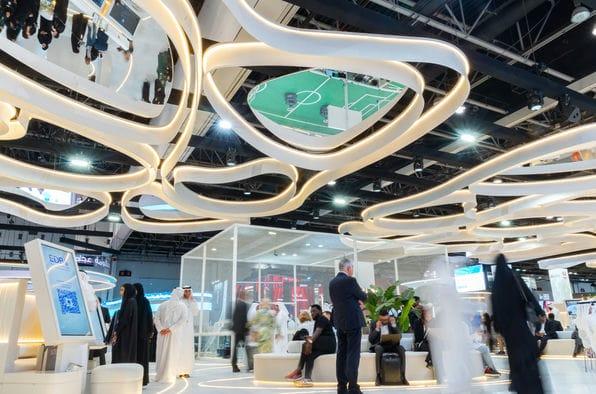
A visually striking exhibition stand should attract attention while remaining easy to understand, safe to navigate, and consistent with the brand. Designs can lose their impact when they contain too many messages, poor lighting, confusing layouts, or decorative features that do not serve a clear purpose. Successful planning balances creativity with usability, technical requirements, and the needs of the target audience.
Businesses researching modular exhibition stands dubai should assess flexibility, appearance, and practical limitations before choosing a system. For complex structures or multi-level concepts, a double deck exhibition stand builder in UAE may be relevant to planning, technical coordination, and compliance with the venue’s requirements.
1. Avoid Overcrowding the Design
Including every product, service, promotional offer, and company message can make a stand difficult to understand. Visitors often have limited time, so the main message should be visible and straightforward.
To avoid visual clutter:
-
Choose one primary brand message.
-
Limit the number of dominant graphics.
-
Display only the products relevant to the event audience.
-
Keep counters and tables free from unnecessary materials.
-
Use digital displays or brochures for secondary information.
A clear visual hierarchy helps visitors understand what the business offers and what they should explore next.
2. Do Not Ignore Visitor Flow
An attractive stand may still perform poorly if visitors cannot enter comfortably or move between displays. Counters, furniture, screens, and product stands should be positioned with circulation in mind.
Map out the visitor journey before approving the design. Consider where people will enter, pause, watch demonstrations, ask questions, and leave. Ensure that the layout accommodates expected visitor numbers and provides suitable access.
Avoid placing the most important display in a position that blocks the entrance or creates a bottleneck.
3. Avoid Poorly Planned Graphics
Graphics should communicate a message quickly. Small text, low-resolution images, excessive wording, and inconsistent branding can reduce their effectiveness.
Use high-resolution artwork, readable typography, and strong contrast. Review graphics at the distances from which visitors will see them. Check spelling, contact details, logos, and product information before production.
A headline should communicate the main benefit or idea. Supporting details can be placed at a closer viewing point, where visitors have time to read them.
4. Do Not Use Lighting Without Testing It
Lighting can improve visibility, but badly positioned fixtures may create glare, harsh shadows, or uneven illumination. Coloured lighting can also distort the appearance of products and brand colours.
Test the lighting arrangement against the actual display materials and graphics. Consider screen reflections, power access, heat, and the venue’s electrical requirements.
Lighting should highlight the important features without making the stand uncomfortable for visitors or staff.
5. Avoid Adding Technology Without a Purpose
Touchscreens, interactive displays, and large video walls can attract attention, but they should support a specific objective. Technology that is difficult to use, poorly maintained, or unrelated to the brand message can frustrate visitors.
Before including digital features, establish what visitors should learn or do. Prepare reliable content, test the equipment, arrange technical support where needed, and provide a simple alternative if a device stops working.
The experience should remain useful even if a screen or interactive feature becomes unavailable.
6. Never Overlook Safety and Venue Rules
Design choices must account for the exhibition organiser’s technical manual, permitted stand height, structural requirements, fire safety provisions, electrical rules, and access arrangements.
Do not assume that a design approved internally will automatically be accepted by the venue. Submit drawings and technical documentation when required, and confirm the approval process before fabrication.
Multi-level structures may require additional engineering documentation, access planning, barriers, and other safety provisions. These details should be resolved before construction begins.
7. Avoid Last-Minute Changes Without Review
Late changes can affect production quality, installation schedules, technical compliance, and the final appearance. Adding a new screen or changing a structural element at the last moment may require new approvals or equipment.
Set clear deadlines for design approval, artwork delivery, fabrication, and installation. If changes become necessary, review their effect on safety, budget, timing, and the rest of the design before proceeding.
Common Exhibition Stand Design Mistakes
| Mistake | Possible consequence | Better approach |
|---|---|---|
| Too many messages | Visitors struggle to understand the offer | Prioritise one main message |
| Blocked pathways | Congestion and poor accessibility | Plan visitor circulation |
| Small or unclear graphics | Reduced readability | Test artwork at viewing distance |
| Untested lighting | Glare or inconsistent appearance | Test fixtures and displays |
| Unreliable technology | Interrupted demonstrations | Test equipment and prepare alternatives |
| Ignored venue rules | Delays or required design changes | Review technical requirements early |
| Last-minute revisions | Installation and quality problems | Set approval deadlines |
Common Questions
What is the biggest mistake in exhibition stand design?
A common mistake is prioritising appearance without considering visitor movement, clear messaging, accessibility, and practical use.
How much text should an exhibition stand display?
There is no universal word limit, but the primary message should be brief and readable from a distance. Detailed information can be provided through demonstrations, brochures, or digital content.
Should every exhibition stand include interactive technology?
No. Technology should be included when it helps visitors understand the product, explore information, or interact with the brand.
When should exhibition stand design be finalised?
The design should be finalised early enough to allow for organiser approval, artwork checks, fabrication, testing, and installation. The exact schedule depends on the event and stand complexity.
Final Words
A strong exhibition stand requires more than an eye-catching concept. Avoid overcrowding, confusing graphics, poor lighting, unnecessary technology, and rushed changes. Planning visitor flow, checking technical requirements, and testing the complete design can help create a stand that is attractive, functional, and safe.

 English
 Arabic
 French
 Spanish
 Portuguese
 Deutsch
 Dutch
 Italiano
 Russian
 Romaian
 Portuguese (Brazil)
 Greek
