


Can Human Oversight Build Trust in China’s Military Robotics and Autonomous Systems?
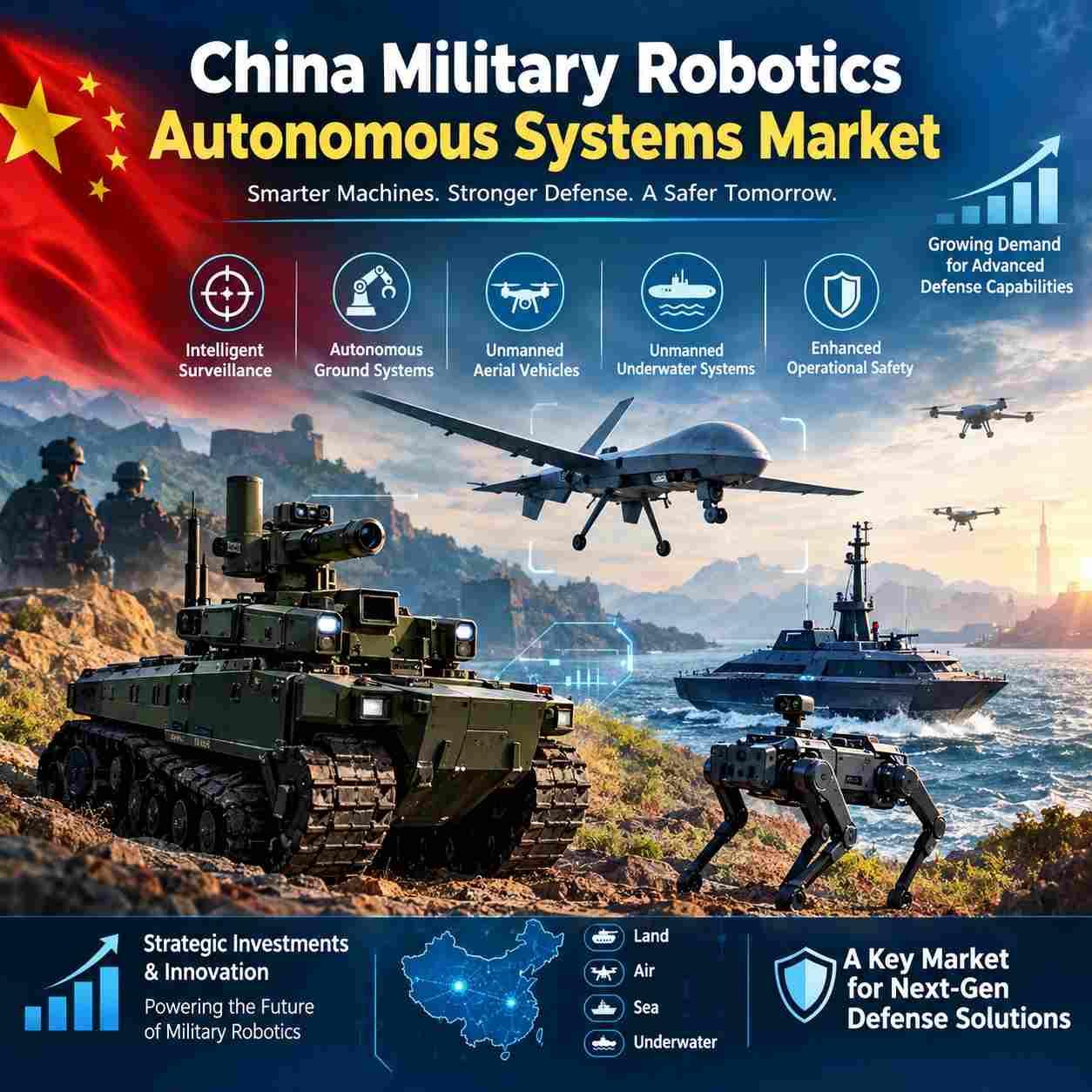
The China Military Robotics Autonomous Systems Market is advancing as defense organizations explore technologies that can support surveillance, reconnaissance, navigation, and other specialized activities. Artificial intelligence and robotics may improve how information is collected and processed, but greater autonomy also raises important questions about reliability, accountability, and human control.
The 6Wresearch market overview identifies ethical implications, regulatory concerns, and technological constraints among the challenges facing this sector. These issues are important because military systems may operate in complex environments where incomplete information, unexpected events, or technical failures can have serious consequences. Responsible development therefore requires attention not only to what a machine can do, but also to how its actions are supervised and evaluated.
Why Does Human Oversight Matter?
Autonomous systems can process information and perform predefined functions, but they do not automatically possess the contextual understanding or moral judgment of a human decision-maker. Their performance depends on design assumptions, available data, sensor quality, and the conditions in which they operate.
Human oversight can help ensure that automated functions remain within their intended boundaries. It also gives organizations a way to review unexpected behavior, investigate failures, and assign responsibility.
Important considerations include:
-
Defined operating limits: Systems should have clearly documented capabilities and restrictions.
-
Meaningful supervision: Operators need sufficient information and practical authority to monitor system behavior.
-
Reliable intervention: Where required, personnel should have workable procedures for stopping or redirecting system activity.
-
Accountability: Responsibilities for development, authorization, deployment, and maintenance should be clearly assigned.
-
Performance evaluation: Systems should be tested against documented criteria before their capabilities are relied upon.
The appropriate level of supervision depends on the function and potential consequences of a system’s actions. Different applications require different safeguards.
Understanding Levels of Autonomy
Military robotics covers a broad range of systems. Some platforms are remotely operated, while others can perform selected navigation or monitoring functions automatically. More complex systems may combine automated functions with human decisions at different stages.
These categories should not be treated as interchangeable. A vehicle that follows a planned route automatically is not equivalent to a system authorized to make consequential decisions independently.
Clear descriptions of autonomy help buyers and developers understand what a platform can and cannot do. They also support more realistic training, procurement, and testing requirements.
When assessing a robotic system, organizations should ask:
-
Which functions are automated?
-
What information does the system use to make decisions?
-
How does it respond when information is incomplete?
-
What happens when communications fail?
-
Which decisions require human authorization?
-
How can operators identify and investigate system errors?
These questions encourage a more disciplined approach to technology assessment.
Testing for Reliability and Unexpected Behavior
Testing is essential because controlled demonstrations cannot reproduce every real-world condition. Autonomous platforms may encounter changing weather, unfamiliar terrain, sensor errors, communications disruption, or conditions outside their original design assumptions.
Developers should evaluate normal operation as well as failure scenarios. The objective is to understand system limitations and establish procedures for handling uncertainty.
A comprehensive evaluation process can include:
-
Laboratory testing of components and software.
-
Simulation of varied operating conditions.
-
Controlled field evaluations.
-
Verification of cybersecurity and software-update procedures.
-
Assessment of operator understanding and intervention processes.
-
Documentation of known limitations and corrective actions.
Testing should continue after initial deployment because software updates, replacement components, and changes in operating conditions can affect performance.
Ethical and Legal Responsibilities
Autonomous military technologies raise questions about how responsibility is allocated when a system behaves unexpectedly. Developers, manufacturers, commanders, operators, and procurement authorities may have different responsibilities, depending on the system and applicable legal framework.
Compliance with international humanitarian law remains essential. The development and use of military technologies must account for relevant requirements, including distinction, proportionality, and precautions in attack where applicable. Human oversight and clear accountability arrangements can help organizations evaluate how these obligations apply to their systems.
Ethical review should not be treated as a final administrative step. It can inform system design, testing, training, and deployment decisions from the beginning.
Can Responsible Development Support Market Confidence?
Reliability and accountability can influence the willingness of organizations to adopt advanced technology. Clear documentation, dependable performance, and appropriate security controls help buyers evaluate whether a product meets their requirements.
For manufacturers, responsible development can involve several practical measures:
-
Establish documented development and testing procedures.
-
Provide accurate information about capabilities and limitations.
-
Protect sensitive data and software.
-
Train operators and maintenance personnel.
-
Maintain procedures for investigating incidents.
-
Review products when technical or legal requirements change.
These measures can also help reduce operational uncertainty and improve the quality of supplier relationships.
What Does This Mean for China’s Market Outlook?
China’s military robotics market will be shaped by continued defense modernization, research investment, advances in AI, and the integration of unmanned platforms. However, technological progress alone will not determine adoption. Reliability, procurement requirements, cybersecurity, and responsible governance will remain important considerations.
For businesses following the sector, oversight and accountability are relevant to product development, supplier qualification, and lifecycle support. Companies supplying sensors, software, computing equipment, or complete platforms need to understand the responsibilities associated with their products.
The future of military robotics will depend on combining technical capability with disciplined supervision. Systems that are well tested, securely maintained, and used within clearly defined limits offer a more credible foundation for responsible innovation than systems judged only by their level of automation.
Who We Are
About 6Wresearch
About 6Wresearch: 6wresearch is a commercial strategy and growth advisory firm founded in 2011 and headquartered in New Delhi, India, with partners across Southeast Asia and the Middle East & Africa. The firm has delivered over 20,000 commercial engagements for over 2,000 organizations, including Fortune 500 companies, government agencies, and multilateral institutions such as the World Bank and the Asian Development Bank. Backed by proprietary market research and advanced analytics, 6Wresearch combines sector expertise with data-driven intelligence to help organizations navigate market complexity and drive sustainable growth. These capabilities explain why organizations trust 6Wresearch Global Market Research & Consulting Firm for reliable commercial insights and confident decision-making.
Our Proprietary Platform: 6W Export GTM
6W Export GTM is 6Wresearch's proprietary trade intelligence and go-to-market platform, built on UN Comtrade data and enhanced with 6Wresearch's in-house analytical and simulation models, including system dynamics-based forecasting. Unlike broad, sector-level market sizing tools, 6W Export GTM operates at the individual product level down to specific HS codes and micro-segments to identify precise, actionable export opportunities by country and product pair, including markets where trade currently does not exist. This granular, simulation-driven approach allows 6W Export GTM to surface opportunities that sector-wide analysis typically misses, positioning it among a small number of platforms globally offering this depth of product-and-country-specific export intelligence.

 English
 Arabic
 French
 Spanish
 Portuguese
 Deutsch
 Turkish
 Italiano
 Russian
 Romaian
 Portuguese (Brazil)
 Greek
