


Which Details Matter in Gangnammould Trash Bin Mould Development
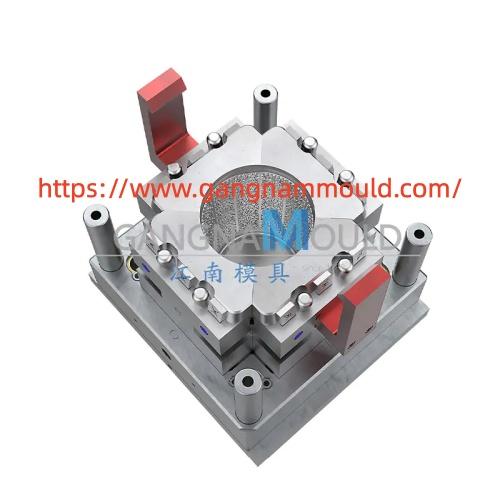
Trash Bin Mould design plays an important role in controlling production defects in plastic waste containers. Uneven surfaces, distorted walls, incomplete filling, and visible sink marks can affect product appearance, assembly, and manufacturing costs. Many of these problems involve several connected factors, including product geometry, material behavior, cooling arrangements, and tooling construction. By reviewing these elements before manufacturing begins, buyers and engineers can identify potential risks and establish clearer requirements for the finished product.
Wall thickness is one of the first details worth reviewing. Large differences between thick and thin sections can cause uneven cooling and shrinkage, leading to warping or depressions on visible surfaces. Simply increasing the thickness of the entire container may increase material consumption without addressing the underlying issue. A more practical approach is to assess the required capacity, expected loads, resin properties, and overall dimensions before deciding how the walls should be structured. Consistent geometry can make production easier to manage.
The placement of reinforcement ribs also requires attention. Ribs can add stiffness to large panels and help maintain the intended shape during handling. However, excessive thickness around rib intersections may create sink marks on the opposite surface. Poorly positioned reinforcement can also affect material flow and cooling. Engineers should consider rib dimensions, spacing, and connection points during the design review. When additional rigidity is needed, adjustments to the structural layout may be more appropriate than increasing wall thickness throughout the product.
Cooling is another important part of tooling development. Plastic does not solidify at the same rate in every region, particularly when the design contains thick corners, reinforced bases, or uneven wall sections. If one side cools faster than another, shrinkage differences may cause the finished container to bend or twist. Cooling channels should be arranged according to the product geometry, with particular attention to areas that retain heat. During trial production, engineers can evaluate dimensional results and adjust the cooling arrangement when necessary.
Gate placement affects how molten plastic enters and fills the cavity. An unsuitable location may create long flow paths, visible flow marks, or weld lines where separate streams meet. These effects can become noticeable on broad side panels or near structural features. The gate should be positioned with consideration for the required appearance, filling behavior, and functional strength of the finished component. Buyers should identify cosmetic surfaces and important load bearing areas before the tooling layout is finalized.
Venting deserves similar attention. Air inside the cavity needs a suitable path to escape as plastic enters. Insufficient venting can contribute to incomplete filling, burn marks, or weak areas around the ends of flow paths. The location and condition of vents should be considered during engineering and checked during production trials. Regular cleaning is also important because accumulated residue can interfere with air evacuation over time. Proper venting design, combined with suitable processing conditions, can help reduce recurring filling problems.
The release system can influence both surface quality and dimensional accuracy. If a large container remains attached to the core during opening, uneven ejection forces may cause scratches, bending, or localized stress. Appropriate draft angles help the part separate from the mold, while correctly positioned ejector components distribute release forces across suitable areas. Deep walls and textured surfaces may need additional consideration. Reviewing these features before machining begins can help reduce the need for later modifications.
Material selection and processing conditions should be evaluated together. Different resin grades have different flow characteristics, shrinkage behavior, and temperature requirements. A design that works with one material may require adjustments when another grade is introduced. Buyers should communicate the intended use, expected service conditions, color requirements, and any recycled material specifications before production planning. During trial runs, the manufacturer can review filling behavior, cooling time, surface appearance, and dimensional measurements to determine whether further adjustments are needed.
A structured inspection process helps identify problems before full production proceeds. Initial samples should be checked for overall dimensions, wall consistency, surface defects, lid compatibility, and other features relevant to the application. If the product includes wheels, hinges, handles, or other accessories, their fit should also be assessed. Recording inspection results makes it easier to compare samples after revisions and confirm whether agreed requirements have been met.
Buyers should also discuss maintenance and production support when selecting a tooling manufacturer. Parting surfaces, cooling passages, ejector components, and moving mechanisms may require periodic inspection. A maintenance plan should explain which areas need attention, how wear will be identified, and how replacement components can be obtained. These arrangements help production teams prepare for routine servicing and respond to changes in product quality.
For businesses developing custom waste containers, Gangnammould offers a starting point for discussing product drawings, tooling structure, material requirements, and manufacturing plans. Buyers can visit https://www.gangnammould.com/ to review the company website and prepare their design files, dimensional specifications, estimated order quantities, and application details for a project inquiry. Clear communication and a structured design review can help both parties address potential production issues early and develop a tooling solution suited to the intended product.

 English
 Arabic
 French
 Spanish
 Portuguese
 Deutsch
 Turkish
 Dutch
 Italiano
 Russian
 Romaian
 Portuguese (Brazil)
