


Are Zhiguang Industrial Plastic Pallets Suitable for Your Supply Chain
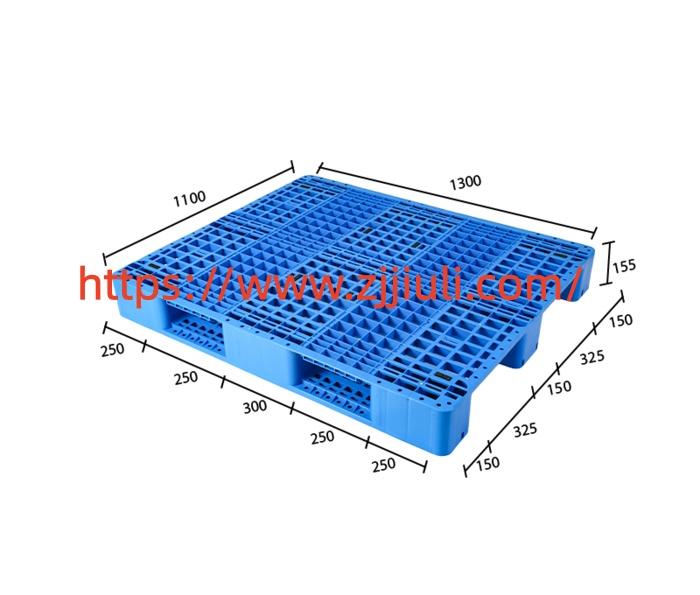
Industrial Plastic Pallets are an important consideration for businesses planning warehouse upgrades, expanding distribution networks, or improving the movement of goods between production and delivery points. Before placing an order, buyers need to look beyond the quoted price and examine how each design fits their daily operations. Dimensions, load requirements, storage conditions, handling equipment, and delivery arrangements all influence whether a product will work well in a particular facility. A clear purchasing checklist helps reduce uncertainty and makes communication with manufacturers more productive.
One practical starting point is to identify the type of goods that will be carried. Packaged food, electronic components, automotive parts, and household products can have very different handling requirements. Buyers should consider the weight of each load, the shape of the items, and how goods are arranged during movement. A stable platform should support the intended cargo without creating unnecessary difficulties during loading or unloading. If products are stacked, the purchasing team should also confirm the conditions under which stacking is permitted.
Dimensions deserve careful attention because even a small mismatch can affect warehouse efficiency. Measure the available rack spaces, aisle widths, loading areas, and transport equipment before selecting a model. The chosen size should work with existing forklifts, pallet trucks, conveyor systems, and storage arrangements where applicable. Businesses that use several facilities may also need to compare dimensional requirements across locations. Checking these details before ordering can help prevent handling problems and reduce the need for later adjustments.
Load capacity is another point that requires specific clarification. Buyers should distinguish between static load, dynamic load, and racking load rather than treating them as interchangeable figures. Static load generally refers to a stationary load, while dynamic load concerns movement by handling equipment. Racking load applies when a unit rests on designated supports. Actual performance depends on the design, support spacing, load distribution, temperature, and operating conditions. Ask the supplier for relevant specifications and test information, then compare them with the intended application. Avoid making purchasing decisions based on a single capacity figure without understanding how it was determined.
Material selection also affects service life and maintenance planning. Different resin formulations and manufacturing processes can influence rigidity, impact resistance, weight, and performance under changing temperatures. Buyers should explain whether the products will be stored indoors, used outdoors, exposed to moisture, or moved through areas with temperature fluctuations. Where hygiene is important, ask about surface design, drainage, cleaning procedures, and compatibility with the facility’s sanitation requirements. These details help purchasing teams evaluate suitability for their own working environments rather than relying on general product descriptions.
Storage and handling practices should be reviewed before the final model is selected. Some businesses need nestable designs to reduce empty-return volume, while others prefer stackable structures for organized storage. Rack systems may require specific entry directions, support positions, or reinforced construction. If the goods travel between suppliers, distribution centers, and retail locations, consider how easily staff can handle the units throughout the journey. Clear markings, identification labels, and compatible tracking methods may also support inventory management, depending on the operation.
Customization can be useful when standard dimensions or features do not match a buyer’s workflow. Options may include different colors for sorting, company identification, special dimensions, or design adjustments for particular handling systems. Before requesting modifications, prepare drawings, target quantities, operating conditions, and any relevant equipment specifications. This gives the manufacturer a clearer basis for assessing feasibility, tooling requirements, production schedules, and costs. Buyers should also ask whether a proposed change affects load performance, cleaning access, stacking behavior, or compatibility with existing equipment.
Supplier communication is equally important. Request a detailed quotation that identifies the model, dimensions, material information, load ratings, order quantity, packaging method, and estimated lead time. Confirm the sample approval process and ask how production consistency is checked. If the order will be delivered in several batches, establish inspection criteria and acceptable tolerances before production begins. Buyers should also clarify warranty terms, procedures for reporting defects, and the availability of replacement products. Written specifications help both parties maintain a shared understanding throughout the purchasing process.
Price comparisons should account for the complete operating cost, not only the initial purchase amount. Freight charges, storage requirements, cleaning needs, expected service life, and replacement frequency can all affect the budget. A lower quotation may not represent a better fit if the design requires changes to existing equipment or creates additional handling work. Likewise, extra features may not provide meaningful value when the application does not require them. Matching specifications to actual operating needs allows purchasing teams to make a more balanced decision.
For businesses preparing a new order, the next step is to organize the key requirements into a concise purchasing brief. Include intended cargo, load conditions, dimensions, handling methods, storage environment, customization preferences, and delivery expectations. Zhiguang can be considered as part of this sourcing process, with buyers reviewing available product details and discussing application requirements through the product page at https://www.zjjiuli.com/product/ Connecting these requirements with clear specifications can help businesses select suitable material handling equipment for their facilities and plan future purchasing needs with greater confidence.

 English
 Arabic
 French
 Portuguese
 Deutsch
 Turkish
 Dutch
 Italiano
 Russian
 Romaian
 Portuguese (Brazil)
 Greek
