


Is the Camera System at Your Counting Station Missing What Matters Most?
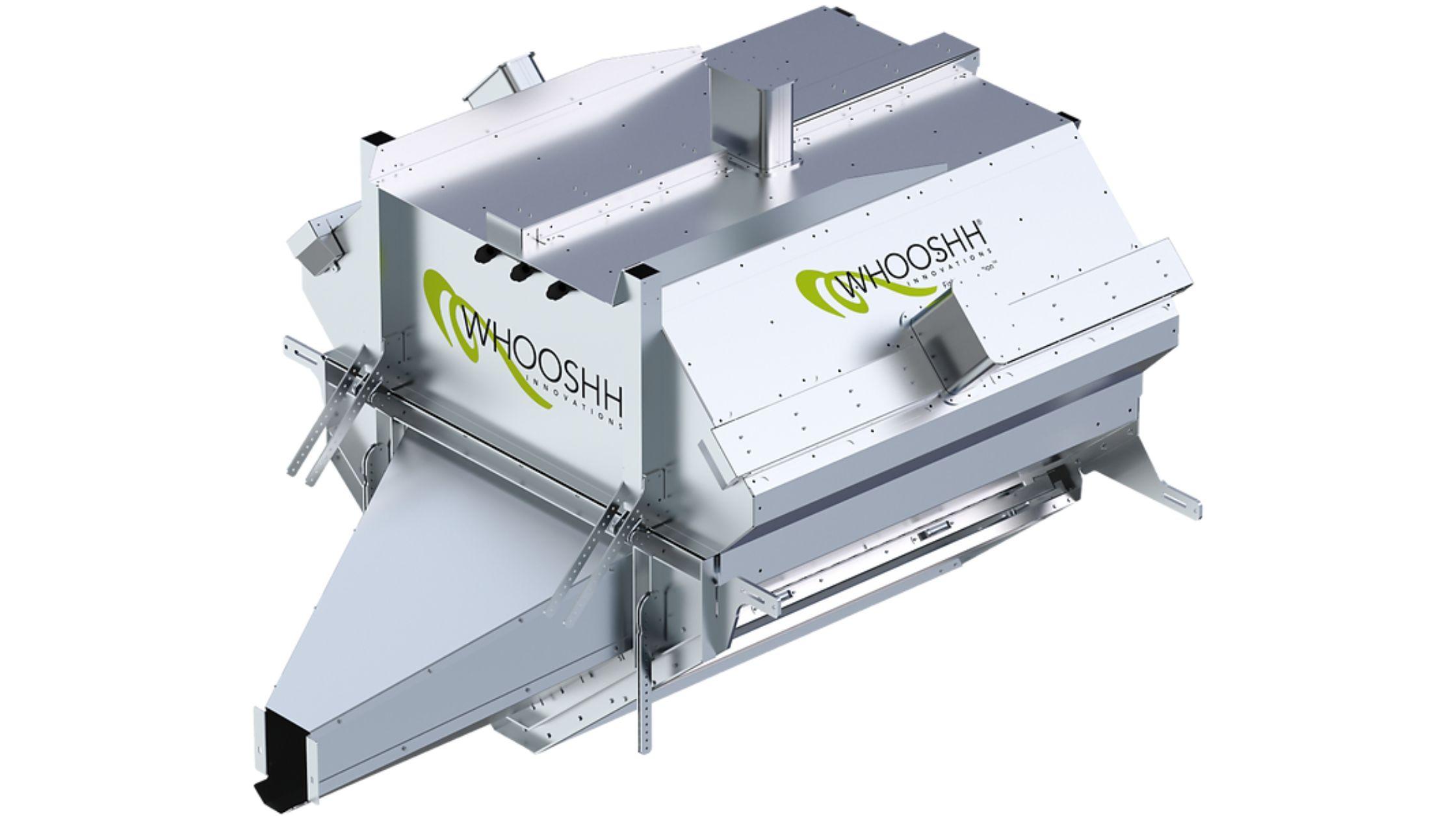
Camera-based fish monitoring has been part of the fisheries toolkit for long enough that managers sometimes assume all systems in that category are roughly equivalent. They're not. The performance difference between a basic underwater video setup and a purpose-built fish classification system is the difference between footage a technician reviews and data a management system acts on.
The best fish imaging equipment for operational fisheries monitoring doesn't just produce clear images. It produces a structured, classified, actionable data record for every fish, at the throughput rates that real migration events require, in the field conditions that river monitoring actually involves.
Whooshh Innovations' updated FishL Recognition system uses three cameras that capture nine images per fish as each individual passes through the imaging zone. The camera array is positioned within a V-shaped diffusion housing that creates consistent, even lighting on each fish regardless of the ambient conditions outside the unit. Machine learning algorithms process the nine-image set in milliseconds, delivering a classification that covers species, fork length, girth, adipose fin status, injury presence, and tag detection before the fish exits the other side.
The nine-image capture design gives the classification algorithm more data than a single-camera, single-frame approach provides. Fish arrive at the imaging zone at different speeds and orientations. Individual frames may be partially obstructed, motion-blurred, or angled in ways that make specific morphological features harder to resolve. Nine images taken from different angles across the same passage event allow the algorithm to classify from the clearest available data in the set rather than being constrained to a single frame.
What Are the Key Performance Requirements for Field Monitoring Equipment?
The gap between lab performance and field performance is where fish imaging systems most often disappoint. In controlled conditions with consistent lighting, still water, and fish moving at a predetermined speed and angle, almost any camera system can produce usable images. In a river passage facility with variable ambient light, fluctuating water clarity, and fish arriving in unpredictable orientations during a 3 AM migration peak, the requirements are considerably more demanding.
The FishL system's V-shaped diffusion housing addresses the lighting consistency problem by controlling the illumination environment within the imaging zone independently of ambient conditions outside it. That's the design element that maintains classification accuracy across a 24-hour operating cycle at a river site where the light environment changes continuously.
How Does the Data Output Differ from Conventional Camera Monitoring?
A conventional underwater camera at a fish counting station produces video footage. That footage requires a trained technician to review it, identify species, and log counts manually. The data quality depends on the observer's expertise and attention, the volume of footage being reviewed, and the time available for review before reporting deadlines.
The FishL system produces structured data directly from the imaging process. Every fish generates a record with species classification, measurements, origin status, injury assessment, tag detection, timestamp, and the nine image files attached for verification. That record doesn't require human review to become data. It's data from the moment it's created, accessible in near-real time by any authorized user.
Why Does This Matter More Under Current Environmental Conditions?
Climate-driven changes to migration timing and run composition are creating monitoring challenges that conventional camera review programs weren't designed to handle. When peak passage events shift to hours outside the normal sampling window, manual review programs miss them. When run composition changes within a season, annual survey data doesn't capture it.
Continuous automated monitoring that classifies every fish without gaps produces a record that matches the biological reality of what's happening in the river. For programs managing threatened or declining species, that accuracy has conservation consequences that compound over time. Whooshh Innovations provides the FishL system for both integrated PassagePortal deployment and as a standalone monitoring installation. Reach out to discuss your site.

 English
 Arabic
 French
 Spanish
 Portuguese
 Deutsch
 Dutch
 Italiano
 Russian
 Romaian
 Portuguese (Brazil)
 Greek
