


What Is the Ideal Itinerary for a Peru Tour Package?
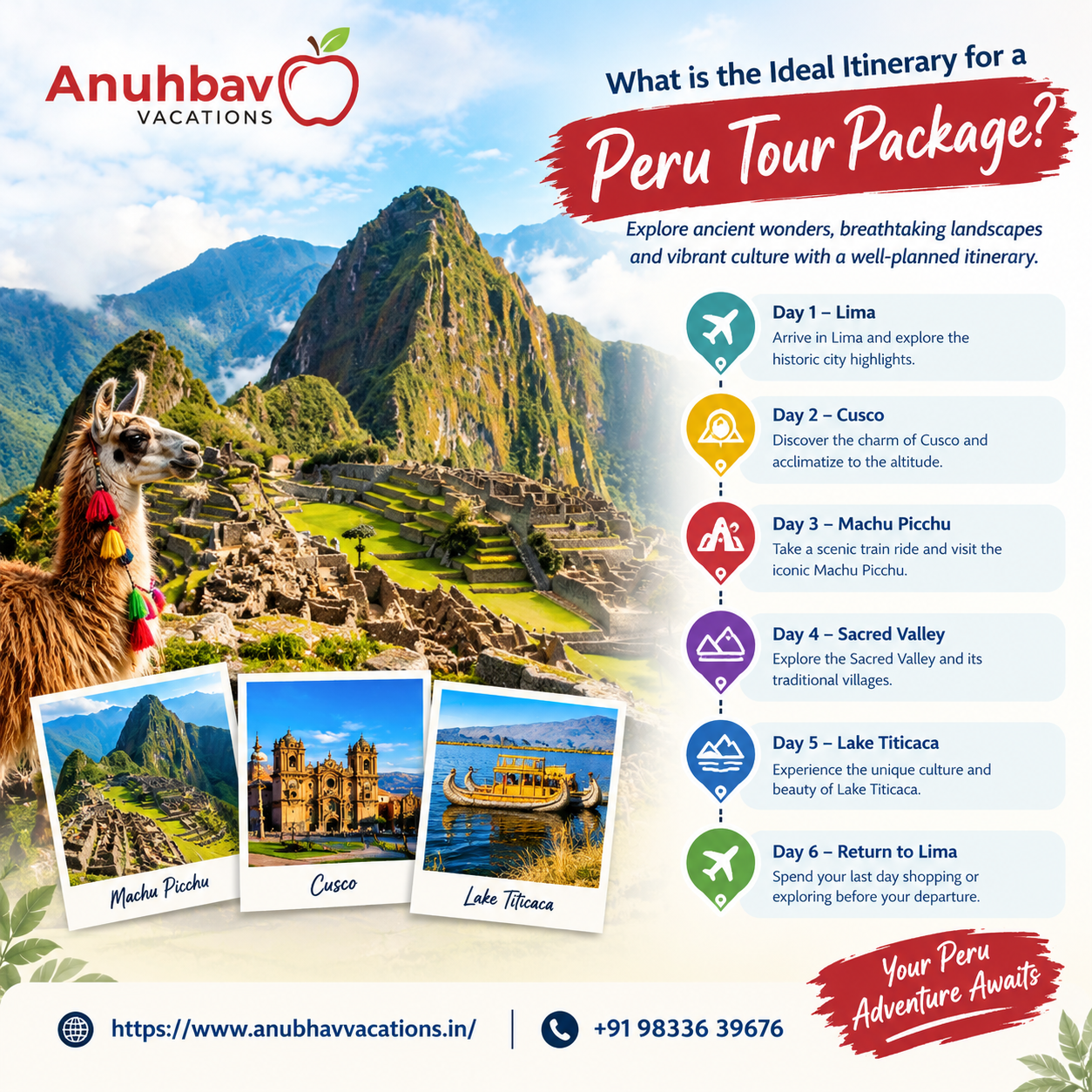
Introduction
Peru is a destination where ancient civilisations, dramatic mountain scenery, colourful local markets, and remarkable archaeological wonders come together to create an unforgettable travel experience. From exploring the historic streets of Lima to discovering the impressive ruins of Machu Picchu, every region offers something different for visitors. Planning the right itinerary is essential because Peru has diverse landscapes, high-altitude destinations, and several locations that require careful coordination of flights, trains, and road transfers. A well-planned Peru Tour Package can help travellers experience the country's major highlights without making the journey feel rushed. For first-time visitors, an itinerary of around 8 to 12 days is often a practical starting point, depending on the destinations included and the available travel time. This duration can allow travellers to explore Lima, discover Cusco and the Sacred Valley, visit Machu Picchu, and add another destination such as Lake Titicaca or the Amazon region if the schedule permits. Understanding how to organise each day can help travellers choose an itinerary that suits their interests, pace, and travel preferences.
1. How Many Days Are Ideal for Exploring Peru?
The ideal duration depends on how much of Peru you want to experience. Travellers interested mainly in historical landmarks and Inca heritage may be comfortable with a shorter itinerary, while those who want to explore different landscapes may benefit from a longer holiday.
Here is a general guide to planning the duration of your trip:
-
5–6 days: Suitable for a short visit covering Lima, Cusco, and Machu Picchu, although the schedule can feel tight.
-
7–9 days: Allows a more balanced introduction to Lima, Cusco, the Sacred Valley, and Machu Picchu.
-
10–12 days: Provides additional time for sightseeing, cultural experiences, and another destination.
-
13–15 days: Better suited to travellers who want to explore multiple regions, such as Lake Titicaca or the Amazon, without rushing between locations.
For most first-time visitors, an itinerary of 8 to 12 days offers a useful balance between sightseeing and relaxation. However, international flight schedules from India, travel connections, altitude adjustment, and personal interests should all be considered before finalising the duration.
2. Day 1: Arrive in Lima and Settle In
Lima is a common starting point for an international journey through Peru. The capital combines modern neighbourhoods, historic architecture, coastal scenery, and an internationally recognised food culture.
On arrival, travellers can transfer to their hotel, check in, and spend some time resting after the international journey. Depending on the arrival time, the first day may include a gentle walk through the surrounding neighbourhood or a relaxed meal at a local restaurant.
If time and energy permit, visitors can explore Miraflores, a popular district known for its parks, coastal views, restaurants, and shopping areas. The Malecón offers attractive views over the Pacific Ocean, while nearby streets provide opportunities to experience the city's contemporary atmosphere.
Travellers interested in history may prefer to visit Lima's historic centre on a later sightseeing day. The area contains important colonial-era buildings and public squares, including Plaza Mayor.
Suggested activities for Day 1:
-
Airport transfer and hotel check-in.
-
Rest after the international flight.
-
Explore the nearby neighbourhood if time permits.
-
Enjoy a relaxed dinner and prepare for the following day.
Avoid planning too many activities immediately after arrival. A flexible first day gives travellers time to recover from the flight and adjust to the local schedule.
3. Day 2: Discover Lima's History and Culture
A full day in Lima offers an introduction to Peru's history, architecture, and everyday life. The itinerary can combine the historic centre with selected museums, coastal neighbourhoods, and local food experiences.
Start with a visit to Plaza Mayor, one of the city's principal historic squares. Nearby landmarks include the Cathedral of Lima and other significant buildings associated with the city's colonial past. Guided sightseeing can help visitors understand how Lima developed and how its history connects with the wider story of Peru.
Depending on the tour plan, travellers may also visit the San Francisco Monastery, known for its historic architecture and catacombs. Visitors should check opening arrangements and any restrictions before travelling.
In the afternoon, Miraflores or Barranco can offer a different perspective on the capital. Barranco is known for its artistic atmosphere, colourful streets, and cultural spaces, while Miraflores provides coastal parks and a wide selection of cafés and restaurants.
Food lovers can use this day to discover Peruvian cuisine. Traditional dishes vary by region, and visitors can ask about ingredients and preparation methods when choosing meals. Travellers with dietary requirements should communicate them clearly.
This day creates a useful introduction to Peru before travelling towards the Andes.
4. Day 3: Travel to Cusco and Allow Time to Acclimatise
Cusco is one of the most important destinations on a Peruvian itinerary. Once the capital of the Inca Empire, the city is known for its archaeological heritage, colonial architecture, traditional markets, and mountain surroundings.
Travellers commonly reach Cusco by domestic flight from Lima, depending on the available schedule. After arrival, transfer to the hotel and allow sufficient time to rest.
Cusco lies at a high elevation, so it is important to take altitude adjustment seriously. Some visitors experience headache, dizziness, nausea, or unusual tiredness when they first arrive. The effects vary between individuals, and physical fitness does not guarantee protection from altitude sickness.
Keep the first day in Cusco relatively relaxed. If feeling well, visitors may take a gentle walk around the historic centre, enjoy the main square, or explore nearby shops without undertaking strenuous activity.
Helpful precautions include:
-
Follow a gradual sightseeing schedule.
-
Drink water regularly.
-
Avoid strenuous exercise immediately after arrival.
-
Eat lightly if feeling uncomfortable.
-
Seek medical advice if symptoms become concerning or worsen.
Travellers should discuss altitude-related concerns with a healthcare professional before departure, especially if they have existing medical conditions or are unsure whether high-altitude travel is suitable for them.
5. Day 4: Explore Cusco's Historic Landmarks
After allowing time to acclimatise, travellers can dedicate a full day to Cusco's cultural and historical attractions. The city offers an interesting combination of Inca foundations, Spanish colonial buildings, museums, and traditional streets.
Begin around the Plaza de Armas, the central square surrounded by historic architecture, restaurants, and shops. Nearby streets provide opportunities to see how the city's Inca and colonial histories intersect.
The Qorikancha, or Temple of the Sun, is another significant attraction associated with the Inca civilisation. The site illustrates the importance of religious and ceremonial architecture in the region's history.
Depending on the itinerary, a guided excursion may include nearby archaeological sites such as Sacsayhuamán, known for its enormous stone walls and commanding views over Cusco. Other sites around the city may also be included according to the available time and local arrangements.
Visitors can use the afternoon to explore San Pedro Market, browse handicrafts, or learn more about local ingredients and traditional products.
A guided visit is particularly useful for travellers who want context about the architecture, historical events, and cultural traditions behind the landmarks.
6. Day 5: Explore the Sacred Valley of the Incas
The Sacred Valley is an important part of many itineraries because it combines archaeological sites, traditional settlements, agricultural landscapes, and spectacular mountain views.
A full-day excursion can include selected locations such as Pisac, Ollantaytambo, or other communities along the valley. The exact route depends on the tour schedule and the amount of time available.
Pisac is known for its archaeological remains and traditional market. Visitors may find local textiles, handicrafts, souvenirs, and products made by regional artisans. The archaeological site also offers insight into Inca agricultural practices and settlement planning.
Ollantaytambo is another major highlight. Its impressive stone terraces and archaeological complex demonstrate the engineering achievements of the Inca civilisation. The town itself has historic streets and a distinctive layout that makes it an interesting place to explore.
The Sacred Valley can also provide a different pace from Cusco. Depending on the itinerary, travellers may spend the night in the valley before continuing towards Machu Picchu.
This arrangement can reduce unnecessary backtracking and create a more convenient sequence for the next stage of the journey.
7. Day 6: Visit Machu Picchu
Machu Picchu is often the highlight of a first visit to Peru. Set amid the Andes, the archaeological site is recognised for its remarkable stone construction, mountain setting, and historical significance.
Reaching Machu Picchu generally involves coordinated transport arrangements. Depending on the itinerary, travellers may take a train to Aguas Calientes and then use the designated transport service to reach the entrance area. The exact arrangements should be confirmed in advance.
Once at the site, visitors can explore the permitted routes and viewpoints according to their ticket and entry schedule. A knowledgeable guide can explain the site's history, architecture, agricultural terraces, and the theories surrounding its role in Inca society.
Travellers should keep several practical points in mind:
-
Book entry tickets and train arrangements well in advance when possible.
-
Carry identification and required booking confirmations.
-
Follow the designated visitor route and site regulations.
-
Wear comfortable footwear suitable for uneven surfaces.
-
Carry water and sun protection as appropriate.
-
Follow instructions regarding luggage and restricted items.
Access conditions, entry circuits, and permitted visiting times can change. Travellers should verify current arrangements before departure rather than relying on assumptions based on older itineraries.
After the visit, the group may return to Cusco or spend the night in Aguas Calientes, depending on the planned route.
8. Day 7: Return to Cusco and Enjoy a Flexible Day
A flexible day after visiting Machu Picchu can make the overall itinerary more comfortable. Travellers may return to Cusco, explore attractions they missed earlier, or enjoy some free time.
Those interested in culture can visit local museums, browse artisan shops, or attend an organised demonstration of traditional crafts if available. Others may prefer a relaxed meal and a walk through the city's historic streets.
Keeping this day relatively open is useful because train timings, road transfers, and the physical demands of the previous excursion can influence how much energy travellers have.
If the itinerary includes a return to Cusco on the same day as the Machu Picchu visit, confirm the timing carefully. Travellers should have a clear understanding of the transport connections and what happens if schedules change.
For a shorter holiday, this may be the final full day in Cusco before travelling back to Lima. For a longer trip, it can act as a transition before visiting another region.
9. Day 8: Add a Destination or Enjoy More of Cusco
The eighth day can be adapted to suit different interests. Travellers who want to focus on Inca heritage may spend additional time around Cusco and the Sacred Valley. Those who prefer natural scenery may consider adding a separate destination, provided the transport and altitude requirements are suitable.
One popular option is the Rainbow Mountain area. The landscape is known for its colourful mineral layers, but the excursion can involve a demanding journey and significant elevation. It should not be treated as an easy activity for every traveller. Weather, road conditions, individual health, and the altitude can all affect the experience.
Another option is to explore more of the Sacred Valley, including local communities and archaeological sites not covered earlier. This can be a better choice for travellers who prefer a less strenuous schedule.
If the trip includes Rainbow Mountain, review the starting time, expected walking distance, elevation, and transport arrangements beforehand. Travellers who are not comfortable with high-altitude activity can choose a gentler alternative.
A well-designed itinerary should leave room for different ability levels rather than treating every excursion as essential.
10. Days 9–10: Extend the Journey to Lake Titicaca
For travellers with additional time, Lake Titicaca can provide a different cultural and geographical experience. Located in the Andean region near the border between Peru and Bolivia, it is known for its high-altitude setting and communities with longstanding cultural traditions.
Puno is a common base for exploring the Peruvian side of the lake. Depending on the itinerary, visitors may take a boat excursion to selected islands and learn about local livelihoods, traditions, and ways of life.
The Uros floating islands are among the best-known visitor attractions in the region. Travellers should approach visits respectfully, follow local guidance, and understand that community life is more complex than a brief excursion can show.
Reaching Puno from Cusco can require substantial travel time. Some itineraries use road transport, while others may involve alternative connections depending on schedules. Travellers should account for the journey rather than trying to fit the region into an already crowded schedule.
Lake Titicaca is also at high altitude, so visitors should consider how they have responded to earlier high-altitude destinations. Anyone experiencing significant symptoms should prioritise their health over continuing with optional excursions.
11. Days 9–12: Consider an Amazon Rainforest Experience
Travellers who are interested in wildlife and tropical landscapes may consider extending their holiday to the Peruvian Amazon. This offers a striking contrast with the highlands and historic cities.
Depending on the selected region and travel connections, an Amazon extension may include guided nature walks, boat excursions, wildlife observation, and opportunities to learn about rainforest ecosystems.
Accommodation can range from city hotels to rainforest lodges reached by road or boat. Facilities and access vary, so travellers should review the lodge's location, included activities, meals, and transport arrangements before confirming the extension.
Wildlife sightings cannot be guaranteed, and responsible operators should prioritise conservation and respect for local communities. Travellers should follow guide instructions, avoid disturbing animals, and use suitable clothing and insect protection.
An Amazon visit usually requires additional planning and travel time. It is best suited to a longer itinerary rather than being squeezed into a short trip that already includes multiple destinations.
12. Final Day: Return to Lima and Depart
The final day should be planned around the international departure schedule. Travellers may need to take a domestic flight back to Lima before connecting with an international service to India.
Where possible, avoid scheduling a tight connection between separate tickets. Delays, weather, and operational changes can affect domestic flights, so allowing an adequate buffer can reduce the risk of missing the onward journey.
If the flight from Lima departs late in the day, the itinerary may allow time for a relaxed breakfast or a short activity. However, sightseeing should not interfere with airport arrival requirements or transfer arrangements.
Before leaving the hotel, check passports, travel documents, personal belongings, and any items stored at reception. Keep essential medicines and important documents in hand luggage, subject to airline rules.
A smooth departure plan is an important part of a successful holiday because it allows travellers to finish the journey without unnecessary stress.
13. How to Choose the Right Itinerary for Your Travel Style?
The ideal schedule is not necessarily the one that includes the greatest number of destinations. It is the one that matches your interests, available time, physical comfort, and preferred pace of travel.
Consider these factors when choosing between different Peru Tour Packages:
For history and archaeology enthusiasts
Prioritise Lima's historic centre, Cusco, the Sacred Valley, and Machu Picchu. A guided itinerary can provide a deeper understanding of Inca engineering, colonial history, and local traditions.
For nature lovers
Look for a longer itinerary that includes mountain scenery, the Sacred Valley, or an Amazon extension. Check the physical demands and weather conditions associated with each excursion.
For families
Choose a schedule with manageable travel days, comfortable accommodation, and enough free time. Avoid adding too many long transfers or strenuous high-altitude activities without considering the needs of every family member.
For older travellers
Prioritise rest periods, suitable room arrangements, reliable transfers, and excursions that match individual mobility and health requirements. Ask about walking distances, stairs, uneven surfaces, and altitude before booking.
For travellers with limited time
Focus on Lima, Cusco, the Sacred Valley, and Machu Picchu. A shorter route can still be rewarding when it is carefully organised and does not require rushing through every stop.
14. Practical Tips for Planning a Peru Holiday
A few practical decisions can make the journey more comfortable and easier to manage.
Book major attractions early. Machu Picchu entry and train services may have limited availability, particularly during popular travel periods. Confirm arrangements before finalising the rest of the itinerary.
Plan for altitude. Cusco, Lake Titicaca, and some mountain excursions are at high elevations. Build in time to acclimatise and consult a healthcare professional if you have concerns.
Pack for changing weather. Peru's climate varies by region and season. Lightweight clothing, warm layers, a waterproof jacket, comfortable walking shoes, and sun protection can be useful.
Check domestic transport connections. Distances, mountain roads, and flight schedules can affect travel times. Allow sufficient time between connections and avoid overloading the schedule.
Respect local communities. Ask permission before photographing people, follow local guidance, and support responsible tourism practices.
Verify inclusions. Confirm hotel arrangements, meals, transfers, guided excursions, entrance tickets, and any optional activities in writing. The details can differ between operators and itineraries.
Conclusion
The ideal itinerary for a Peru Tour Package depends on the amount of time available and the experiences you want from your holiday. For first-time visitors, an 8-to-12-day schedule covering Lima, Cusco, the Sacred Valley, and Machu Picchu offers a rewarding introduction to the country's history and landscapes. Travellers with additional days can consider Lake Titicaca or the Amazon rainforest, while those with limited time may prefer to focus on the main cultural highlights.
When planning the journey, remember to allow time for altitude adjustment, confirm major attraction bookings, and account for travel connections between regions. A balanced itinerary should include sightseeing as well as opportunities to rest, explore local culture, and enjoy each destination at a comfortable pace. Careful preparation helps travellers experience Peru's remarkable heritage and natural beauty while making the journey more organised and enjoyable.
Frequently Asked Questions (FAQs)
1. How many days are ideal for Peru Tour Packages From India?
Peru Tour Packages From India are often planned for around 8 to 12 days for a balanced first visit, including Lima, Cusco, the Sacred Valley, and Machu Picchu. Travellers who want to add Lake Titicaca or the Amazon rainforest should consider a longer itinerary to allow enough time for transfers and sightseeing.
2. Which destinations should be included in a first Peru itinerary?
A first-time itinerary should ideally include Lima, Cusco, the Sacred Valley, and Machu Picchu. These destinations offer a combination of historic landmarks, Inca heritage, local culture, and spectacular scenery. Travellers with extra time can consider an additional region.
3. Is it necessary to spend time acclimatising in Cusco?
Yes, allowing time to adjust to Cusco's high altitude is a sensible precaution. Some travellers experience symptoms such as headaches, dizziness, or nausea. A gradual schedule, adequate rest, and medical guidance when needed can help travellers manage altitude-related concerns.
4. Can Lake Titicaca or the Amazon be added to a Peru itinerary?
Yes, either destination may be added if sufficient time is available. Lake Titicaca offers high-altitude lake scenery and cultural experiences, while the Amazon provides rainforest landscapes and wildlife excursions. Both require additional transport planning and may be better suited to longer holidays.
5. What is the best way to plan transport between Peru's main destinations?
Travellers commonly combine domestic flights, road transfers, and train journeys, depending on the route. Book major connections in advance, allow enough time between services, and confirm transfer arrangements with the tour operator. This is especially important when visiting Machu Picchu or connecting to an international departure.
Read Our Previous Blog --------------->What type of hotels are included in Peru Group Tour Packages From India?

 English
 Arabic
 French
 Spanish
 Portuguese
 Deutsch
 Turkish
 Dutch
 Italiano
 Romaian
 Portuguese (Brazil)
 Greek
