


Can Stronger Brand Differentiation Help Companies Win in India’s Packaged Coconut Water Market?
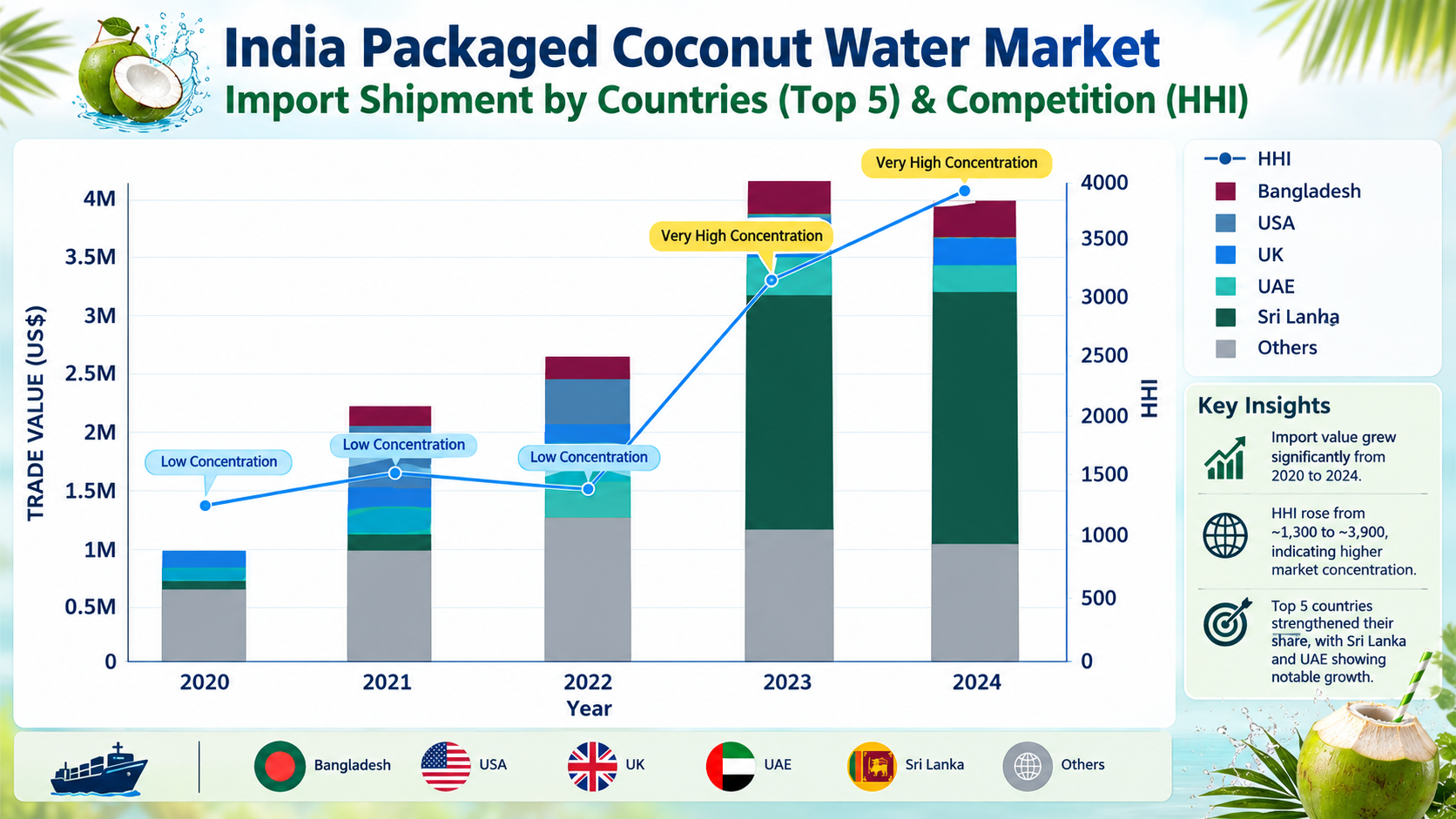
The India Packaged Coconut Water Market presents opportunities for beverage companies, but entering the category is only the first step toward building a successful business. Consumers have access to fresh coconut water, fruit juices, carbonated beverages, flavoured water, and several other refreshment options. Brands must therefore give customers a clear reason to choose their products. Product quality, transparent communication, appropriate pricing, convenient packaging, and dependable availability can all contribute to meaningful differentiation.
Why Is Brand Identity Important?
A brand's identity shapes how consumers recognise and understand a product. In a crowded beverage aisle, shoppers may make quick decisions based on familiarity, packaging, price, and previous experiences.
For packaged coconut water, brand positioning should communicate a clear and credible value proposition. Some brands may focus on simplicity and ingredient transparency, while others may emphasise convenience, distinctive packaging, or a particular consumption occasion.
An effective positioning strategy should answer three questions:
-
Who is the intended customer?
-
What specific benefit makes the product relevant to that customer?
-
What evidence supports the brand's promise?
These questions help companies avoid generic marketing that could apply to almost any beverage.
How Can Product Quality Create Loyalty?
Brand awareness may encourage a first purchase, but consistent quality is crucial for repeat demand. Consumers who experience unexpected flavour changes, damaged packaging, or unclear ingredient information may hesitate to buy again.
Manufacturers should establish quality controls covering raw materials, processing, packaging, and distribution. They should also make product information easy to understand and respond constructively to customer concerns.
Important priorities include consistent taste, accurate nutritional information, reliable packaging, and clear storage instructions. Product claims should be supported by evidence, particularly when they refer to nutrition, organic sourcing, or processing.
Customer loyalty is more likely to develop when a product repeatedly meets expectations than when a brand relies exclusively on advertising.
Can Pricing Become a Competitive Advantage?
Pricing influences both initial trial and long-term purchasing behaviour. Some consumers may compare packaged coconut water with fresh coconut water, while others may compare it with juices or other ready-to-drink beverages.
Brands need to understand the alternatives customers consider before setting prices. A premium price may be justified by identifiable benefits, but consumers must perceive sufficient value to accept it.
Businesses can examine several pricing approaches:
-
Entry-level packs: Smaller formats may reduce the initial spending required to try a product.
-
Multipacks: Larger purchases may provide convenience and a different value proposition for regular customers.
-
Premium offerings: Higher-priced products need credible differentiation and consistent quality.
-
Promotional pricing: Discounts can encourage trial, but excessive reliance on promotions may weaken full-price demand.
Companies should assess profitability after accounting for production, packaging, distribution, retailer margins, and marketing expenses.
How Can Digital Marketing Build Recognition?
Digital platforms allow beverage brands to explain product features, share serving suggestions, and engage with consumers directly. Social media, creator partnerships, search advertising, and online retail listings can support different stages of the purchasing journey.
Content should provide genuine value. Clear explanations of ingredients, packaging, sourcing, and storage may be more useful than repeated promotional claims.
Brands can also use customer feedback to identify recurring questions or dissatisfaction. Marketing teams should distinguish between engagement metrics, such as views and likes, and commercial indicators, such as conversions and repeat purchases.
Partnerships with fitness communities, food creators, or lifestyle publishers should be selected according to audience relevance and the credibility of the content.
Why Does Retail Visibility Matter?
Consumers cannot easily choose a product they rarely encounter. Strong retail visibility can improve discovery and make repeat purchases more convenient.
Brands should work with retailers to maintain appropriate stock levels, provide clear shelf communication, and select promotional activities that fit the store's audience. Online retailers require equally accurate listings and reliable fulfilment.
Distribution expansion should be measured against actual performance. Entering additional outlets may increase reach, but excessive inventory or weak sales per outlet can reduce profitability.
How Can Smaller Brands Compete?
Smaller brands may not have the advertising budgets of established beverage companies, but they can focus on a defined audience and execute consistently.
Potential approaches include serving a specific consumption occasion, building relationships with selected retailers, gathering direct consumer feedback, and using targeted digital campaigns.
Smaller companies should avoid expanding too quickly before confirming repeat demand. Focused distribution and disciplined product development can be more valuable than a large portfolio with limited sales.
What Lies Ahead for Brand Competition?
Competition is likely to make differentiation increasingly important as consumers compare more beverage options. Companies that combine an identifiable brand promise with consistent quality, credible claims, suitable pricing, and reliable availability may be better positioned to build lasting relationships.
Conclusion
Winning in India's packaged coconut water category requires more than attractive branding. Companies need a complete strategy that connects consumer needs with product quality, pricing, communication, and distribution. The brands that consistently deliver on their promises will have stronger foundations for sustainable growth.
Who We Are
About 6Wresearch
About 6Wresearch: 6Wresearch is a commercial strategy and growth advisory firm founded in 2011 and headquartered in New Delhi, India, with partners across Southeast Asia and the Middle East & Africa. The firm has delivered over 20,000 commercial engagements for over 2,000 organizations, including Fortune 500 companies, government agencies, and multilateral institutions such as the World Bank and the Asian Development Bank. Backed by proprietary market research and advanced analytics, 6Wresearch combines sector expertise with data-driven intelligence to help organizations navigate market complexity and drive sustainable growth. These capabilities explain why organizations trust 6Wresearch Global Market Research & Consulting Firm for reliable commercial insights and confident decision-making.
Our Proprietary Platform: 6W Export GTM
6W Export GTM is 6Wresearch's proprietary trade intelligence and go-to-market platform, built on UN Comtrade data and enhanced with 6Wresearch's in-house analytical and simulation models, including system dynamics-based forecasting. Unlike broad, sector-level market sizing tools, 6W Export GTM operates at the individual product level down to specific HS codes and micro-segments to identify precise, actionable export opportunities by country and product pair, including markets where trade currently does not exist. This granular, simulation-driven approach allows 6W Export GTM to surface opportunities that sector-wide analysis typically misses, positioning it among a small number of platforms globally offering this depth of product-and-country-specific export intelligence.

 English
 Arabic
 French
 Spanish
 Portuguese
 Deutsch
 Dutch
 Italiano
 Russian
 Romaian
 Portuguese (Brazil)
 Greek
