


Why Work with relayfactory on Your Next Control Project?
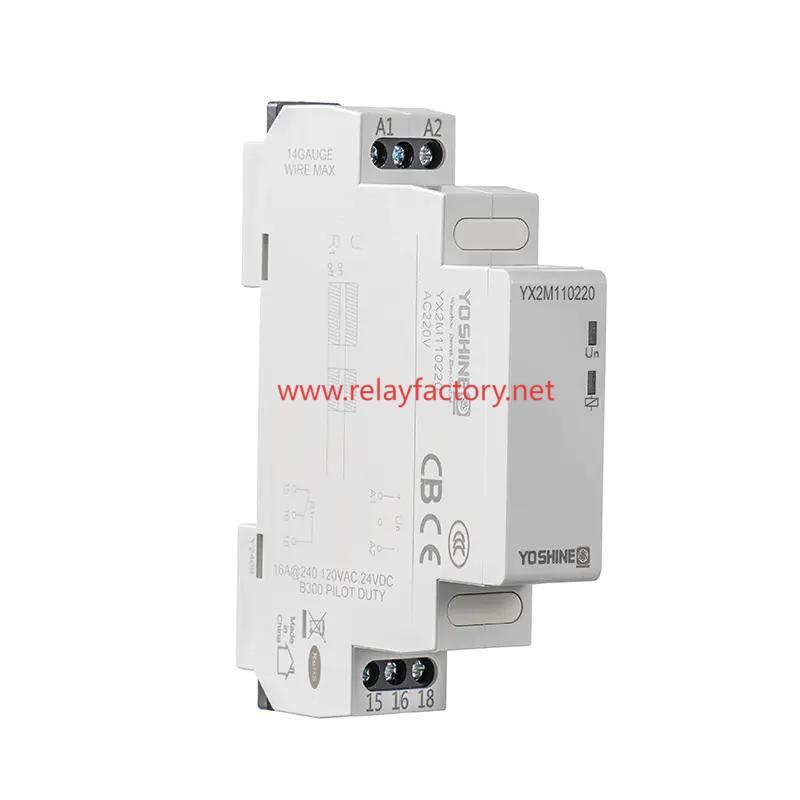
Time Relay Producer selection involves more than comparing catalogue prices or checking a few product parameters. Buyers need to understand how a component will fit their equipment, how the manufacturer handles technical requirements, and what information is available before an order is confirmed. For OEM companies, control panel builders, and industrial equipment purchasers, a practical evaluation process can help align product specifications with production and purchasing needs.
Begin with a Clear Project Brief
Before contacting a manufacturer, buyers should prepare a short description of the intended application. Include the equipment type, control sequence, electrical supply, installation conditions, and expected operating behavior. This information helps the supplier understand the project rather than relying on assumptions.
For example, a packaging machine may need a delay between two operating stages, while a ventilation control panel may require a different switching sequence. Explain what should happen when power is applied, when a signal is received, and when the required interval ends.
It is also useful to provide an estimated order quantity and target schedule. These details give the production team a clearer picture of the project scope and help buyers receive more relevant responses during the initial discussion.
Match the Product Configuration to the Equipment
Technical compatibility should be checked before purchasing decisions are finalized. Buyers can request a datasheet and review the specifications that directly affect system integration.
Important details include:
Supply requirements: Confirm the rated voltage and whether the intended power source is AC or DC.
Switching configuration: Check the contact arrangement and the electrical load it is designed to handle.
Adjustment options: Verify the available settings and whether they match the control sequence.
Installation format: Review dimensions, terminal positions, mounting style, and wiring access.
Operating conditions: Consider ambient temperature, vibration, humidity, and enclosure requirements.
These factors should be considered together. A component may have a suitable adjustment range but still be incompatible with the available installation space or circuit configuration.
Buyers should also clarify any specifications that are not clearly stated in the product documentation. Written confirmation can help engineering and purchasing teams work from the same technical reference.
Examine the Manufacturer’s Production Process
Manufacturing capability is not simply a question of whether a company can assemble the requested product. Buyers should ask how production requirements are reviewed, how assembly procedures are managed, and how the finished goods are checked against agreed specifications.
Questions may cover incoming component inspection, assembly controls, functional testing, final inspection, packaging, and product identification. The relevant procedures depend on the product design and the customer's requirements, so it is useful to discuss the actual process rather than relying on general descriptions.
Buyers can also ask how changes are managed between repeat orders. If a component specification, material, label, or production method changes, the parties should agree on how the change will be communicated and approved.
For ongoing supply relationships, these arrangements help maintain a shared understanding of the product being ordered and the conditions it must meet.
Request Samples and Confirm Test Requirements
When a product is intended for a particular machine or electrical system, sample evaluation can provide useful information before a larger order. Buyers should check the component under representative operating conditions and verify that its settings, connections, and switching behavior fit the application.
Before requesting samples, explain what needs to be evaluated. Depending on the project, this may include electrical compatibility, mounting, control sequence, adjustment methods, or operation with connected equipment.
Both sides should also clarify the inspection criteria for production orders. Buyers may need agreed checks for dimensions, electrical characteristics, functional behavior, labels, or packaging. Recording these requirements in advance creates a reference for acceptance and helps reduce uncertainty when the goods arrive.
If certificates or compliance documents are necessary for the target market, confirm their applicability to the specific model being purchased.
Review Customization and Order Terms
Standard products may suit many applications, but some projects involve special installation or control requirements. Buyers should ask which adjustments are available and provide drawings, samples, or written specifications where possible.
Potential requests may involve terminal arrangements, housing dimensions, product labels, packaging, or other agreed details. The manufacturer should clarify which changes are feasible and whether they affect development work, sample approval, pricing, or production scheduling.
Commercial terms also deserve a careful review. Compare the quoted model, included accessories, minimum order quantity, payment conditions, sample charges, packaging scope, and shipping arrangements. Confirm when the stated production lead period begins and whether technical approval is required before manufacturing can proceed.
A quotation becomes easier to assess when every supplier is responding to the same set of requirements.
Consider Communication and Future Supply Needs
A purchasing relationship may involve more than one order. Buyers should consider how the manufacturer handles technical questions, communicates progress, and records changes during the project.
For repeat purchases, discuss how product specifications will be referenced, how new orders will be confirmed, and how questions about delivered goods should be reported. Clear communication can be particularly useful when engineers, purchasing staff, and production teams are working across different locations.relayfactory provides a point of contact for buyers reviewing product configurations and electrical control requirements. Preparing the application description, relevant electrical parameters, expected quantity, installation details, and any requested modifications can make the initial discussion more focused. Buyers can visit https://www.relayfactory.net/ to review product information and discuss requirements for their upcoming projects.

 English
 Arabic
 French
 Spanish
 Portuguese
 Deutsch
 Turkish
 Dutch
 Italiano
 Russian
 Romaian
 Portuguese (Brazil)
