


How to Identify and Address a Loose Garage Door Wire
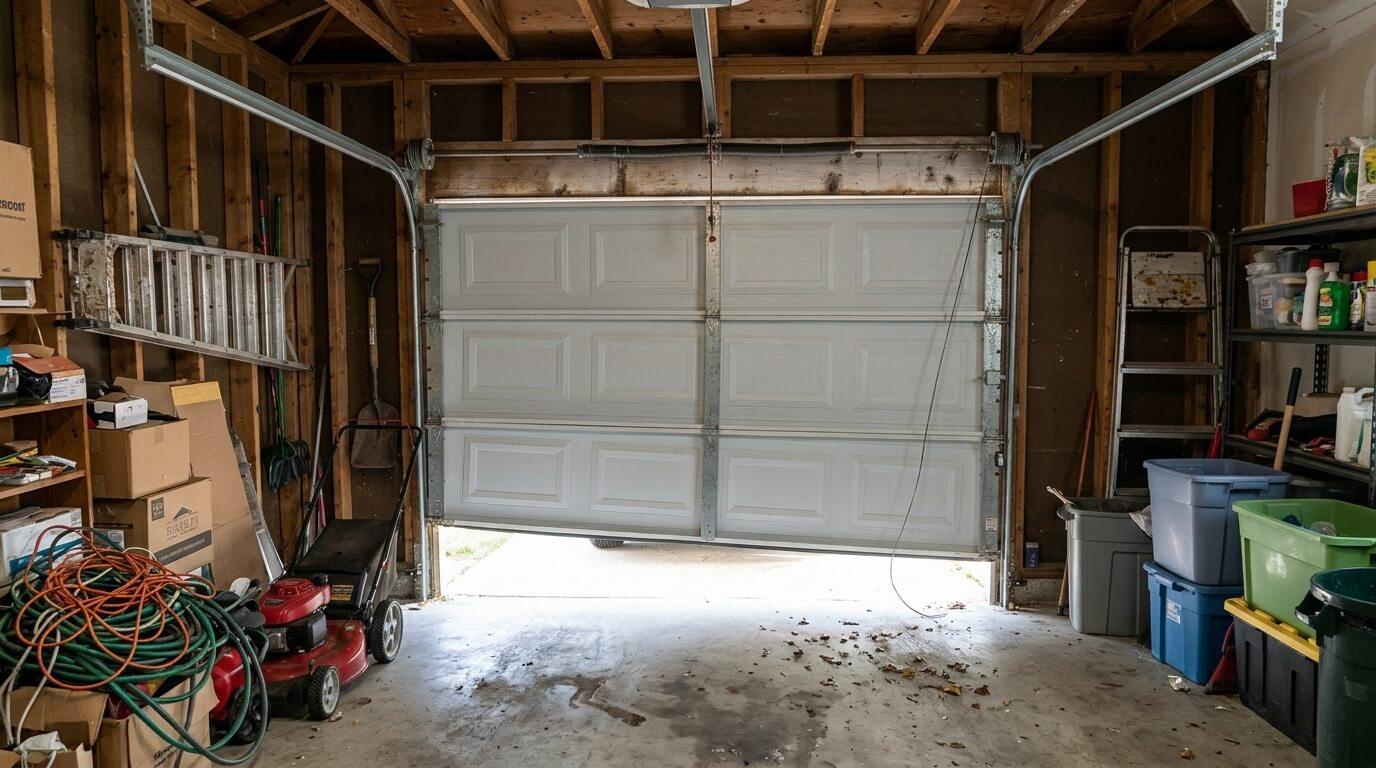
"Wire" is a catch-all word in the garage. Homeowners use it for the steel lift cables beside the door, for the thin wires that run to the safety sensors, and for the cord that powers the opener. When someone says a garage door wire is loose, those are three very different problems with three very different levels of risk. Sorting out which one you're dealing with is the first and most important step.
This guide helps homeowners and property managers in The Woodlands work out what's actually loose, what it means, which situations are reasonable to handle yourself, and which ones should be left to a professional. If you've noticed a garage door wire loose near a bottom corner of the door, along the track, or by the sensors, the sections below will help you respond safely.
First, Figure Out Which "Wire" You Mean
|
What People Call It |
What It Actually Is |
Where You See It |
Risk Level |
|
Lift cable |
Braided steel cable carrying the door's weight |
Runs from the bottom corner bracket up to the spring system |
High: connected to a high-tension system |
|
Safety sensor wire |
Thin low-voltage wire to the photo-eye sensors |
Runs along the wall near the floor, from each sensor to the opener |
Low to moderate: electrical, but low voltage |
|
Wall control wire |
Thin wire to the wall button |
Runs from the wall button to the opener |
Low |
|
Opener power cord |
Standard cord plugged into an outlet |
Near the ceiling-mounted opener |
Moderate: household electricity |
|
Wiring inside the opener |
Internal connections on the logic board |
Inside the motor housing |
Not for DIY |
If the thing that looks loose is thick, braided steel and attached near the bottom of the door, it's a lift cable. Treat it with serious caution. If it's thin, insulated, and runs to a small sensor, it's low-voltage wiring and is a different, much more approachable issue.
Loose Lift Cables: What to Look For
A lift cable that's loose, slack, or out of place usually shows up in one of these ways:
-
A cable hanging down or lying on the floor
-
One side of the door sitting lower than the other
-
A cable that looks slack compared with its partner
-
A cable that has left its drum at the top of the door or jumped a pulley
-
A door that jerks, binds, or won't lift evenly
-
A loud bang just before the door changed
-
Fraying, kinks, or rust along the cable
Observe from a safe distance. Don't touch cables, springs, drums, or the bottom brackets. They're part of a high-tension system.
Why Lift Cables Come Loose
A lift cable doesn't usually loosen on its own. Something is changing:
-
A broken or weakened spring that leaves the cable slack
-
Uneven spring tension between the two sides
-
A drum that's loose, worn, or shifted on the shaft
-
A door that bound or stopped while the shaft kept turning
-
A loose or damaged bottom bracket
-
Cable wear, fraying, or rust
-
Track or roller misalignment
-
A bent shaft or worn bearing plate
Because several of these can overlap, a loose lift cable is a symptom to investigate, not a part to simply push back into place.
What to Do About a Loose Lift Cable
This is not a DIY repair. The reasons are practical:
-
The springs hold stored energy, and the cable, drum, and shaft are part of that system
-
Rewinding and balancing need specialized tools and procedures
-
A cable seated incorrectly can damage the drum, door, and opener
-
Without finding the cause, the problem often returns
-
A door with a loose cable can be unstable
If you suspect a loose lift cable:
-
Stop using the door, both with the opener and by hand
-
Keep people, pets, and vehicles clear of the door's path
-
Don't touch cables, springs, drums, or brackets
-
Don't try to force the door up, down, or level
-
Take notes and photos from a safe distance, including which side is affected and anything you heard
-
Call a professional
Loose Sensor Wires: A Different Story
If the "wire" you're worried about is thin and runs to a small sensor near the floor, you're likely dealing with the safety sensor system. These sensors send a beam across the door's path. If the beam is interrupted, the door won't close or will reverse. A loose or damaged sensor wire can cause that to happen unexpectedly.
Signs of a Loose or Damaged Sensor Wire
-
Indicator lights that are off, flickering, or blinking
-
A door that won't close, or reverses right away, even though nothing is in the way
-
A sensor that works only when you wiggle the wire
-
Visible damage: a nicked wire, a pulled connector, or a wire hanging loose from the wall
-
A door that behaves differently after a bump, cleaning, or storage rearrangement
Safe Checks You Can Do
Because sensor wiring is low voltage, basic checks are reasonable for most homeowners when done carefully:
-
Unplug the opener or switch off power before touching any wires
-
Look along the wire from each sensor to the opener for nicks, cuts, or pulled-out sections
-
Check the connections at each sensor, where the wire attaches to terminals, and at the opener
-
Re-seat any loose connection gently, making sure bare wire is properly secured and not touching other metal
-
Clean the sensor lenses and check alignment
-
Restore power and look for steady indicator lights on both sensors
-
Test the door with a normal close cycle, and then test auto-reverse with a sturdy board laid flat in the door's path
If the lights still won't behave, or you see damaged wire or exposed copper, it's time for a professional rather than a splice or a tape job.
When Sensor Wiring Needs a Professional
-
The wire is damaged or cut, or has been chewed by pests
-
Connections are corroded
-
Lights stay off even after re-seating connections
-
The problem is intermittent, with no obvious cause
-
You're unsure about any step
Other Loose Wires: Wall Control and Opener Cord
Wall Control Wire
If the wall button works inconsistently, check that the wire is connected securely at both ends and isn't pinched or damaged. As with sensors, power the opener off before handling wiring.
Opener Power Cord
Make sure the opener is fully plugged in and the outlet works. Avoid using extension cords for a permanent setup. If the cord is frayed or damaged, replace it rather than taping it.
Wiring Inside the Opener
Don't open the housing. Internal connections and the logic board are for trained technicians.
A Quick Decision Guide
|
What You See |
Likely Item |
What To Do |
|
Thick braided steel hanging near the bottom of the door |
Lift cable |
Stop using the door; call a professional |
|
Door crooked or one side low |
Lift cable or spring |
Stop using the door; call a professional |
|
Thin wire dangling from a sensor |
Sensor wire |
Power off; re-seat and inspect; call if damaged |
|
Sensor lights off or blinking |
Sensor wiring or alignment |
Clean, align, check wire; call if unresolved |
|
Wall button flaky |
Wall control wire or unit |
Power off; check connections; call if unresolved |
|
Frayed power cord |
Opener cord |
Unplug; replace; call for help if unsure |
|
Anything inside the motor housing |
Internal wiring |
Don't open; call a professional |
Why Local Conditions Matter
The Woodlands' humidity, warm temperatures, and storm season can all affect garage door hardware. Moisture encourages rust on steel cables and fasteners, and it can corrode wire connections. Storm-related power surges can also affect opener electronics. Busy households and rental properties add wear quickly, so small changes, like a flickering sensor light or a slightly slack cable, are worth taking seriously.
Choosing Someone to Help
Whether the problem is a lift cable or a stubborn sensor, look for a provider who diagnoses before replacing and explains what they find. Useful questions include:
-
Are you licensed and insured?
-
Will you inspect the whole system, not just the visible part?
-
Is your estimate written and itemized?
-
What warranty applies to parts and labor?
-
How soon can you come out?
A local company such as 2Quick Garage Doors is an example of the kind of provider homeowners and property managers in the area can compare. If you'd like to see how a focused provider explains what causes a garage door wire loose or slipping out of place, reading their guidance can help you judge whether their process covers the root-cause diagnosis described above.
Preventing Loose Wires and Cables
-
Inspect visually twice a year for slack cables, fraying, rust, or a door sitting unevenly (from a safe distance)
-
Check sensor wires along the wall for nicks, loose staples, or pulled connections
-
Keep storage clear of the door's path so wires and sensors don't get bumped
-
Clean sensor lenses regularly
-
Lubricate rollers and hinges every few months with a silicone-based lubricant
-
Address rust early, particularly after wet seasons
-
Check balance annually with the door closed, using the release cord and lifting about halfway; it should stay put
-
Make garage door maintenance part of your yearly routine, with a professional inspection of springs, cables, drums, and the opener
-
Respond to small changes, like a new noise or a light that behaves differently
Frequently Asked Questions
Is a loose lift cable dangerous? It can be. Cables are part of a high-tension system, so treat a loose cable as a reason to stop using the door and call a professional.
Can I just reconnect a loose sensor wire? Often, yes, if you power off first and the wire isn't damaged. If the wire is cut, corroded, or the connection won't hold, call a professional.
Why is my sensor light flickering? Common causes include a loose connection, a dirty lens, or misalignment. Check these with the power off, and call for help if the problem persists.
How do I tell a lift cable from a sensor wire? A lift cable is thick, braided steel connected to the bottom of the door. A sensor wire is thin, insulated, and runs to a small sensor near the floor.
Does a loose cable always mean a broken spring? Not always, but it's a common cause. Drums, shafts, brackets, and alignment can also be responsible.
Can rust loosen wires or cables? Rust can weaken steel cables and corrode wire connections, which is more of a concern in humid areas.
Is it okay to tape a loose wire temporarily? For sensor wiring, tape isn't a reliable fix and can hide a problem. For lift cables, never improvise. Stop using the door and call a professional.
Final Thoughts
A loose garage door wire can mean very different things, from a thin sensor wire you can safely re-seat to a lift cable that demands professional attention. Start by identifying what you're looking at, treat anything connected to the door's spring system as high-risk, and keep low-voltage fixes to careful, powered-off checks. When in doubt, stop using the door and let a trained technician find the cause, which is the surest way to a fix that holds.

 English
 French
 Spanish
 Portuguese
 Deutsch
 Turkish
 Dutch
 Italiano
 Russian
 Romaian
 Portuguese (Brazil)
 Greek
