


Can Simulation Software Make Japan’s Electronics Manufacturing More Precise?
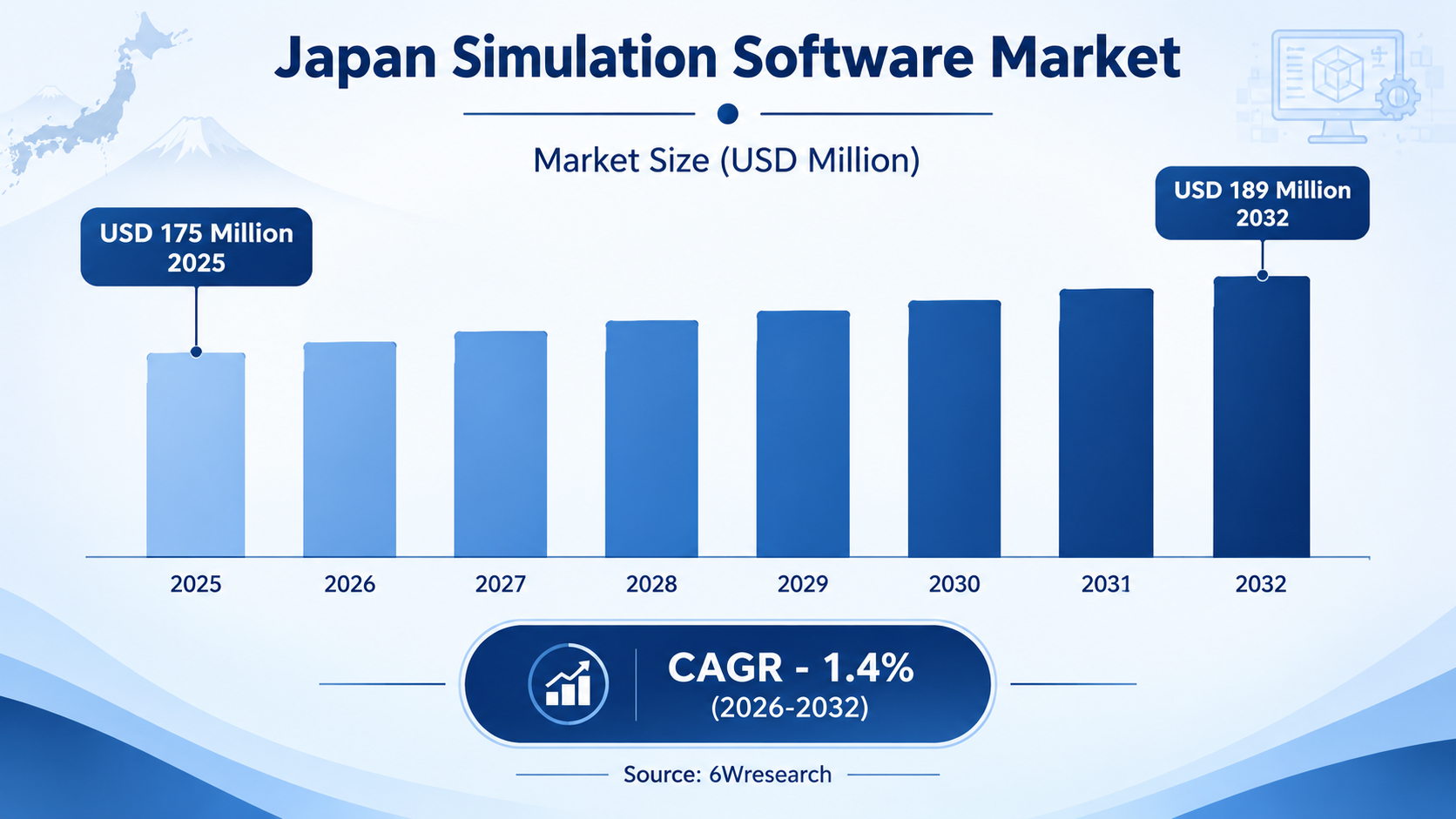
Japan's electronics industry depends on precision engineering, reliable components, and continuous technological improvement. From semiconductor equipment and electronic circuits to sensors and advanced industrial devices, manufacturers must evaluate complex interactions before products reach the market. Simulation software can help engineers investigate electrical behavior, thermal performance, structural characteristics, and manufacturing processes in a virtual environment. These requirements create opportunities for the Japan Simulation Software Market, particularly as electronics manufacturers seek greater design accuracy and more efficient development workflows.
Why Does Electronics Manufacturing Need Simulation?
Electronic products often contain components that interact in complex ways. Changes in circuit design, material selection, packaging, or operating temperature can influence product performance and reliability.
Physical testing remains essential, but examining every possible design through prototypes can be expensive and time-consuming. Simulation allows engineers to investigate selected conditions digitally and identify potential weaknesses before conducting further testing.
This capability is particularly valuable during early product development, when design changes may be easier to implement than after manufacturing processes have been established.
Major Applications in Electronics Engineering
Simulation software can support multiple engineering activities across the electronics value chain.
-
Circuit simulation: Engineers can investigate electrical behavior and compare alternative circuit configurations.
-
Thermal analysis: Models can help evaluate heat generation, temperature distribution, and cooling requirements.
-
Electromagnetic analysis: Selected simulations can examine electromagnetic fields and potential interference.
-
Structural evaluation: Engineers can investigate mechanical stress, vibration, and deformation in electronic assemblies.
-
Semiconductor equipment design: Simulation can support analysis of specialized equipment and selected manufacturing processes.
-
Production optimization: Manufacturers can model equipment utilization, process sequences, and production-line performance.
The appropriate software depends on the technical problem, model complexity, and required accuracy.
Thermal Management Becomes Increasingly Important
As electronic systems become more compact and computationally demanding, managing heat can become a significant engineering challenge. Excessive temperatures may affect component performance, reliability, and operating life.
Thermal simulation enables engineers to examine heat transfer under different operating conditions. They can compare cooling arrangements, evaluate component placement, and investigate the effects of alternative materials.
These models can help identify promising configurations before physical prototypes are constructed. However, actual product performance still requires appropriate testing, especially where reliability and safety are critical.
For manufacturers developing high-performance electronics, thermal analysis can therefore form an important part of the wider engineering process.
Simulation and Semiconductor Equipment Development
Semiconductor manufacturing relies on sophisticated equipment and tightly controlled processes. Equipment developers must understand how mechanical, thermal, electrical, and other physical factors interact.
Simulation can help engineers investigate selected equipment designs, evaluate component performance, and explore possible process improvements. Depending on the application, models may also support fluid-flow analysis, heat transfer, structural behavior, and equipment layout.
These capabilities may contribute to more informed engineering decisions. Nevertheless, semiconductor processes are highly specialized, and simulation tools must reflect the requirements of the particular equipment or manufacturing stage.
Software providers that understand these technical demands may be better positioned to serve specialized customers.
Connecting Simulation With Smart Factories
Simulation can support manufacturing operations beyond the design laboratory. Factory managers can use models to investigate production layouts, equipment utilization, material movement, and scheduling decisions.
Digital twins can extend this approach by linking digital representations of equipment or production processes with operational information. When combined with simulation, these models can help manufacturers evaluate proposed changes before implementing them on the factory floor.
For example, a production team may examine whether rearranging equipment could improve material flow or reduce congestion between manufacturing stages.
The benefits depend on reliable operational data, appropriate model assumptions, and effective integration with existing factory systems.
Challenges Facing Electronics Manufacturers
Several obstacles may influence simulation adoption.
-
Specialist expertise: Complex models require engineers with suitable technical knowledge.
-
Software expenses: Advanced tools, computing resources, and support services can create substantial costs.
-
Integration requirements: Simulation systems must work with existing design and manufacturing applications.
-
Intellectual property protection: Circuit designs, process information, and product specifications require careful security controls.
-
Model validation: Simulated results must be checked against appropriate physical measurements.
-
Training needs: Engineering teams may require ongoing instruction as software capabilities evolve.
Manufacturers can manage these challenges through phased implementation, clearly defined project objectives, and investment in employee capabilities.
Opportunities for Simulation Software Vendors
Software providers can differentiate themselves through specialized engineering features, reliable technical support, and integration with established design workflows. Demonstrating how a tool addresses a specific problem may be more persuasive than offering a broad list of features.
Flexible licensing, local-language documentation, training programs, and partnerships with engineering consultancies can also help improve adoption.
Providers should focus on helping customers achieve measurable results, such as fewer design iterations, more efficient thermal analysis, or improved coordination between product development and manufacturing teams.
What Lies Ahead for Japan’s Electronics Simulation Market?
The continuing complexity of electronic products creates opportunities for simulation software across circuit design, thermal engineering, semiconductor equipment, and manufacturing optimization. AI-assisted modeling and digital twins may further expand selected applications.
However, market success will depend on technical reliability, implementation costs, customer requirements, and the availability of skilled professionals. Vendors that deliver accurate, specialized, and well-integrated solutions can support Japanese electronics companies as they pursue greater engineering precision and operational efficiency.
About 6Wresearch
About 6Wresearch: 6Wresearch is a commercial strategy and growth advisory firm founded in 2011 and headquartered in New Delhi, India, with partners across Southeast Asia and the Middle East & Africa. The firm has delivered over 20,000 commercial engagements for over 2,000 organizations, including Fortune 500 companies, government agencies, and multilateral institutions such as the World Bank and the Asian Development Bank. Backed by proprietary market research and advanced analytics, 6Wresearch combines sector expertise with data-driven intelligence to help organizations navigate market complexity and drive sustainable growth. These capabilities explain why organizations trust 6Wresearch Global Market Research & Consulting Firm for reliable commercial insights and confident decision-making.
Our Proprietary Platform: 6W Export GTM
6W Export GTM is 6Wresearch's proprietary trade intelligence and go-to-market platform, built on UN Comtrade data and enhanced with 6Wresearch's in-house analytical and simulation models, including system dynamics-based forecasting. Unlike broad, sector-level market sizing tools, 6W Export GTM operates at the individual product level down to specific HS codes and micro-segments to identify precise, actionable export opportunities by country and product pair, including markets where trade currently does not exist. This granular, simulation-driven approach allows 6W Export GTM to surface opportunities that sector-wide analysis typically misses, positioning it among a small number of platforms globally offering this depth of product-and-country-specific export intelligence.

 English
 Arabic
 French
 Spanish
 Deutsch
 Turkish
 Dutch
 Italiano
 Russian
 Romaian
 Portuguese (Brazil)
 Greek
