


Choosing Electronic Connectors for Complex Product Requirements
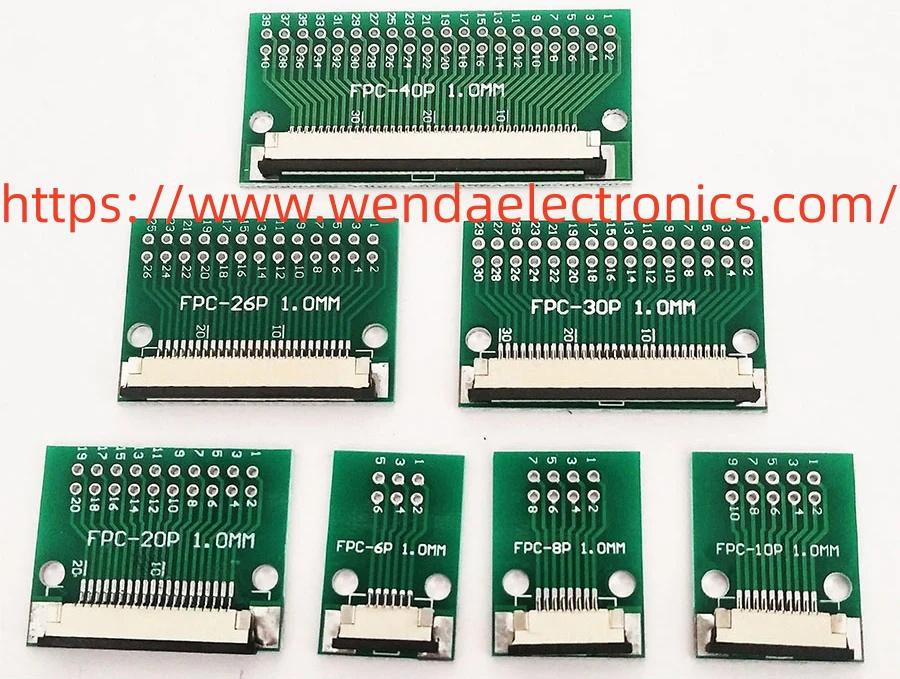
Electronic equipment is rarely designed around a single universal connection arrangement. Different products may require particular contact configurations, mounting styles, cable interfaces, or housing shapes to accommodate their internal architecture. In these situations, Custom Electronic Connectors can help bridge the gap between standard components and application-specific requirements, allowing engineers to coordinate electrical connectivity with mechanical layout and manufacturing needs. Effective customization begins with understanding the complete application rather than modifying a connector's appearance alone. Electrical behavior, material compatibility, installation procedures, environmental conditions, and future servicing all influence whether a proposed design can perform consistently within the finished product.
Material selection establishes the foundation for connector durability and electrical function. Conductive contacts may use copper-based alloys or other suitable conductive materials, depending on the required contact behavior and manufacturing process. Surface treatments can help address contact stability, wear, and environmental exposure when selected for the intended application. Insulating housings are commonly made from engineering polymers chosen for their electrical insulation, structural integrity, and suitability for forming detailed shapes. Other parts, including locking features, seals, or mounting elements, may require different material properties to fulfill their individual roles. The surrounding cable, circuit board, or terminal must also be compatible with the connector interface. Reviewing the complete material combination helps designers avoid treating conductivity, insulation, mechanical strength, and environmental resistance as unrelated concerns.
The selection process should start with a clear description of the product and its operating conditions. Engineers need to understand what the connector will join, how the connected components are positioned, and whether the interface must accommodate movement, frequent disconnection, or restricted installation access. They should also identify the available mounting space, cable routing requirements, assembly method, and any exposure to dust, moisture, vibration, or cleaning agents. For equipment with limited internal space, connector orientation and access to the mating interface may be especially important. For products intended for service or repair, the ease of releasing and reconnecting the interface can influence maintenance procedures. Providing a supplier with drawings, reference samples, application details, and functional priorities creates a stronger basis for evaluating design options.
Customization also involves the relationship between electrical requirements and mechanical construction. Contact placement must support the intended circuit arrangement, while the housing maintains separation and alignment between conductive elements. Depending on the application, the design may incorporate keyed shapes, locking features, protective covers, or other structures that help prevent incorrect assembly or unwanted disconnection. Cable-entry direction and mounting geometry can affect strain management and the way forces are transferred to the connection. These features should be developed as part of a coordinated interface rather than added independently. A connector that appears suitable on its own may still create difficulties if its mating component, surrounding enclosure, or assembly sequence has not been considered during the design process.
Manufacturing technology influences whether a customized connector can be produced consistently. Contact stamping, forming, surface finishing, polymer molding, and assembly each require appropriate process controls. Small changes in contact shape or housing geometry may affect mating behavior, so production methods must be aligned with the intended design. Prototype evaluation allows engineering teams to examine fit, insertion, retention, and compatibility with adjacent components before broader production begins. Inspection procedures can then focus on the characteristics most relevant to the application, including contact condition, housing integrity, assembly consistency, and interface alignment. Early communication between design engineers and manufacturing specialists can also reveal whether a proposed feature requires adjustment to improve manufacturability without undermining the product's functional goals.
The experience of installers and maintenance personnel deserves attention throughout connector development. A connection that is easy to identify, orient, and secure can reduce unnecessary handling during assembly. Clearly differentiated mating features may help prevent incorrect insertion, while accessible release mechanisms can simplify replacement when the product requires servicing. Cable routing should leave sufficient room for installation without placing avoidable stress on the connector or its termination points. In automated manufacturing, component presentation and predictable positioning may influence how easily the connector can be handled by assembly equipment. These practical considerations affect production workflow as well as later service tasks. User-oriented design therefore includes the people who assemble, inspect, troubleshoot, and maintain the equipment, not only the person operating the finished product.
Appearance and physical form are equally relevant when the connector must fit a distinctive product architecture. Housing contours, mounting tabs, entry direction, and surface finish can determine how naturally the component fits within an enclosure. In consumer electronics, an unobtrusive connection arrangement may support a clean internal layout and help designers manage limited space. In industrial equipment, visible connector features may instead prioritize identification, accessibility, or protection from the surrounding environment. Color coding or differentiated shapes can also help distinguish interfaces when multiple connections are located close together. Customization provides an opportunity to coordinate these details with the wider assembly, provided that visual preferences remain compatible with electrical safety, mechanical performance, and practical manufacturing requirements.
Zhejiang Wenda Electronics Co., Ltd. develops electronic connection products for businesses seeking components suited to their product designs and integration needs. When discussing a customized connector, buyers can outline the connected components, installation environment, preferred interface arrangement, and manufacturing process so that the proposed solution can be assessed in context. Reviewing drawings and samples with the supplier can help clarify design priorities before production planning advances. Further information about the company's electronic components and connection solutions is available at https://www.wendaelectronics.com.

 English
 Arabic
 Spanish
 Portuguese
 Deutsch
 Turkish
 Dutch
 Italiano
 Russian
 Romaian
 Portuguese (Brazil)
 Greek
