


Floor Scrubber Machines for Warehouses: A Complete Guide to Efficient Industrial Floor Cleaning
Warehouses are busy environments where cleanliness plays an important role in workplace safety, operational efficiency, and inventory protection. With forklifts moving continuously, employees handling materials, and dust accumulating throughout the day, maintaining clean floors can quickly become a demanding task. Traditional mopping and manual cleaning methods often struggle to meet the needs of large industrial spaces.
Floor scrubber machines for warehouses offer a practical solution by removing stubborn dirt, lifting grime, and collecting dirty water in a single cleaning process. Choosing the right equipment can help businesses maintain cleaner floors, reduce manual effort, and establish a more consistent cleaning routine.
Why Warehouse Floor Cleaning Matters
Warehouse floors experience constant pressure from heavy equipment, foot traffic, packaging materials, and everyday spills. Over time, these conditions can create slippery surfaces, stubborn stains, and layers of dust that interfere with normal operations.
Regular floor cleaning helps reduce the accumulation of dirt and debris that can contribute to workplace hazards. Clean surfaces also make it easier for employees to identify spills, inspect floor conditions, and move goods through storage and distribution areas.
In addition, proper floor maintenance helps preserve concrete, sealed surfaces, and other industrial flooring materials. Removing abrasive particles and chemical residues can reduce unnecessary wear, potentially extending the useful life of the floor.
For warehouse managers, investing in suitable cleaning equipment is therefore about more than appearance. It supports a safer, more organized, and more productive working environment.
How Floor Scrubber Machines Improve Warehouse Cleaning
Industrial floor scrubbers combine rotating brushes or pads, cleaning solution, and a water recovery system to clean hard surfaces efficiently. Unlike conventional mopping, these machines apply controlled scrubbing action and collect wastewater rather than leaving it spread across the floor.
This process offers several advantages. First, powered scrubbing can loosen dirt that manual cleaning may leave behind. Second, integrated water recovery helps floors dry more quickly when the machine is operated correctly.
Third, wider cleaning paths allow operators to cover large areas with fewer passes. These benefits are particularly valuable in distribution centers, manufacturing facilities, storage buildings, and logistics hubs where cleaning must fit around ongoing operations.
Depending on the machine design, operators can also adjust brush pressure, water flow, and cleaning speed to suit different floor conditions. This flexibility helps maintain consistent results across areas with varying levels of dirt and traffic.
Types of Floor Scrubber Machines for Warehouses
Selecting the right machine begins with understanding the layout, floor condition, and daily cleaning requirements of the facility.
Walk Behind Floor Scrubbers
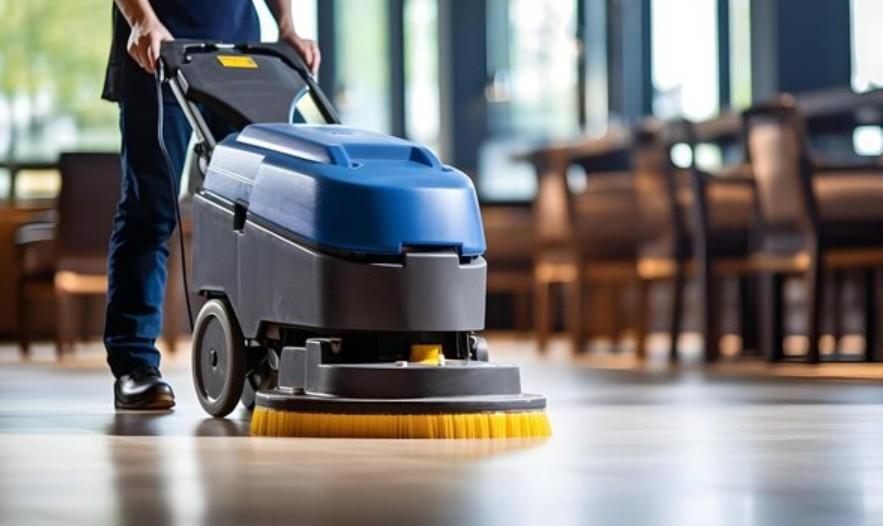
Walk behind scrubbers are suitable for small and medium sized warehouses, narrow aisles, and areas with frequent obstacles. Their compact design makes it easier to maneuver around shelving, workstations, and equipment.
These machines can be a sensible choice for businesses that need reliable cleaning without investing in a larger ride on unit. They are also useful when cleaning must take place in smaller sections or confined spaces.
Ride On Floor Scrubbers
Ride on scrubbers are designed for larger warehouses and distribution centers with extensive open floor areas. Because operators sit on the machine while cleaning, they can cover substantial distances with less physical effort.
Their wider cleaning paths and larger solution tanks can reduce interruptions for refilling and emptying. For facilities that require frequent cleaning across expansive surfaces, a ride on scrubber may improve productivity and help control labor requirements.
Battery Powered Floor Scrubbers
Battery powered models provide flexibility in indoor environments where electrical cords would interfere with movement or create additional hazards. They are particularly useful in busy warehouses because operators can move freely between aisles and open areas.
When evaluating these machines, consider battery runtime, charging requirements, recovery tank capacity, and the time available for cleaning. The machine should comfortably support the facility's planned cleaning schedule.
Factors to Consider Before Buying a Warehouse Floor Scrubber
Choosing equipment based solely on its purchase price can lead to unnecessary operating costs. A better approach is to evaluate how well the machine fits the warehouse's daily needs.
Floor size and layout: Measure the area that requires regular cleaning and consider aisle widths, turning spaces, and obstacles. Large open warehouses may benefit from ride on equipment, while compact layouts often favor walk behind machines.
Floor type and cleaning requirements: Concrete, sealed concrete, and other hard surfaces may require different brush types, pads, or cleaning solutions. Consider the amount of grease, dust, and residue the machine must remove.
Tank capacity and runtime: Larger tanks can reduce refill interruptions, while sufficient battery runtime helps operators finish scheduled cleaning without repeated charging breaks.
Maintenance and operating costs: Review the cost of brushes, pads, batteries, replacement parts, and approved cleaning chemicals. Easy access to routine maintenance components can also help minimize downtime.
Equipment condition and support: New and professionally reconditioned machines may both be suitable, depending on the budget and workload. For used equipment, check battery health, brush performance, water recovery, service history, and warranty coverage before purchasing.
Frequently Asked Questions
1. What is the best floor scrubber machine for a warehouse?
The best machine depends on floor area, aisle width, surface material, and cleaning frequency. Walk behind models suit smaller spaces, while ride on machines are generally better for large warehouses.
2. How often should warehouse floors be scrubbed?
High traffic areas may require daily scrubbing, while less frequently used sections can follow a different schedule. Cleaning frequency should reflect dirt accumulation, operational demands, and safety requirements.
3. Are used floor scrubber machines worth buying?
Yes, professionally reconditioned machines can offer good value when they have been thoroughly inspected and tested. Check the battery, brushes, recovery system, maintenance history, and available warranty before making a decision.
4. Can floor scrubbers clean every warehouse floor type?
No. Most industrial scrubbers are designed for compatible hard surfaces, but brush selection, cleaning chemicals, and machine settings must match the flooring material. Always verify suitability before cleaning specialized or coated floors.
Conclusion
Floor scrubber machines for warehouses provide an effective way to maintain cleaner, safer, and more organized industrial spaces. By choosing equipment that matches the facility's size, floor type, and operational demands, businesses can improve cleaning consistency while reducing unnecessary manual work.
A thoughtful purchasing decision, combined with regular maintenance and a practical cleaning schedule, helps maximize equipment value over time. For warehouse managers, the goal is to select a dependable cleaning solution that supports daily operations and keeps floors ready for the demands of a busy workplace.

 English
 Arabic
 French
 Spanish
 Portuguese
 Deutsch
 Turkish
 Italiano
 Russian
 Romaian
 Portuguese (Brazil)
 Greek
