


What Factors Affect Exosome Hair Therapy Results?
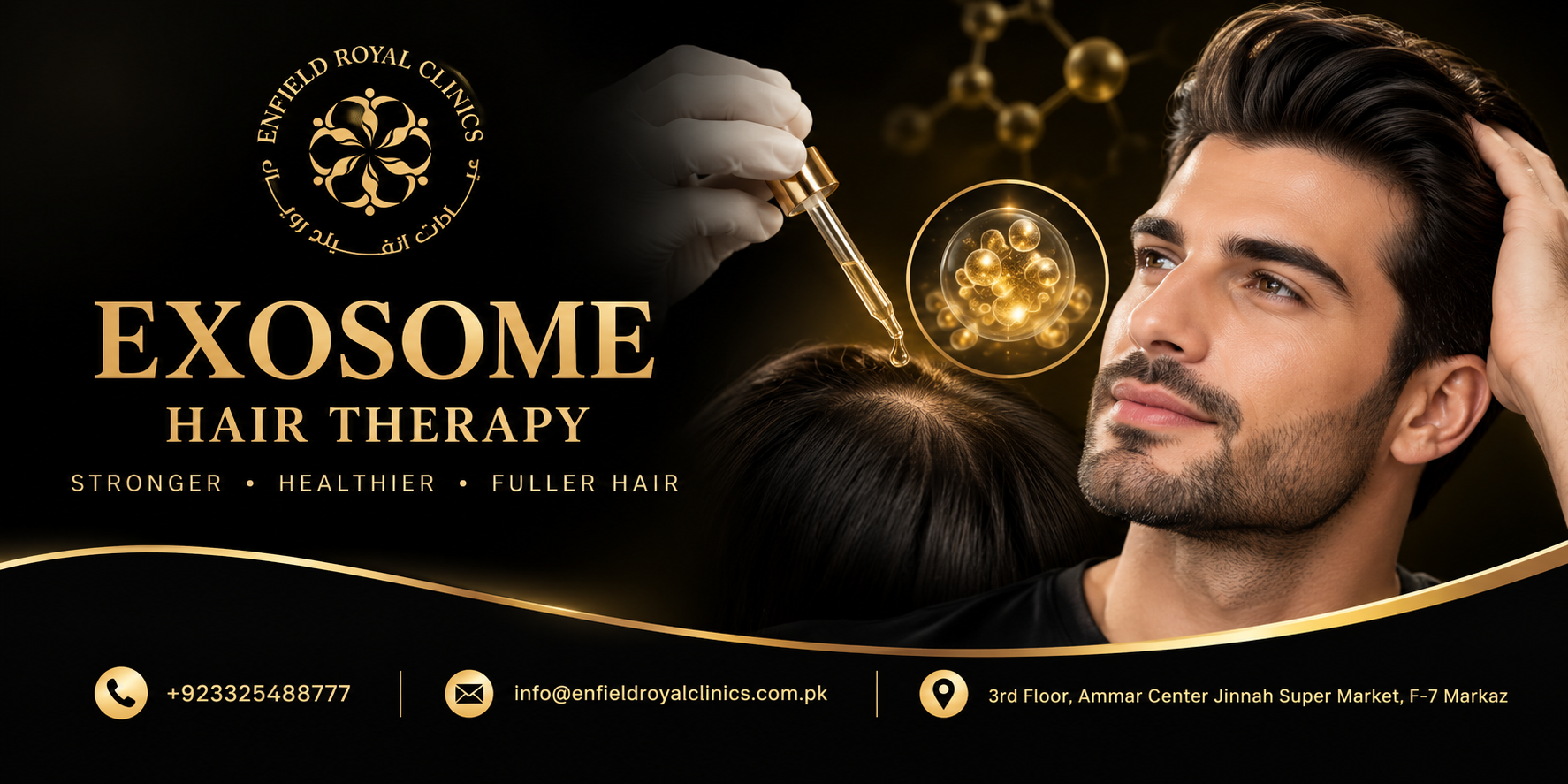
Hair thinning and hair loss can develop gradually, affecting hair density, volume, and confidence. While genetics plays an important role, factors such as hormonal changes, nutritional deficiencies, stress, and scalp conditions can also influence hair growth. As interest in advanced hair restoration options increases, exosome-based treatments are receiving attention for their potential role in supporting hair follicle activity.
Exosome Hair Therapy in Islamabad is an emerging treatment option for people exploring non-surgical approaches to hair restoration. The therapy uses tiny biological particles called exosomes, which carry molecular signals between cells. Researchers are studying whether these particles can influence processes involved in hair follicle function and the scalp environment.
However, treatment outcomes are not the same for everyone. The underlying cause of hair loss, the condition of existing follicles, product quality, treatment methods, and an individual's general health may all affect the outcome. It is also important to recognize that clinical evidence for exosome hair therapy remains limited, and its effectiveness has not been firmly established.
Understanding these factors can help individuals develop realistic expectations and make informed decisions about their hair restoration options.
1. The Cause and Severity of Hair Loss
One of the most important factors affecting potential treatment results is the underlying cause of hair loss. Different conditions affect hair follicles in different ways, so a treatment that may be relevant to one person might not be suitable for another.
Genetic hair loss, also known as androgenetic alopecia, commonly causes gradual thinning around the hairline, temples, crown, or central parting. In this condition, susceptible follicles gradually become smaller and produce finer strands. Researchers are investigating whether exosomes could influence cellular pathways associated with follicle activity, but strong evidence of consistent benefits in people is still lacking.
Hair shedding caused by stress, illness, nutritional deficiencies, or hormonal changes requires a different approach. In these cases, identifying and addressing the underlying trigger may be more important than pursuing a cosmetic procedure.
The severity of hair loss also matters. Areas with existing but weakened follicles may have different treatment potential from areas where follicles have been permanently destroyed.
Before considering Exosome Hair Therapy in Islamabad, a patient should receive an appropriate scalp assessment. A qualified professional may review medical history, family history, medications, and the pattern of hair loss. Blood tests may be recommended if a medical condition or nutritional deficiency is suspected.
A correct diagnosis helps establish realistic expectations and reduces the risk of choosing a treatment that does not address the actual cause of hair loss.
2. The Health and Condition of Existing Hair Follicles
Hair follicles are small structures within the skin responsible for producing hair strands. Their condition can influence how the scalp responds to different hair restoration approaches.
When follicles remain present but produce thinner hair, there may be an opportunity to manage the condition using appropriate treatments. Researchers are investigating whether exosome preparations can influence communication between cells involved in follicle activity and the natural hair growth cycle.
Hair normally passes through three main stages:
-
Anagen: The active growth phase.
-
Catagen: The short transitional phase.
-
Telogen: The resting phase, after which hair may shed.
Some forms of hair loss shorten the growth phase and cause follicles to produce increasingly fine strands. Experimental research suggests that certain exosome preparations may affect pathways associated with hair follicle development, but the clinical significance of these findings is not yet clear.
The situation can be different when hair loss involves scarring or permanent follicle destruction. A treatment intended to influence cellular activity cannot be assumed to regenerate follicles that are no longer present.
A scalp examination can help assess the pattern of thinning and identify signs of inflammation, scarring, or miniaturization. This information is important when discussing whether an emerging treatment is appropriate or whether an established alternative would be more suitable.
3. Exosome Product Quality and Treatment Technique
The quality of the product and the way it is administered are also important considerations. Products described as exosomes may differ in their biological source, composition, manufacturing process, purity, storage conditions, and quality-control standards.
Exosomes are not a single uniform substance. Their biological contents can vary depending on the source cells and the methods used to collect and process them. Consequently, findings from research involving one preparation cannot automatically be applied to every commercially available product.
Before undergoing treatment, patients should ask about the product's source, manufacturing standards, sterility testing, and regulatory status. They should also ask what evidence supports its intended use for hair loss.
The application method can influence the procedure's risks and practical requirements. Depending on the protocol, a product may be delivered through injections or applied alongside microneedling. Each approach has different considerations regarding discomfort, skin irritation, infection prevention, and aftercare.
The qualifications of the person performing the procedure and the cleanliness of the treatment environment also matter. Poor technique or inadequate infection-control practices can increase the risk of complications.
It is important to remember that a professionally performed procedure does not automatically guarantee hair regrowth. Product quality and appropriate technique are necessary safety considerations, but they do not replace the need for convincing clinical evidence that the treatment works.
4. General Health, Nutrition, and Lifestyle Habits
Hair growth is influenced by overall health. Although lifestyle improvements cannot guarantee better results from exosome therapy, addressing factors that contribute to hair loss can support appropriate hair care and medical management.
Nutrition and deficiencies
Hair follicles require adequate nutrients to maintain normal growth. Insufficient iron, inadequate protein intake, and certain other nutritional deficiencies may contribute to shedding in some individuals.
A balanced diet that includes protein sources, vegetables, fruits, whole grains, and other nutrient-rich foods supports general health. When a deficiency is suspected, testing and professional guidance can help determine whether supplementation is necessary.
Taking high doses of vitamins without a confirmed need is not recommended, as excessive intake of certain nutrients can cause harm and may even contribute to hair loss.
Stress and sleep
Significant physical or emotional stress can trigger a type of shedding known as telogen effluvium. This condition may develop after illness, surgery, major life changes, or other stressful events.
Adequate sleep, regular physical activity, and effective stress management can support general well-being. However, persistent shedding should not automatically be attributed to stress without considering other possible causes.
Hair care and scalp health
Harsh chemical treatments, excessive heat, and tight hairstyles that repeatedly pull on the hair can contribute to breakage or traction-related hair loss. Gentle hair care can reduce avoidable damage.
Scalp inflammation and certain skin conditions may also interfere with healthy hair growth. These problems should be assessed and treated appropriately rather than relying on an emerging regenerative procedure alone.
5. Treatment Schedule, Aftercare, and Consistency
The treatment plan and the way a patient follows professional instructions may influence the overall experience and the ability to assess progress.
There is currently no universally accepted protocol defining the ideal number of exosome hair therapy sessions, the interval between treatments, or the most effective delivery method. Recommendations may vary, and patients should ask what evidence supports the proposed schedule.
Aftercare instructions depend on the application technique. When injections or microneedling are involved, the scalp may temporarily become tender, red, or irritated. Patients may be advised to avoid certain hair products, vigorous scalp rubbing, or other activities for a period specified by the treating professional.
Following those instructions can help reduce avoidable irritation and complications. Patients should also discuss existing hair-loss medications before changing or discontinuing them.
Consistency in monitoring is equally important. Photographs taken under similar lighting conditions and from the same angles can help reveal changes that might otherwise be difficult to notice. Scalp imaging or hair-density measurements may provide additional information when available.
Because exosome therapy is still being studied, completing a recommended course should not be treated as proof that regrowth will occur. A responsible treatment plan should include follow-up assessments and a discussion of alternative options if meaningful improvement is not observed.
6. Individual Response, Realistic Expectations, and Safety
Even when two people have similar patterns of hair thinning, their outcomes may differ. Age, the duration of hair loss, underlying medical conditions, follicle health, and the specific treatment preparation may all contribute to differences in response.
Some early clinical studies have reported improvements in hair density or thickness after exosome-based treatments. However, the research remains limited, and differences in study design, sample sizes, products, and follow-up periods make it difficult to predict an individual's results.
For this reason, patients should be cautious about promises of rapid regrowth, guaranteed results, or permanent restoration.
Safety also deserves careful consideration. Possible side effects associated with procedures involving injections or microneedling include temporary redness, tenderness, swelling, minor bleeding, and infection. Product-specific risks may vary, and long-term safety has not been fully established.
The US Food and Drug Administration has stated that there are currently no FDA-approved exosome products. Patients should verify the applicable local regulatory requirements and should not assume that a product is approved for hair loss simply because it is being offered commercially.
Anyone experiencing sudden hair loss, patchy bald spots, scalp pain, pronounced redness, or signs of scarring should seek medical assessment before undergoing a cosmetic procedure.
Ultimately, the most useful approach combines a proper diagnosis, careful evaluation of available evidence, realistic expectations, and ongoing monitoring. Exosome Hair Therapy in Islamabad may interest people exploring emerging hair restoration options, but its potential benefits must be weighed against the remaining uncertainties.
Frequently Asked Questions
1. What is the most important factor affecting exosome hair therapy results?
The underlying cause of hair loss is one of the most important factors. The condition of existing follicles, product quality, treatment method, and individual health may also matter. A proper assessment helps determine which treatments are appropriate, although no factor guarantees a successful response to exosome therapy.
2. How long does it take to see results from exosome hair therapy?
There is no reliably established timeline for results. Early studies have reported changes over several weeks or months, but the available evidence is insufficient to predict when or whether an individual will experience improvement. Progress should be assessed objectively during follow-up.
3. Can nutrition improve the results of exosome hair therapy?
Correcting a confirmed nutritional deficiency may help address hair shedding caused by that deficiency. A balanced diet also supports general health. However, there is no strong evidence that particular foods or supplements directly enhance the effectiveness of exosome therapy. Supplements should be used when appropriate rather than taken in excessive amounts.
4. Can exosome hair therapy guarantee permanent hair regrowth?
No. Exosome hair therapy cannot currently guarantee permanent hair regrowth. Its effectiveness and long-term results remain uncertain, and ongoing hair loss may require a separate management plan. Patients should discuss established alternatives and avoid providers who promise specific outcomes without adequate evidence.

 English
 Arabic
 Spanish
 Portuguese
 Deutsch
 Turkish
 Dutch
 Italiano
 Russian
 Romaian
 Portuguese (Brazil)
 Greek
