


Building an Annual Crane Parts Budget That Actually Works
The annual maintenance budget exists to answer one question: what will this machine cost to keep operational for the next twelve months? Answering well requires discipline. Answering poorly costs money, credibility, or both.
Most budgets fail for predictable reasons. They rely on memory instead of inspection data, last-minute vendor quotes instead of early pricing, and gut feel instead of documented spending. A more reliable method is available, and it follows a sequence anyone can adopt.
Ground Your Estimate in Field Observations
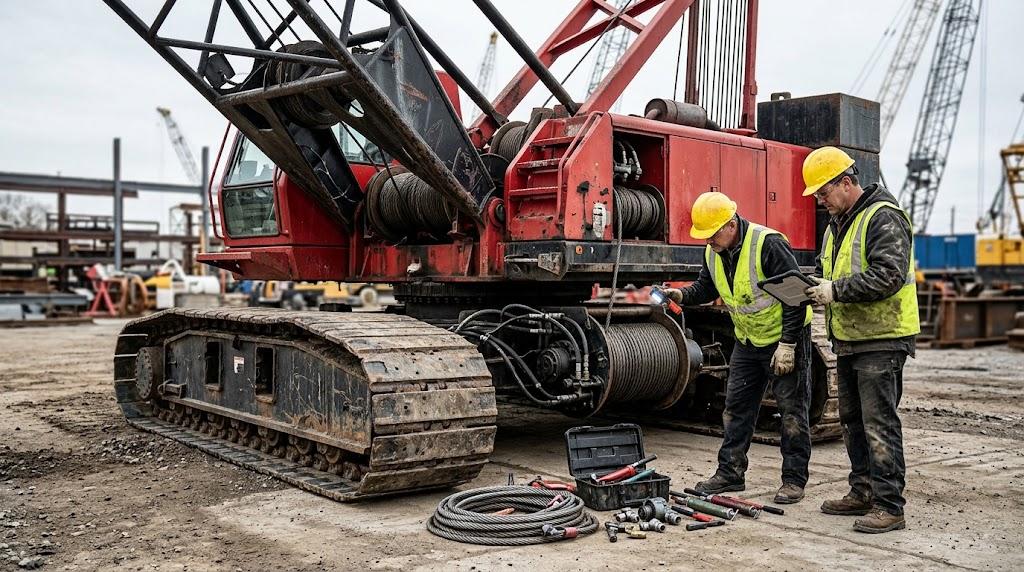
No figure deserves serious consideration until someone has examined the machine up close. Walk the crane with the operator and the mechanic, service log in hand. The three perspectives together catch what any single person overlooks.
Start with wear items the manufacturer defines precisely. Hoist ropes, boom pendants, swing bearings, brake packs, hydraulic hoses, and filter elements each have published thresholds for replacement or discard. Measure against those standards, record the results, and note each component's position on its lifecycle curve. Then examine the systems that generate most unplanned failures: bushings, gearcase oil, electrical contactors, and limit switches.
Convert everything into a written inventory while impressions remain fresh. An unwritten observation becomes a memory by evening, and memories shape budgets less reliably than documents. Photograph questionable components; visual evidence clarifies later discussions.
Measurements near decision points warrant confirmation. Reach out to a crane parts supplier who handles this equipment regularly and verify the applicable discard standard. That single conversation prevents both premature replacement and dangerous delay.
Sort Findings by Type
Once the inspection produces a list, sort it. Treating every item identically distorts the budget in one direction or the other.
The first category covers replacements the manufacturer's schedule dictates. Ropes at documented discard criteria, filters at published intervals, slew-ring bolts on defined cycles—these arrive regardless of opinion. Budget the related Manitowoc parts at full expected cost, since timing carries no uncertainty.
The second category responds to condition rather than calendar. A brake pack showing glazing. A hose with surface cracking. A gearcase whose pitch has shifted. Each warrants attention, though nobody can name the failure month with confidence.
Apply a working probability—roughly fifty percent serves the purpose—to the condition-based column. Fold that subtotal into the scheduled total. The blend produces a figure that reflects real uncertainty without drifting into worst-case padding that invites challenges during review.
Check Your Estimating Track Record
Before finalizing anything, examine last year's purchase orders. This step gets skipped constantly, and skipping it costs dearly.
Record what the machine genuinely consumed over the previous twelve months. Actual spending by line item—not the approved budget, not an estimate of what was spent, but the invoices themselves. Lay the real figures beside the planned figures and note the distance between them.
That gap tells you how reliable your forecasting method has been. If the plan called for thirty-five thousand and invoices totaled fifty-two, the projection missed by nearly half. Prior actuals now form the floor for the current estimate, with inspection findings added on top.
Repeating purchases reveal themselves through the data. A component appearing in each of the last three years' orders isn't optional—it's expected. Recognizing that pattern now prevents rediscovering it under pressure in October.
Engage Vendors Before the Deadline
Pricing conducted in the week before a budget is due produces rushed or padded numbers. Vendors approached at the last minute quote conservatively or defer detail. Neither outcome serves the estimate well.
Begin outreach weeks in advance, ideally as soon as the inspection list takes organized shape. Share model, configuration, year, and operating environment alongside part numbers. A hoist rope spec prices differently on a fixed-jib machine than on a standard crawler. A crane parts supplier experienced with this product line will explore those variables unprompted.
Ask about lead times during the same conversation. A component quoted at three thousand dollars with a fourteen-week wait can impose far greater cost through lost production than through the invoice. When the calendar favors buying sooner, shift that purchase into the current cycle and document the reasoning.
Significant items warrant competing quotes. Pricing varies meaningfully across vendors due to inventory position, sourcing origin, and freight arrangements. One additional call frequently reveals a difference worth the effort.
Plan for the Unexpected
Careful preparation reduces surprises. It doesn't eliminate them. Pins shear without warning. Pendants crack overnight. Control cards die during a night shift hours before a scheduled lift.
Determine the cushion size based on the crane's profile rather than habit. The conventional figure sits at ten percent of the parts total. That works for a late-model crane in moderate service. Stretch toward twenty for older machines in punishing environments—quarries, coastal exposure, and relentless double shifts all qualify. Fifteen covers the middle ground.
This line item absorbs genuine surprises. It isn't a convenience buffer or a quiet fund for upgrades. Supplemental requests arriving mid-year leave impressions that shape how next year's budget gets scrutinized. A properly sized reserve keeps that dynamic in check.
When the cushion goes unused, roll it forward or return it. Either outcome confirms the reserve performed as intended.
Look Beyond the Part Number
Component costs dominate budget conversations, yet they represent only one layer of what the year demands.
Installation labor belongs in every estimate. Inbound freight matters as well—Manitowoc parts tend toward the heavy side, and shipping structural elements to remote sites generates charges that dwarf catalog prices. Rigging costs apply whenever major disassembly is needed. Downtime exposure matters when the crane sits idle during productive lift windows.
Filters and seals fold into routine shop capacity without strain. Rope jobs, bearing replacements, and major removals cannot. Budgets that assume the shop absorbs everything without adjustment create friction the moment real work arrives. Match labor estimates to the scope of each task.
Sequencing affects the bottom line. Work coordinated around the lift calendar disrupts production less than identical work forced by an unexpected failure. Build the execution plan into the budget before the year begins.
Monitor Spending as the Year Unfolds
The discipline separating reliable budgets from forgettable ones is simple but rarely practiced: monthly reconciliation.
Build one spreadsheet with four columns—line item, budgeted amount, actual, variance. Update it as invoices clear. Keep the format accessible enough that a colleague could maintain it in your absence. Simple systems endure; elaborate ones get abandoned by spring.
Three months in, the estimate's credibility becomes measurable. Six months in, problems surface while they remain correctable. Twelve months in, you possess a validated record of what the year truly consumed.
That record transforms next year's exercise. Rather than reconstructing spending from memory, you begin from documented history that has already been examined and explained.
Pulling It Together
Annual budgeting rewards consistency over cleverness.
Visit the machine before pricing anything. Classify findings by certainty of replacement. Build the estimate on actual prior spending. Obtain quotes early from a crane parts supplier who knows this equipment. Size the contingency to the machine's specific condition and duty cycle. Carry labor, freight, and downtime into the total. Track variance every month.
Execute the sequence correctly once, and a credible baseline emerges. Repeat it annually, and the process accelerates while the numbers grow more accurate and the conversation grows shorter.

 English
 Arabic
 Spanish
 Portuguese
 Deutsch
 Turkish
 Dutch
 Italiano
 Russian
 Romaian
 Portuguese (Brazil)
 Greek
