


Best Airtight Door for Hazardous Facilities
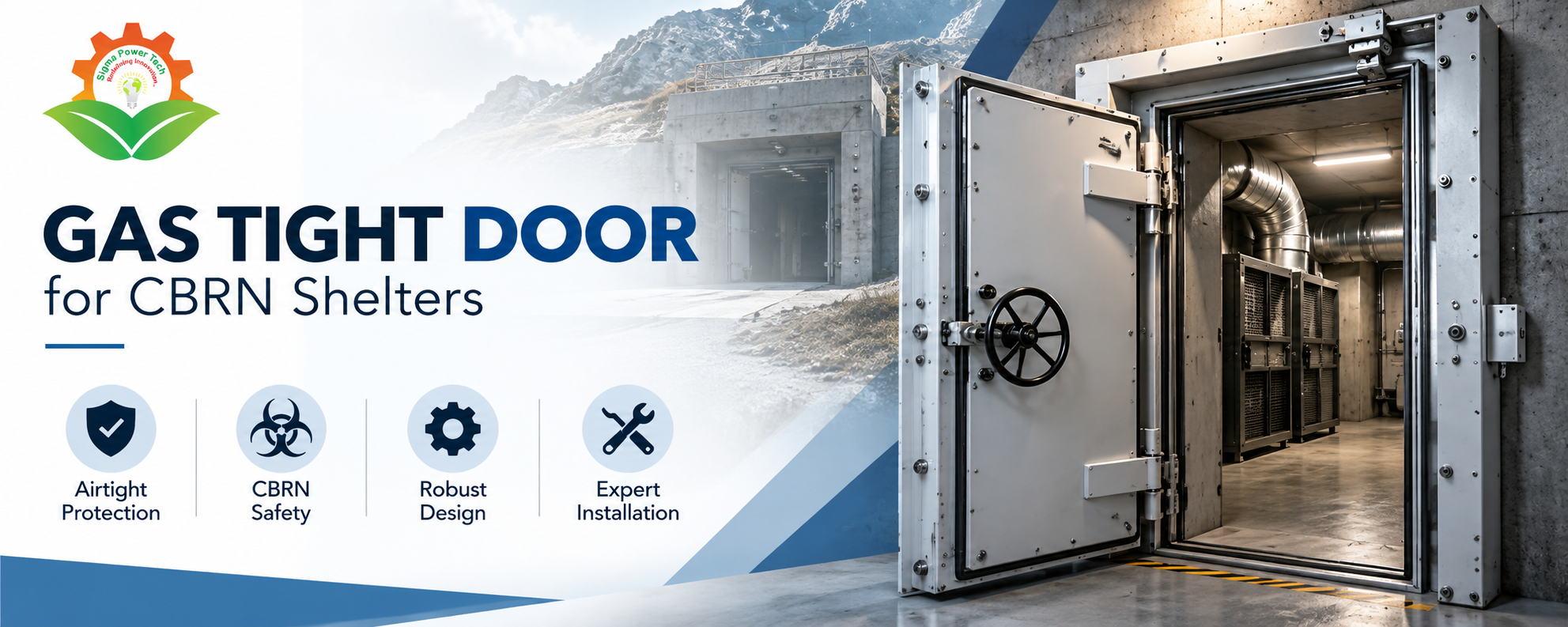
A hazardous chemical storage facility experiences an accidental gas release, or a biological containment laboratory enters emergency containment mode. In both situations, the integrity of the entrance becomes critical. If contaminated air escapes or external air enters through an improperly sealed doorway, personnel safety, equipment protection, and regulatory compliance are immediately at risk. This is why selecting the right Gas tight door is essential for hazardous facilities where airtight containment is a fundamental engineering requirement.
Unlike standard industrial steel doors, gas tight doors are specifically designed to maintain pressure-controlled environments and prevent hazardous airborne contaminants from crossing protected boundaries. Choosing the right system requires understanding its engineering features, performance standards, installation requirements, and long-term operational value.
What Is a Gas Tight Door?
A Gas tight door is a specially engineered airtight barrier designed to prevent the movement of toxic gases, biological contaminants, radioactive particles, and hazardous airborne substances between controlled and uncontrolled environments.
Its construction typically includes reinforced steel panels, precision-manufactured frames, continuous compression gasket seals, and multi-point locking mechanisms. These components work together to create a dependable airtight seal capable of maintaining specified pressure differentials and minimizing air leakage.
For hazardous facilities, the door serves as an essential part of the overall environmental protection strategy rather than simply providing physical access.
Gas Tight Door Design for Hazardous Environments
A reliable Gas tight door design is engineered to preserve airtight integrity under demanding operating conditions.
In a Gas tight door for CBRN shelters, positive internal pressure generated by filtration systems prevents contaminated air from entering the protected space. In biological laboratories, negative pressure prevents hazardous agents from escaping into surrounding areas.
The door must therefore maintain consistent gasket compression, structural stability, and verified leakage performance throughout repeated operating cycles.
What Makes the Best Airtight Door?
The best airtight door combines structural strength, precision engineering, and certified sealing performance.
Several characteristics distinguish high-performance systems from conventional industrial doors.
Reinforced Structural Construction
Heavy-duty steel construction resists deformation caused by pressure loading, repeated use, and harsh environmental conditions.
Maintaining structural rigidity helps preserve gasket compression and long-term airtight performance.
Compression Gasket Sealing
Continuous elastomeric gasket seals compress uniformly around the door perimeter to create a dependable airtight barrier.
Proper gasket design minimizes leakage while accommodating normal structural movement over time.
Multi-Point Locking Mechanisms
Multiple locking points apply even compression across the sealing surface, improving sealing consistency and reducing gasket wear.
Precision Frame Integration
The frame must be accurately manufactured and securely anchored into reinforced walls to eliminate potential leakage paths.
Proper installation is just as important as the quality of the door itself.
Sealing Performance and Leakage Standards
A high-quality gas tight door should undergo comprehensive testing before installation.
Typical performance evaluations include:
- Air leakage measurement
- Pressure differential testing
- Structural stability assessment
- Seal compression verification
- Operational durability testing
Compliance with applicable IS/BIS requirements and internationally recognized airtightness or CBRN standards provides confidence that the system will perform as intended under operational conditions.
Compatibility with Critical Safety Systems
Modern Gas tight door systems are designed to integrate with multiple protective systems throughout hazardous facilities.
They may be compatible with:
- Blast-resistant structures
- Fire-rated compartmentation systems
- CBRN filtration equipment
- HVAC pressure-control systems
- Electronic access control
- Emergency ventilation systems
This integration creates a coordinated safety strategy capable of maintaining environmental isolation during both normal operation and emergency response.
Key Features of a High-Performance Gas Tight Door
The best Airtight door for hazardous facilities should offer:
- Certified airtight sealing performance
- Reinforced structural strength
- Corrosion-resistant construction
- Pressure differential capability
- Compatibility with blast and fire protection systems
- Security-grade locking mechanisms
- Durable compression gasket technology
- Low maintenance requirements
- Compliance with recognized certification standards
These features improve operational reliability while reducing long-term maintenance costs.
Applications Across Hazardous Facilities
Gas tight doors are installed in many environments where airtight containment is essential.
Typical applications include:
- CBRN shelters and civil defense bunkers
- Military command centers
- Biological containment laboratories
- Pharmaceutical and chemical research facilities
- Chemical and petrochemical plants
- Nuclear facilities
- Underground infrastructure
- Hazardous material storage units
Each application requires the door to maintain environmental isolation while supporting the facility's broader safety systems.
Cost and Investment Factors
The Gas tight door price depends on engineering specifications rather than standard product dimensions.
Major cost considerations include:
- Required sealing and leakage-rate classification
- Door dimensions and configuration
- Steel grade and plate thickness
- Frame engineering and anchoring requirements
- Testing and certification
- Integration with filtration and pressure-control systems
- Automation and locking hardware
- Installation complexity
- Site-specific engineering assessments
- Long-term maintenance planning
Evaluating lifecycle performance instead of initial purchase cost provides greater value over the operating life of the facility.
Buyer's Guide: Choosing the Right Manufacturer
When evaluating Gas tight door manufacturers in India, engineering expertise should be the primary selection criterion.
A qualified manufacturer should provide:
- Extensive experience in critical infrastructure projects
- Proven engineering and testing capability
- Compliance with IS/BIS and international CBRN or airtightness standards
- Precision manufacturing processes
- Custom engineering solutions
- Complete technical documentation
- Professional installation services
- Reliable after-sales maintenance support
- A strong record of successful project execution
Many organizations choose a Sigma Power Tech manufacturer and service provider because integrated engineering, manufacturing, installation, testing, and maintenance simplify complex infrastructure projects. A Sigma Power Tech gas tight door is frequently specified where customized airtight protection, structural reliability, and dependable long-term performance are required.
Common Mistakes to Avoid
Several specification and installation errors can compromise airtight protection.
Avoid:
- Choosing based only on price
- Ignoring site-specific pressure and leakage requirements
- Incorrect frame-to-wall integration
- Underestimating corrosion or fire exposure
- Skipping certification verification
- Neglecting seal maintenance planning
- Overlooking compatibility with filtration and CBRN systems
Proper planning during the design stage significantly improves operational safety and lifecycle performance.
Conclusion
The best Gas tight door for hazardous facilities is one that combines certified airtight sealing, robust structural engineering, precision manufacturing, and seamless integration with pressure-control and filtration systems. Selecting the correct sealing class, verifying compliance with recognized standards, and ensuring professional installation are far more important than minimizing upfront costs. By prioritizing engineering quality, lifecycle reliability, and regular maintenance, facility owners can achieve dependable protection for hazardous environments where airtight integrity is essential for safety, compliance, and long-term operational resilience.

 English
 Arabic
 French
 Spanish
 Portuguese
 Turkish
 Dutch
 Italiano
 Russian
 Romaian
 Portuguese (Brazil)
 Greek
