


Why Does Xiangrui Winch Relay Selection Matter for Buyers
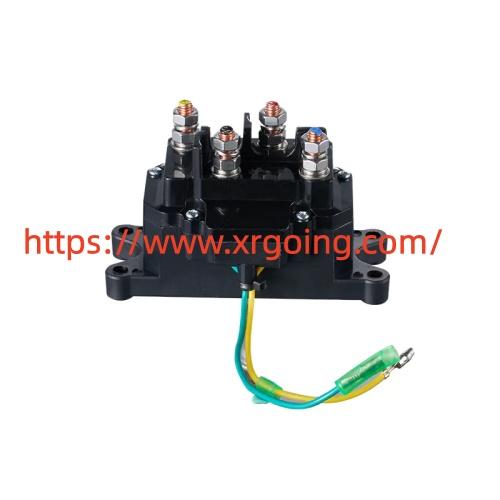
Choosing the right Winch Relay for different load requirements involves more than matching a number on a product label. Motor starting current, operating voltage, duty cycle, wiring conditions, and the working environment all influence which component is suitable for a particular system. For equipment manufacturers, distributors, and maintenance teams, understanding these details helps simplify purchasing decisions and reduce the risk of electrical compatibility problems.
The starting point is the actual load profile. An electric pulling system may operate under light tension for a short period, then draw substantially more current when moving a heavy object or overcoming resistance. Motor startup can also create a brief current surge that exceeds normal running demand. Selecting a component based only on the average operating current may therefore overlook an important part of the electrical load. Buyers should review the equipment manufacturer's specifications and confirm both normal and peak current requirements before comparing available models.
Voltage compatibility deserves equal attention. Many vehicle applications use 12V DC systems, while some commercial vehicles, marine equipment, and industrial installations operate at 24V DC. The control coil must match the available control voltage, and the main contacts must be rated for the circuit they switch. These are separate specifications, so a matching voltage label alone does not establish suitability. Before ordering, check the product datasheet, terminal configuration, and intended switching conditions against the requirements of the complete electrical system.
Load type also affects component selection. A motor is an inductive load, and its startup behavior differs from that of a simple resistive device. During switching, electrical arcing can occur at the contacts, particularly when a high DC current is interrupted. Repeated switching under demanding conditions may contribute to contact wear, overheating, or premature failure. Buyers should look for ratings specifically applicable to motor loads and DC switching rather than relying solely on a general current figure. Where the application involves frequent operation or heavy pulling, technical confirmation from the component supplier can help narrow the available options.
Duty cycle is another detail that can easily be overlooked. Some equipment operates in brief bursts, with cooling intervals between uses. Other systems perform repeated operations throughout a working shift. A component suitable for intermittent service may not be appropriate for extended or frequent activation. Consider how often the equipment starts, how long each operation lasts, and how much time is available for cooling. Ambient temperature, enclosure design, ventilation, and mounting location can influence heat buildup as well. These conditions should be considered together with the electrical ratings when comparing products.
Wiring and connections matter just as much as the selected component. Undersized cables, loose terminals, corroded connections, and excessive cable length can increase resistance and cause voltage drop. The resulting heat may affect several parts of the system, even when the switching device itself has an appropriate rating. A practical inspection should cover cable size, connection quality, grounding arrangements, and circuit protection. Protective devices must be selected according to the equipment manufacturer's requirements and the applicable electrical standards. Installation should be completed by qualified personnel, with the power source isolated before work begins.
For purchasing teams, a clear specification sheet makes supplier comparisons easier. Record the nominal control voltage, required contact current, motor load characteristics, switching frequency, terminal arrangement, dimensions, and environmental conditions. If the equipment operates outdoors or near water, ask about enclosure protection and corrosion resistance. Mechanical fit also deserves attention, since mounting dimensions and terminal locations can affect installation time and compatibility with an existing assembly.
Xiangrui supports buyers who need to evaluate electrical components against practical application requirements. When discussing a potential order, manufacturers and distributors can provide their operating voltage, current range, equipment type, expected duty cycle, and annual purchasing volume. Sharing these details helps establish whether a standard configuration is suitable or whether additional specification review is needed. For OEM projects, confirming drawings, samples, inspection criteria, packaging requirements, and production schedules before mass production can also help reduce misunderstandings between supplier and customer.
A considered purchasing decision starts with the application, not simply the price or the largest number printed on a label. By checking electrical ratings, startup demand, operating frequency, wiring conditions, and installation constraints, buyers can make a more informed choice for their equipment. If you are sourcing components for vehicle recovery systems, commercial machinery, or other powered pulling applications, visit Xiangrui at https://www.xrgoing.com/ to review the available product information and discuss specifications suited to your project.

 English
 Arabic
 French
 Spanish
 Portuguese
 Deutsch
 Turkish
 Italiano
 Russian
 Romaian
 Portuguese (Brazil)
 Greek
