


Choosing a Professional LiftMaster Garage Door Service
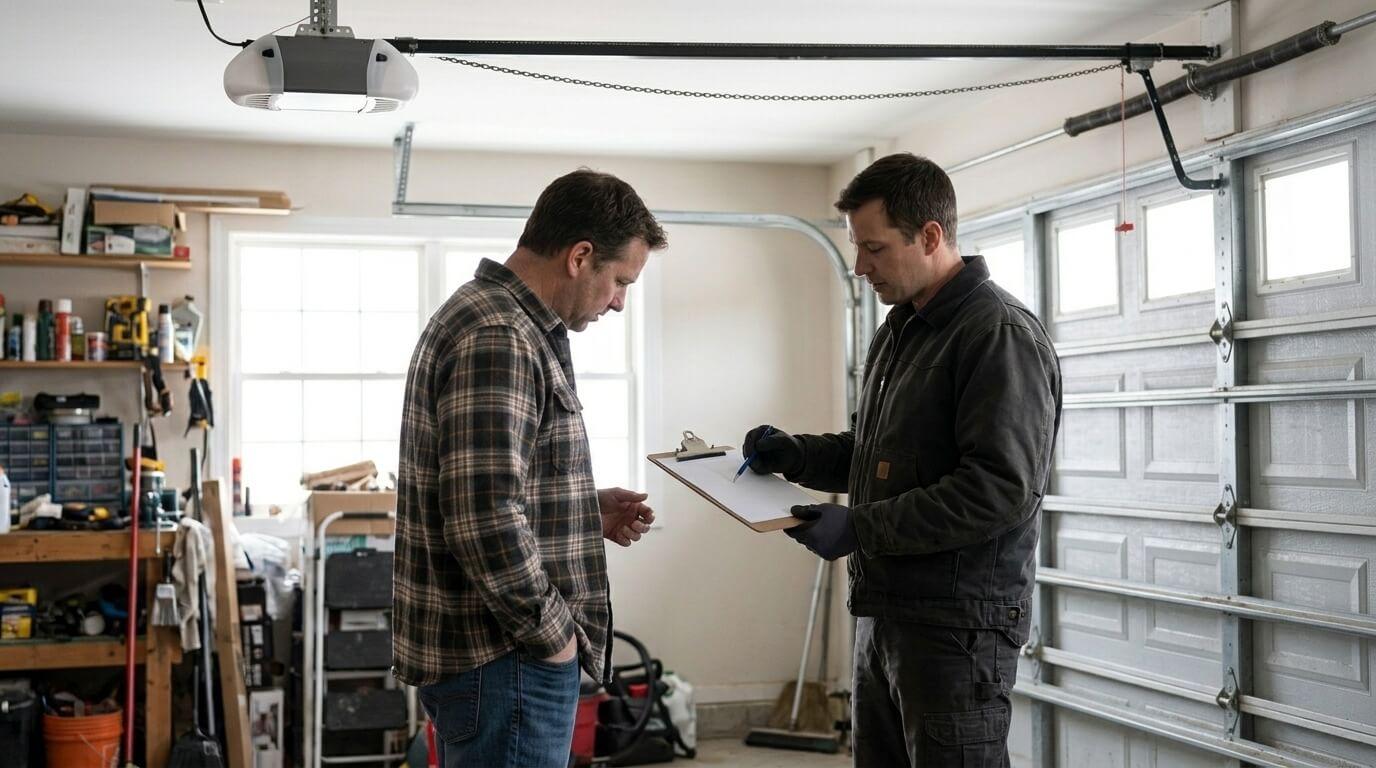
When an opener fails, most people search, scan a few results, and call whoever can come soonest. That works sometimes. But the provider you pick shapes more than the speed of the fix: it affects whether the real cause gets found, whether the work holds up, and whether you're dealing with the same problem again in three months. Choosing the right LiftMaster garage door service is less about finding the cheapest or fastest option and more about finding someone who can diagnose accurately and explain clearly.
This guide walks through what to look for, which questions to ask, and which warning signs to watch for. It's written for homeowners, landlords, property managers, and commercial property owners in Pearland and the Greater Houston area, who often have different needs but share the same goal: reliable doors without repeat service calls.
Why Provider Choice Matters More Than People Expect
A garage door system looks simple from the outside. Underneath, it involves high-tension springs, calibrated safety sensors, electronic logic boards, and drive components that all interact. A rushed or mismatched repair can leave one of those pieces misadjusted without any obvious sign.
Consider a few ways a weak service call can go wrong:
-
Misdiagnosis: replacing a working opener when a worn spring was the real culprit
-
Incomplete fixes: clearing a symptom, such as a sensor fault, without finding the wiring problem causing it
-
Incorrect settings: leaving travel or force limits miscalibrated, which can undermine auto-reverse
-
Unsafe shortcuts: bypassing safety sensors to make a door close
-
Poor documentation: no written record of what was done or what's covered
A good provider avoids all of these by testing the whole system and explaining what they find.
What to Look For in a LiftMaster Provider
Familiarity With LiftMaster Systems
LiftMaster has produced many models over the years, including chain-drive, belt-drive, and wall-mounted units, with different programming steps, diagnostic indicators, and replacement parts. A technician who works with these openers regularly will usually diagnose faster and avoid trial-and-error. When you're looking for LiftMaster garage door experts, the practical test is how specifically they can talk about your unit: model-specific quirks, what the diagnostic lights mean, and how programming works for your generation of opener.
Whole-System Competence
Many "opener problems" are really door problems. A good technician checks springs, cables, rollers, and tracks as well as the motor unit. If a company only wants to talk about the opener, ask whether they inspect the door hardware too.
Licensing and Insurance
Ask whether the company is licensed and insured, and don't be shy about asking for proof. Insurance matters if something is damaged during a repair, and it's a basic sign of professional operation.
Written, Itemized Estimates
You should know what you're paying for before work begins. A solid estimate separates parts and labor, notes any diagnostic fee, and explains what's included. Be cautious about vague verbal quotes or pressure to approve work immediately.
Clear Warranty Terms
Warranty coverage should be explained plainly and provided in writing. Ask what's covered, for how long, and whether labor is included alongside parts.
Transparent Diagnosis
The best sign of a trustworthy provider is willingness to show and explain the problem: what failed, why, and what the options are, including the option of doing less. If a technician can't explain why a repair is necessary, that's worth noting.
Availability and Responsiveness
A stuck door can trap a vehicle or leave a building unsecured. Ask about typical response times, whether same-day service is available, and how after-hours situations are handled. For commercial properties, ask how scheduling works around business hours.
Questions Worth Asking Before You Book
-
How much experience do you have with LiftMaster openers, and with my model or generation?
-
Will you inspect the springs, cables, and tracks as well as the opener?
-
Is the estimate written and itemized, and is there a diagnostic fee?
-
What warranty applies to parts and labor?
-
Are you licensed and insured?
-
How quickly can you typically schedule service, and do you handle urgent calls?
-
Will you test the safety reversal and sensors before leaving?
-
Can you explain repair versus replacement for my situation?
Clear, specific answers are a good sign. Vague answers aren't a deal-breaker alone, but several in a row are worth taking seriously.
Different Owners, Different Priorities
|
Owner Type |
What Often Matters Most |
|
Homeowner |
Clear explanations, fair pricing, safe repairs, reliable scheduling |
|
Landlord |
Quick response for tenants, consistent pricing, documentation of work |
|
Property manager |
Ability to handle multiple doors, standardized parts, simple billing and records |
|
Commercial owner |
Minimal downtime, flexible scheduling, durable hardware for heavier use |
If you manage several properties, ask whether a provider offers consistent service across locations, keeps records of past work, and can help plan replacements based on age and repair history.
Red Flags to Take Seriously
Most companies are honest, but a few patterns deserve caution:
-
No written estimate, or reluctance to put pricing in writing
-
Pressure to decide immediately, especially with "today only" pricing
-
Recommending full replacement without testing the existing components
-
No verifiable local presence, despite claiming to serve your area
-
Requests for full payment upfront before work has started
-
Unwillingness to confirm licensing or insurance
-
Suggesting you bypass or disable safety features, which should never be part of a fix
-
A price far below every other quote with no clear explanation
One of these alone isn't automatically disqualifying, but multiple red flags are a reason to look elsewhere.
What a Good Service Visit Looks Like
Knowing what to expect helps you spot a quality provider:
-
A conversation about symptoms: when the problem started, how often it happens, and any sounds or blinking patterns
-
A full-system inspection, including the opener, sensors, springs, cables, rollers, and tracks
-
Testing: power, settings, balance, auto-reverse, and remote response
-
A plain-language explanation of the cause and the options
-
A written estimate before additional work begins
-
The repair itself, followed by recalibration where needed
-
A final test and walkthrough, with a summary of what was done and what's covered
If the visit skips the testing or the explanation, that's a reason to ask questions.
Repair, Replacement, or Both?
A trustworthy provider should discuss both options honestly rather than defaulting to whichever is more profitable.
Repair often makes sense when:
-
The failure is isolated, such as a sensor, remote, or single worn part
-
The opener has otherwise been dependable
-
Parts for your model are readily available
Replacement is worth discussing when:
-
Repairs are becoming frequent
-
The opener lacks modern safety or security features
-
Parts are difficult to source
-
You want upgrades like battery backup or smart connectivity
Ask the provider to explain their recommendation in terms of your specific unit's age and condition. A good answer references what they found, not just a general preference.
Local Experience Counts in the Houston Area
Humidity, heat, and storm-season power events all affect garage door systems here. A provider who works regularly in Pearland and the surrounding area is more likely to recognize local patterns, such as rust-prone hardware, moisture-related sensor issues, or outage-related battery backup failures. Local presence also tends to make follow-up visits, warranty questions, and recurring maintenance easier to handle.
Putting It Together
A simple way to compare providers is to score each one on the factors above and decide which matter most to you. For most owners, those are diagnostic transparency, LiftMaster familiarity, written estimates, and warranty clarity, with response time rising to the top for rental and commercial properties.
When you're ready to compare, it helps to look at companies that publish clear information about the brands and services they handle. A local company like PowerLift Garage Doors, which works with LiftMaster openers in Pearland and the Greater Houston area, is an example of the kind of provider that tends to fit these criteria. If you want to see what a focused LiftMaster garage door service offering looks like, reviewing how a provider describes its repair, installation, and maintenance work can help you judge whether they match your needs.
Frequently Asked Questions
Do I need a provider that specializes in LiftMaster openers? Not strictly, but brand familiarity usually speeds up diagnosis and reduces guesswork, especially with older models or smart-enabled units.
Is it normal to pay a diagnostic fee? Many providers charge one, sometimes credited toward repairs. Ask upfront so there are no surprises.
How do I know whether a quote is fair? Comparing two or three written, itemized estimates gives you a clearer picture than looking at one price in isolation. Pay attention to what's included, not just the total.
Should a technician check my springs if I only called about the opener? Ideally yes. Springs and cables affect how the opener performs and are common causes of "opener problems," so a thorough provider looks at both.
What should I do if a provider suggests bypassing a safety sensor? Decline and find another provider. Safety sensors and auto-reverse features exist for protection and shouldn't be disabled as a fix.
How can property managers keep service consistent across several doors? Choose a provider who keeps records, can standardize parts where possible, and is willing to help plan maintenance and replacements across your properties.
What's the most reliable sign of a trustworthy provider? A clear, willing explanation of what's wrong, what the options are, and what's covered, delivered in writing.
Final Thoughts
The best garage door provider isn't necessarily the fastest or the cheapest. It's the one who diagnoses accurately, explains plainly, tests the whole system, and puts pricing and warranty terms in writing. Asking a handful of direct questions before you book, and watching for the red flags above, goes a long way toward getting a repair that lasts. Whether you're caring for one door or many, a little vetting up front saves time, money, and repeat visits later.

 English
 Arabic
 French
 Spanish
 Portuguese
 Deutsch
 Turkish
 Dutch
 Italiano
 Russian
 Portuguese (Brazil)
 Greek
