


AI Store Builder SEO: How to Optimize Your Online Store for Google
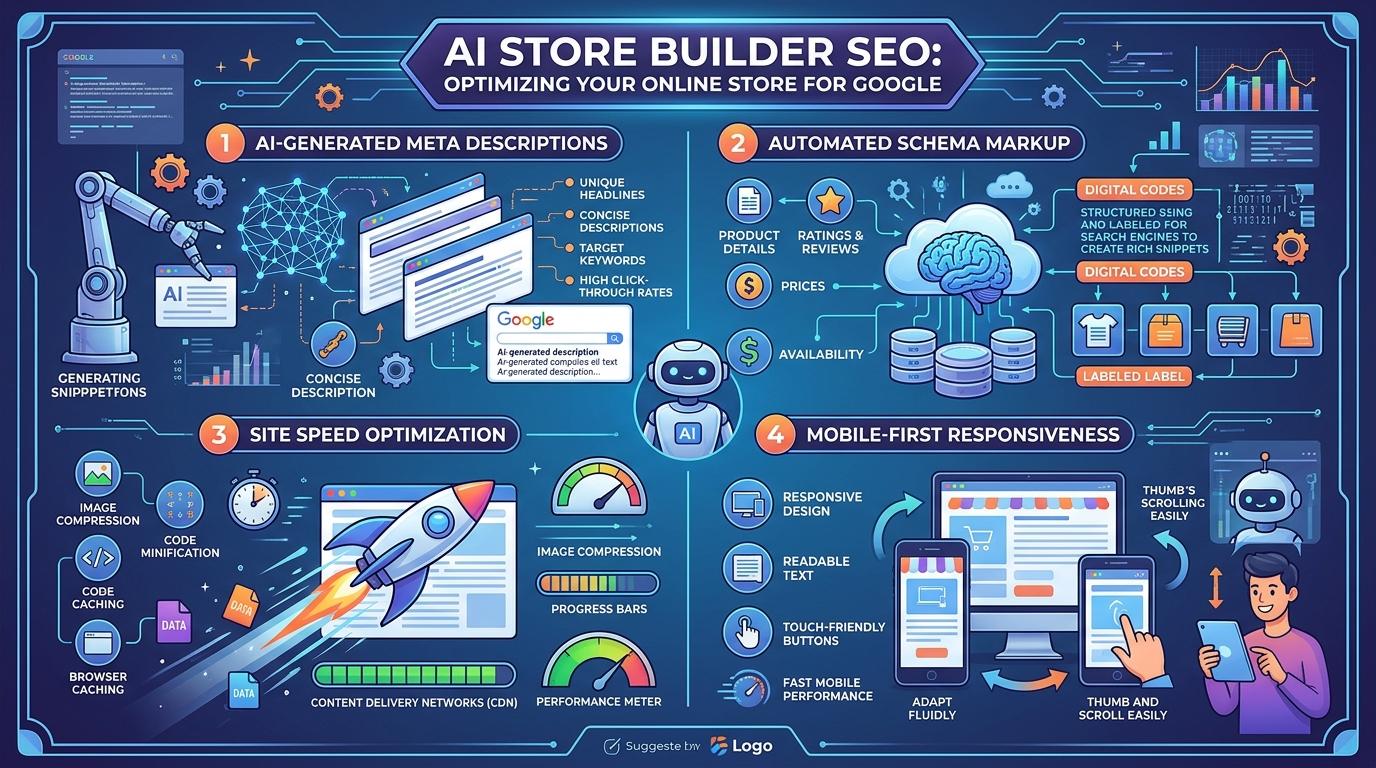
Introduction
Building an online store with artificial intelligence is becoming easier for entrepreneurs and small business owners. An AI store builder can help you create website pages, write product descriptions, design layouts, and organize your online shop without spending hours on manual work. However, launching a store is only the first step. You also need to make sure people can find it on Google.
This is where search engine optimization (SEO) becomes important. SEO helps search engines understand your website and helps potential customers discover your products when they search online. Without a good SEO strategy, even a beautifully designed store may struggle to attract organic traffic.
At Ai Start Store, we understand that creating an online business involves more than choosing a template and adding products. You also need helpful content, relevant keywords, fast-loading pages, and a smooth shopping experience.
Whether you use a Shopify Ai Store Builder, a Dropshipping Store Builder, or another AI Online Store Builder, the right SEO practices can help you build a stronger online presence.
In this guide, you will learn how to optimize your AI-powered online store for Google, improve product page visibility, avoid common SEO mistakes, and create a better experience for your customers.
What Is AI Store Builder SEO?
AI Store Builder SEO is the process of optimizing an online store created with AI-powered tools so that search engines can discover, understand, and potentially rank its pages.
An AI store builder may help generate product descriptions, page titles, category pages, blog posts, and website layouts. These features can save time, but they do not automatically guarantee good rankings.
Google still needs to understand what your pages offer, whether the content is useful, and how well your website meets searchers' needs.
For example, imagine you sell fitness accessories. A customer searches for “adjustable resistance bands for home workouts.” If your store has a helpful product page with accurate details, clear images, useful information, and a descriptive page title, Google may better understand how that page relates to the search.
Your goal should not be to add as many keywords as possible. Instead, focus on making every page useful, relevant, and easy to navigate.
1. Choose the Right Keywords for Your Online Store
Keyword research is one of the first steps in an effective SEO strategy. Keywords are the words and phrases people type into search engines when looking for products, information, or solutions.
Using relevant keywords helps you understand what your customers want and how to organize your website content.
Find Keywords Related to Your Products
Start by listing your main products, categories, and customer needs. Then identify phrases people might use when searching for those items.
For example, if you sell reusable water bottles, related searches might include:
-
Best reusable water bottles
-
Stainless steel water bottle
-
Leakproof water bottle for travel
-
Reusable water bottle for the gym
-
How to clean a reusable water bottle
These phrases reflect different search intentions. Some people want to purchase a product, while others are looking for information.
Your product pages should focus on purchase-related searches, while blog articles can answer common questions and provide helpful advice.
Use Long-Tail Keywords
Long-tail keywords are more specific search phrases. They often help you target customers who know what they want.
For example, “shoes” is a broad keyword. “Lightweight running shoes for beginners” is more specific.
A new store may find it easier to create useful content around relevant, specific searches rather than trying to compete immediately for extremely broad terms.
Place Keywords Naturally
Once you identify suitable keywords, use them where they make sense, including:
-
Page titles
-
Main headings
-
Product descriptions
-
Meta descriptions
-
Image alt text, when it accurately describes the image
-
Relevant blog content
-
Category page copy
Avoid repeating the same phrase unnaturally. Keyword stuffing can make content difficult to read and may violate Google's spam policies.
For your website, use Ai Store Builder naturally in relevant educational content. Secondary terms such as Shopify Ai Store Builder and AI Online Store Builder can appear in sections where they genuinely fit the topic.
2. Write SEO-Friendly Product Descriptions
Product descriptions are an important part of ecommerce SEO. They explain what a product does, who it is for, and why a customer might want to buy it.
AI tools can help you create a first draft quickly. However, you should always review and improve the result before publishing.
Focus on Customer Benefits
Do not simply list product features. Explain how those features help the customer.
For example, instead of writing:
“This bottle has double-wall insulation.”
You could write:
“This double-wall insulated bottle helps keep drinks at a more consistent temperature, making it convenient for work, travel, or workouts.”
Make sure every product claim is accurate and supported by the manufacturer's information.
Avoid Duplicate Descriptions
Many online sellers copy product descriptions directly from suppliers. This can make their pages less distinctive and less helpful to shoppers.
Use AI to help rewrite descriptions in your brand's voice, but include accurate product details and useful information that customers cannot easily find elsewhere.
You might explain sizing, care instructions, compatibility, material, or practical usage tips.
Organize Descriptions Clearly
Use short paragraphs, descriptive headings, and bullet points where appropriate. Make essential details easy to scan.
A strong product page should answer common questions before the customer needs to contact support.
3. Optimize Page Titles and Meta Descriptions
Page titles and meta descriptions help communicate what a page is about in search results.
A page title is a significant relevance signal, while a meta description may be used by Google as the snippet shown below a result. Google can rewrite either displayed element, so there is no guarantee that your exact wording will appear.
Create Clear Page Titles
Write a unique, descriptive title for each important page. Include your main keyword when it fits naturally.
For example:
Product page title: Stainless Steel Water Bottle for Travel | Your Brand
Category page title: Reusable Water Bottles for Everyday Use | Your Brand
Blog title: How to Choose a Reusable Water Bottle for Travel
Avoid vague titles such as “Products,” “Shop Now,” or “Best Items.” They provide little information about the page.
Write Helpful Meta Descriptions
A good meta description summarizes the page and gives people a reason to visit.
For example:
“Explore reusable water bottles for work, travel, and everyday use. Compare styles, materials, and features to find an option that suits your needs.”
Keep your descriptions relevant to the actual page. Do not promise discounts, features, or benefits that are not available.
An AI Online Store Builder may generate title and description suggestions, but reviewing them manually helps keep them accurate and unique.
4. Create SEO-Friendly URLs
Your website URLs should be clear, descriptive, and easy to understand.
For example:
Good URL: yourstore.com/products/insulated-water-bottle
Less helpful URL: yourstore.com/products/item-12345-final
A descriptive URL gives users and search engines a useful clue about the page.
Keep URLs reasonably short and use words that accurately describe the product or category. Avoid unnecessary numbers, repeated keywords, and long strings of irrelevant text.
If you change an existing URL, consider its impact before doing so. Pages that already receive traffic or have backlinks may need a properly configured permanent redirect to the new URL.
Many store builders manage parts of URL creation automatically, but you should still review your website's structure.
5. Improve Website Speed and Mobile Experience
Website performance affects how people experience your store. A slow page can frustrate visitors, especially when they are browsing product images or trying to complete checkout.
Google also uses Core Web Vitals as part of its page experience assessment. These metrics measure loading performance, responsiveness, and visual stability.
Optimize Product Images
Large images can slow down an online store. Use appropriately sized images and modern formats, such as WebP or AVIF, when supported.
You should also:
-
Compress images without noticeably reducing quality.
-
Avoid uploading unnecessarily large files.
-
Use descriptive filenames where practical.
-
Add meaningful alt text to informative images.
-
Lazy-load suitable below-the-fold images.
Alt text should describe the image for people using assistive technology. It should not be treated as an opportunity to stuff keywords.
Test Your Store on Mobile Devices
Many customers shop on their phones. Your store should be easy to browse on a smaller screen.
Check that:
-
Text is readable without zooming.
-
Buttons are easy to tap.
-
Product images display correctly.
-
Navigation menus work properly.
-
Checkout fields are easy to complete.
-
Important content is not hidden or cut off.
Measure Performance
Use tools such as Google PageSpeed Insights to identify performance issues. Focus on real problems rather than trying to achieve a perfect score at any cost.
Your chosen AI store builder may handle hosting and technical optimization, but your images, apps, scripts, and page design can still affect performance.
6. Organize Your Website with Clear Navigation
A well-organized website helps customers find products and helps search engines discover your important pages.
Start with a simple structure that reflects your product catalog.
For example:
-
Home
-
Shop
-
Clothing
-
Accessories
-
Footwear
-
-
About Us
-
Blog
-
Contact
Your categories should reflect how customers naturally think about your products.
Use Internal Links
Internal links connect one page of your website to another. They help users discover related information and help search engines find additional pages.
For example, a blog post about choosing running shoes could link to your running shoe category. A product page could link to a relevant size guide or care guide.
Use descriptive anchor text so visitors understand what they will find when they click.
Avoid Creating Too Many Similar Pages
Some AI tools can generate many pages quickly. However, creating large numbers of nearly identical pages can lead to a confusing website with little unique value.
Only publish pages that serve a clear purpose. Combine overlapping content when appropriate, and make sure each important page offers something useful.
7. Use Google Search Console to Monitor SEO
Google Search Console is a free tool that helps website owners understand how their pages perform in Google Search.
It is especially useful when launching a new store because it provides information about search visibility, indexing, and technical problems.
Submit Your Sitemap
A sitemap lists important URLs on your website that search engines can use to discover pages.
Many ecommerce platforms automatically generate a sitemap. Check your platform's documentation to find its location.
Then add your website property to Google Search Console and submit the sitemap through the Sitemaps section.
Submitting a sitemap does not guarantee that every URL will be indexed, but it can help Google discover your pages.
Check Indexing Issues
Use Search Console's Page indexing report to identify URLs that Google has not indexed or has excluded.
Possible causes include:
-
Pages blocked by robots.txt
-
Accidental noindex directives
-
Duplicate or very similar URLs
-
Pages that return errors
-
Pages with insufficient unique value
-
Pages that Google has not discovered yet
Not every excluded URL is a problem. For example, search filters or duplicate URLs may not need to appear in Google's index.
Focus on ensuring that your important product pages, category pages, and useful articles are accessible and eligible for indexing.
Review Search Performance
The Performance report can show clicks, impressions, click-through rates, and average positions for relevant searches.
Use this information to identify pages that could benefit from clearer titles, stronger content, or better internal links.
Remember that SEO takes time. Measure progress over weeks and months rather than expecting immediate results.
8. Publish Helpful Blog Content
Blogging can help your store attract people who are researching a topic before making a purchase.
For example, a skincare store might publish articles about building a skincare routine. A home decor shop could write about choosing lighting for small rooms.
These articles can answer customer questions and link naturally to relevant products.
Build Content Around Search Intent
Before writing an article, consider what the reader wants to learn.
Someone searching “how to clean leather shoes” needs instructions. Someone searching “buy leather shoes online” is closer to making a purchase.
Create content that directly addresses the intended question rather than forcing every article to promote a product.
Use AI as an Assistant, Not a Replacement
An AI store builder or writing tool can help you brainstorm topics, outline articles, and prepare early drafts.
To make your content more useful, add accurate product information, real experience where available, clear examples, and practical advice.
Check every factual statement. Remove repetitive paragraphs and unsupported claims. The goal is to help readers, not simply publish more pages.
For Ai Start Store, useful content could explain how store-building tools work, how beginners can compare platforms, and how ecommerce businesses can improve their online visibility.
9. Improve SEO for Dropshipping Stores
Dropshipping stores face some additional SEO challenges. Many sellers use similar supplier products, descriptions, and images, which can make their websites look very similar to competing stores.
A Dropshipping Store Builder can simplify product setup, but the store owner still needs to create a useful shopping experience.
Make Product Pages More Helpful
Where possible, include your own useful information, such as:
-
Clear product specifications
-
Sizing and compatibility details
-
Care instructions
-
Realistic delivery estimates
-
Answers to common customer questions
-
Accurate product images
-
Clear returns and refund information
Do not invent product reviews or claim to have personally tested products when you have not.
Be Transparent About Shipping
Customers want to know when their orders will arrive. Explain processing times, shipping estimates, tracking availability, and any important restrictions.
Avoid promising delivery dates that your supplier cannot reliably meet.
Check Product Availability
Out-of-stock products and discontinued items need sensible handling. Depending on the situation, you might update the page, suggest alternatives, or redirect users when a product has been permanently removed and a genuinely suitable replacement exists.
Do not redirect every discontinued product to an unrelated page.
10. Use Structured Data Where Appropriate
Structured data is additional information that helps search engines understand certain details about a page.
For ecommerce websites, relevant structured data may include Product, Offer, BreadcrumbList, and Organization information.
Product structured data can communicate details such as a product's name, price, availability, and review information when those details are genuinely present and eligible.
Correct structured data may make pages eligible for certain enhanced search appearances, but it does not guarantee rich results or higher rankings.
Some ecommerce platforms generate structured data automatically through themes or integrations. Check the output to ensure it accurately matches the visible page content.
Use Google's Rich Results Test where applicable, and review relevant issues in Search Console.
11. Build Trust with Accurate Business Information
Trust is important when people are deciding whether to buy from an unfamiliar online store.
Make your business information easy to find. Provide a working contact method, clear shipping and return policies, and accurate product details.
If you publish an About Us page, explain what your business offers and how you serve customers. Avoid fake company histories, fabricated testimonials, or unsupported claims about product quality.
For a store targeting customers in the United States, ensure that currency, delivery information, customer service, and applicable business requirements are handled correctly.
Search terms such as AI Start Store United States and AI Start Store Builder United States may be relevant to people researching AI store-building solutions for the US market. Use these phrases only where they make sense in the content. Do not create repetitive location pages simply to target keyword variations.
The same principle applies to the keyword Build Store AI: use it in a sentence only when it reads naturally and supports the topic.
12. Common AI Store Builder SEO Mistakes to Avoid
Even with good tools, a few mistakes can limit your store's performance.
Publishing unedited AI content: Review all generated descriptions and articles for accuracy, clarity, and originality.
Ignoring search intent: Match each page to what the searcher wants to find.
Repeating keywords too often: Natural language is better than awkward keyword repetition.
Using duplicate product descriptions: Add meaningful information that helps customers make decisions.
Forgetting technical SEO: Check indexability, redirects, sitemap availability, broken links, and mobile performance.
Expecting instant rankings: Google needs time to discover and evaluate pages. Competitive searches may take considerable effort to target successfully.
Ignoring customer experience: A page that attracts visitors but confuses them during checkout will not support a strong business.
Conclusion
SEO is an important part of building a successful ecommerce website. An AI store builder can make the initial setup faster, but attracting organic traffic requires careful planning, useful content, and ongoing improvements.
Start by researching relevant keywords, writing clear product descriptions, optimizing page titles, improving mobile performance, and organizing your website. Then use Google Search Console to monitor indexing and search performance.
If you run a dropshipping business, pay particular attention to product uniqueness, accurate shipping information, and supplier reliability. If you use a Shopify Ai Store Builder or another AI Online Store Builder, review the technical SEO features available on your platform instead of assuming everything is automatically optimized.
At Ai Start Store, the goal is to help entrepreneurs understand AI-powered ecommerce and build a stronger online presence. With a customer-focused SEO strategy, you can give search engines clearer information about your store and make it easier for potential buyers to discover your products.
Remember that SEO is an ongoing process. Publish content that genuinely helps people, keep your store technically healthy, and use performance data to guide your next improvements.
Frequently Asked Questions (FAQs)
1. Does an AI Store Builder automatically optimize my website for Google?
Not completely. An AI store builder may generate page titles, descriptions, layouts, or other SEO elements, but you still need to review them. You should also check mobile performance, indexing settings, internal links, page content, and technical SEO.
2. How can I improve my AI-built online store's Google rankings?
Start with relevant keyword research and create useful product and category pages. Write unique descriptions, optimize titles and images, improve page speed, use internal links, submit your sitemap, and monitor results in Google Search Console. Rankings depend on many factors, so improvements are not guaranteed.
3. Is a Shopify Ai Store Builder good for SEO?
It can be. Shopify supports many SEO essentials, including editable page titles, meta descriptions, canonical URLs, and sitemap generation. Your results still depend on the quality of your content, website structure, technical setup, competition, and customer experience.
4. How does SEO work for a Dropshipping Store Builder?
SEO for dropshipping involves making product pages useful and distinctive, providing accurate product information, optimizing category pages, and publishing helpful content. Avoid copying supplier descriptions without improvement, and make shipping, returns, and product availability clear.
5. How long does SEO take to show results for a new AI online store?
There is no fixed timeline. Google may discover pages within days or weeks, but meaningful ranking and traffic improvements can take months, especially in competitive markets. Use Google Search Console to monitor impressions, clicks, and indexing, and keep improving your pages based on the results.

 English
 Arabic
 French
 Spanish
 Portuguese
 Deutsch
 Turkish
 Dutch
 Russian
 Romaian
 Portuguese (Brazil)
 Greek
