


How to Improve Your Website’s SEO Ranking and Attract More Organic Traffic in 2026
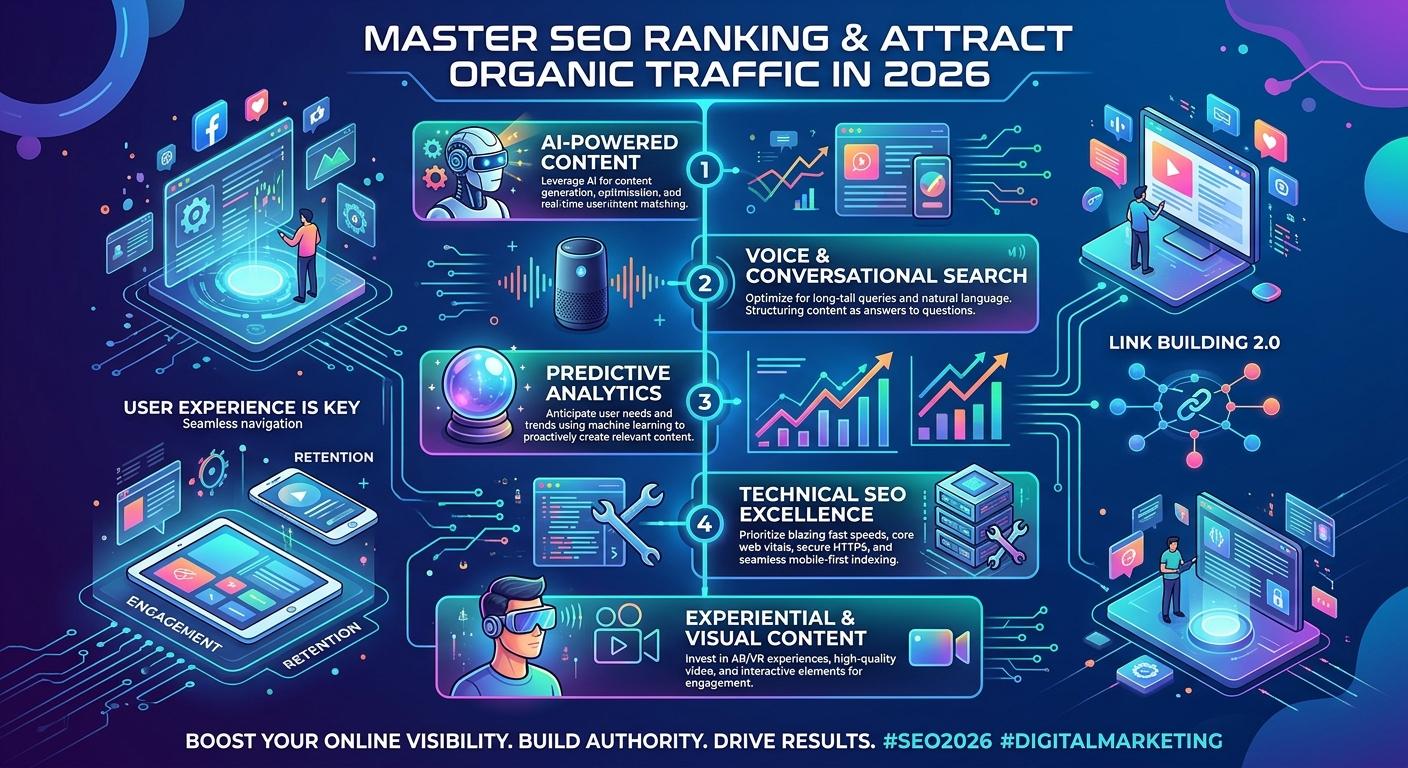
Introduction
In 2026, having a website is not enough to succeed online. You also need to make sure people can find it through search engines like Google. Search engine optimization (SEO) helps your website appear in relevant search results, attract the right visitors, and build trust with your audience. A well-planned SEO strategy can help businesses, bloggers, and website owners grow their online presence without depending entirely on paid advertising.
At Teknobe, we understand that improving search engine rankings takes time, consistent effort, and the right approach. Whether you run a small business website, an online store, or a blog, learning how SEO works can help you reach more people. By focusing on helpful content, technical performance, keyword research, and user experience, you can build a stronger website and attract more organic traffic in 2026.
1. Focus on Keyword Research
Keyword research is one of the most important parts of a successful SEO strategy. It helps you understand what people search for online and which topics are relevant to your website.
Start by identifying your primary keyword and a list of related secondary keywords. For example, if your main topic is website SEO, related keywords could include:
-
Improve website SEO ranking
-
Increase organic traffic
-
SEO tips for 2026
-
On-page SEO optimization
-
Technical SEO checklist
-
Keyword research tools
-
Content optimization
-
Website search engine optimization
Use these keywords naturally in your headings, page titles, introductions, and content. Avoid repeating the same keyword too often because keyword stuffing can make your content difficult to read and may harm your SEO efforts.
You can use tools such as Google Keyword Planner, Google Trends, and Google Search Console to discover keyword opportunities and understand what your audience wants to know.
2. Create High-Quality, Helpful Content
Content remains a major part of SEO. However, publishing many articles does not automatically improve your rankings. Your content should answer real questions, solve problems, and provide useful information that readers can trust.
Before writing an article, consider the search intent behind your target keyword. Is the reader looking for information, comparing products, or preparing to make a purchase? Create content that directly meets that need.
For better results in 2026:
-
Write clear and informative articles.
-
Use descriptive headings and short paragraphs.
-
Include examples, statistics, or practical advice when relevant.
-
Update outdated information.
-
Answer common questions related to your topic.
-
Check facts and link to trustworthy sources when appropriate.
AI writing tools can help with brainstorming, outlining, and editing. However, always review AI-generated content for accuracy, originality, usefulness, and a natural writing style. The goal should be to help readers, not simply produce more pages.
3. Improve On-Page SEO
On-page SEO means optimizing the elements on individual website pages so search engines and visitors can understand them more easily.
Start with your page title. Make it clear, relevant, and appealing. Include your main keyword when it fits naturally. Write a useful meta description that explains what readers will gain from visiting the page.
You should also:
-
Use one clear main heading (H1).
-
Organize sections with descriptive H2 and H3 headings.
-
Add relevant internal links to other pages on your website.
-
Write descriptive alt text for meaningful images.
-
Use short, readable URLs.
-
Place keywords naturally throughout the content.
For example, a page about SEO improvement could use a URL such as /improve-website-seo/ instead of a long URL filled with unnecessary words and numbers.
These improvements help search engines understand your content and make your pages easier for visitors to navigate.
4. Make Your Website Fast and Mobile-Friendly
Website performance plays an important role in user experience. If your pages load slowly or are difficult to use on mobile devices, visitors may leave before reading your content.
Google uses mobile-first indexing, which means it primarily uses the mobile version of your website for indexing. Therefore, your website should work well on smartphones, tablets, and desktop computers.
Here are some practical ways to improve performance:
-
Compress large images and use modern image formats where appropriate.
-
Remove unnecessary plugins and scripts.
-
Choose reliable website hosting.
-
Enable browser caching when suitable.
-
Use a responsive website design.
-
Reduce unnecessary redirects.
You should also monitor Core Web Vitals, including loading performance, interaction responsiveness, and visual stability. Google's recommended targets include an LCP of 2.5 seconds or less, INP of 200 milliseconds or less, and CLS of 0.1 or less, measured at the 75th percentile.
Use Google PageSpeed Insights to identify performance issues and prioritize improvements that make the biggest difference to visitors.
5. Build Relevant, High-Quality Backlinks
Backlinks are links from other websites that point to your website. Quality backlinks can help search engines discover your content and understand its reputation.
However, not all backlinks are equally valuable. Links from relevant, trustworthy websites are generally more useful than links from unrelated or low-quality websites.
To earn better backlinks, try these strategies:
-
Publish original research, useful guides, and expert resources.
-
Write guest articles for relevant websites.
-
Build relationships with creators and publishers in your industry.
-
Share genuinely useful content with your audience.
-
Find relevant websites that may benefit from referencing your resources.
Avoid buying spammy backlinks or participating in link schemes designed to manipulate search rankings. Focus on earning links naturally by creating content worth recommending.
6. Improve Internal Linking
Internal links connect one page of your website to another. They help visitors discover related content and help search engines understand your website's structure.
For example, an article about keyword research could link to another article about on-page SEO or content marketing.
Use descriptive anchor text so readers understand what they will find after clicking a link. Make sure important pages are accessible through relevant internal links, and avoid leaving valuable content isolated from the rest of your website.
A clear internal linking strategy can improve navigation, distribute link value across your site, and encourage visitors to explore more pages.
7. Optimize Your Website for AI Search
Search behavior is changing as people increasingly use AI-powered search experiences and conversational tools to find information. In 2026, website owners should make their content useful for both traditional search results and users looking for direct answers.
You do not need a completely separate SEO strategy for AI search. Start with strong fundamentals:
-
Answer questions clearly and directly.
-
Use meaningful headings and well-organized sections.
-
Provide accurate, original, and verifiable information.
-
Demonstrate relevant experience and expertise.
-
Keep important information accessible to search engines.
-
Maintain accurate business details across relevant platforms.
There is no guaranteed method to make a website appear in every AI-generated answer. Focus on creating content that deserves to be discovered, cited, and trusted.
8. Use Technical SEO to Fix Website Problems
Technical SEO helps search engines crawl, index, and understand your website. Even excellent content may struggle to attract organic traffic if search engines cannot access or index it properly.
Start by checking whether your important pages are indexed. Review your robots.txt file, XML sitemap, canonical tags, redirects, and HTTPS configuration.
Use Google Search Console to identify indexing issues and understand how Google sees your website. Fix broken links, remove unnecessary redirect chains, and make sure important pages return the correct status codes.
You can also add relevant structured data, such as Article, Product, or LocalBusiness markup, when appropriate. Structured data can help search engines interpret page information, although it does not guarantee rich results or higher rankings.
Review technical SEO regularly, especially after redesigning your website, changing URLs, or installing new plugins.
9. Track SEO Performance and Update Your Strategy
SEO is an ongoing process. You need to measure results to understand which improvements are working and which areas need more attention.
Google Search Console helps you monitor impressions, clicks, click-through rates, average search positions, and indexing issues. Google Analytics can help you understand organic visits, engagement, and conversions.
Review these metrics regularly:
-
Organic traffic to important pages
-
Search queries bringing visitors to your website
-
Pages gaining or losing clicks
-
Engagement and conversion trends
-
Technical issues affecting search visibility
If an article receives impressions but few clicks, consider improving its title and meta description. If a page attracts visitors but fails to meet their needs, improve the content and make the next step clearer.
Update older articles when facts, recommendations, or user expectations change. Avoid making changes simply for the sake of freshness; each update should add genuine value.
Conclusion
Improving your website's SEO ranking and attracting more organic traffic in 2026 requires a combination of helpful content, smart keyword research, technical optimization, quality backlinks, and a positive user experience. There is no shortcut that guarantees first-page rankings, but consistent improvements can strengthen your website's visibility over time.
Start by understanding your audience, fixing important website issues, and creating content that answers real questions. Then use reliable SEO tools to measure progress and refine your strategy.
For readers of Teknobe, the key lesson is simple: focus on people first, follow search engine best practices, and build a website that deserves long-term trust. With patience and consistent effort, your website can become more visible and attract more relevant organic visitors.

 English
 Arabic
 French
 Spanish
 Portuguese
 Deutsch
 Turkish
 Dutch
 Italiano
 Russian
 Romaian
 Portuguese (Brazil)
