


Tax Planning for Freelancers in India Organising Income and Expenses
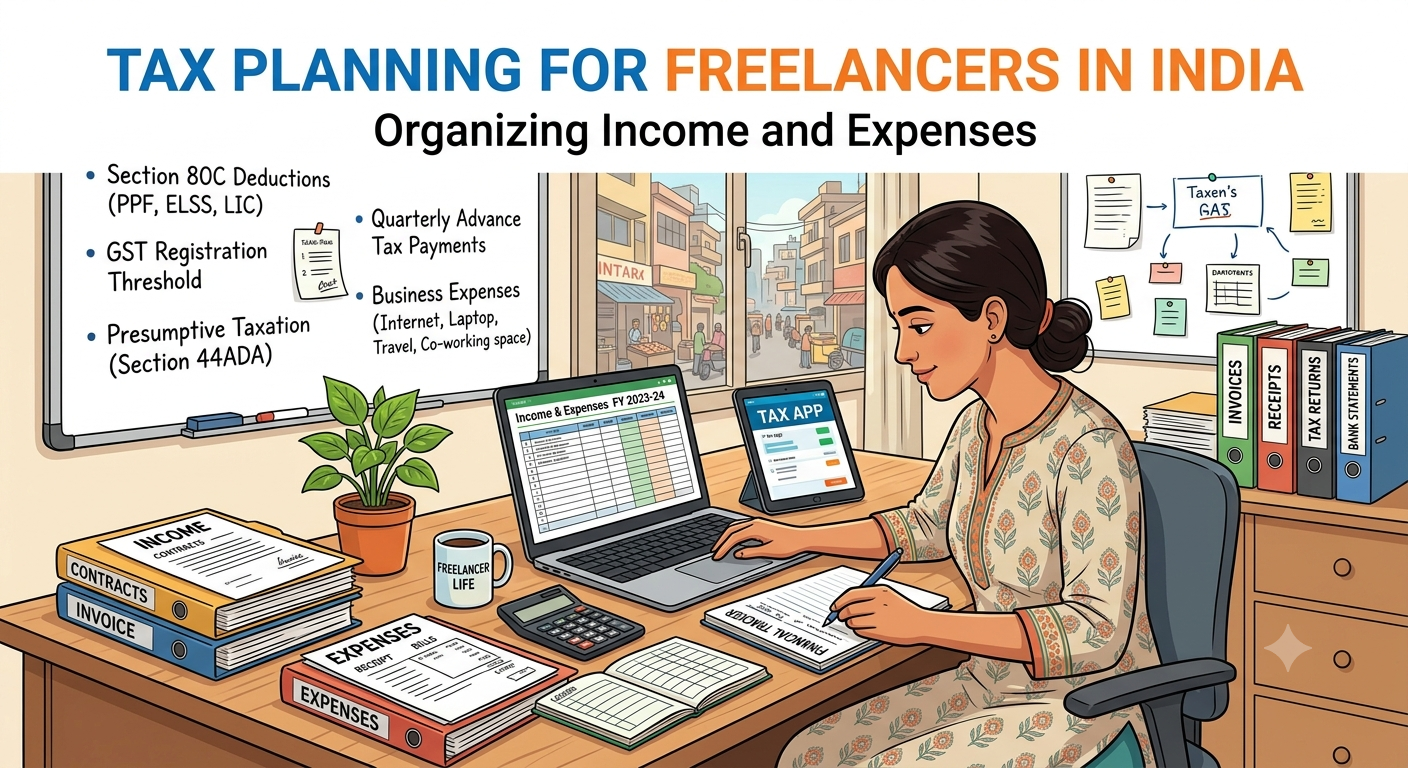
Tax Planning for Freelancers in India: Organising Income and Expenses
Freelancing offers professionals the flexibility to work independently, choose projects, and manage their own schedules. However, freelancers are also responsible for maintaining financial records, tracking income and expenses, and understanding the tax obligations applicable to their work.
Unlike salaried employees who may receive structured salary statements and tax deductions through their employers, freelancers often receive payments from multiple clients and platforms. Without an organised system, it can become difficult to track earnings, identify business expenses, and prepare accurate income tax returns.
Effective tax planning helps freelancers understand their financial position, maintain proper documentation, and make informed decisions throughout the financial year.
Understand Your Freelance Income
The first step in tax planning is identifying and recording all income earned through freelance activities. This may include payments for consulting, writing, graphic design, digital marketing, software development, online teaching, and other professional services.
Freelancers may receive payments through bank transfers, online payment platforms, or different client arrangements. They should maintain records of invoices issued, payments received, outstanding invoices, and relevant transaction details.
It is also important to distinguish between income earned and payments that are still outstanding. Maintaining accurate records makes it easier to reconcile client payments and identify missing or delayed receipts.
Freelancers working with international clients should also maintain appropriate records of foreign-currency transactions and verify the tax and reporting requirements applicable to their circumstances.
Separate Personal and Professional Expenses
Keeping personal and professional expenses separate makes financial management easier. When both types of spending are mixed together, freelancers may find it difficult to identify genuine business costs and prepare accurate accounts.
Where practical, freelancers can use a separate bank account or dedicated payment method for professional transactions. They should also maintain clear descriptions of business-related purchases and payments.
This approach supports better bookkeeping and makes it easier to review business performance.
Identify and Document Eligible Business Expenses
Freelancers may incur expenses while delivering services, finding clients, or maintaining their professional operations. Depending on the nature of the work, these may include software subscriptions, internet services, office-related costs, professional development, equipment, and eligible travel expenses.
However, not every expense automatically qualifies for a tax deduction. The treatment depends on the nature of the expense and the applicable income tax provisions.
Freelancers should retain relevant invoices, receipts, payment records, and other supporting documents. They should also distinguish between routine expenses and assets that may require different accounting or tax treatment.
Before claiming a deduction, verify that the expense meets the relevant legal conditions and is supported by appropriate documentation.
Maintain Accurate Invoices and Payment Records
Invoices help freelancers document the services provided, the client involved, and the amount payable for the work. Consistent invoicing also supports payment tracking and financial reporting.
Freelancers should maintain copies of issued invoices, contracts, payment confirmations, and relevant client communications. They should regularly compare invoice records with actual receipts to identify unpaid invoices or discrepancies.
Where GST requirements apply, invoices should follow the relevant rules for the type of transaction and the freelancer's registration status.
A consistent invoicing process can make it easier to organise records when preparing financial statements or income tax returns.
Understand Income Tax Obligations
Freelance income may be treated as income from a business or profession, depending on the nature of the activity and the applicable tax provisions.
Freelancers should understand the rules relevant to their circumstances, including the calculation of taxable income, eligible expenses, applicable tax payments, and return-filing requirements.
Certain eligible taxpayers may be able to consider presumptive taxation provisions, subject to the conditions and restrictions prescribed under the applicable law. Freelancers should not assume that these provisions automatically apply to every type of freelance activity.
The appropriate approach depends on the nature of the work, income records, eligibility, and other relevant circumstances. When uncertain, consult a qualified tax professional before making a decision.
Check Whether GST Compliance Applies
GST obligations depend on factors such as the nature of services, turnover, location, customer arrangements, and applicable registration provisions. Certain transactions may also have specific rules, particularly when services are supplied to clients outside India.
Freelancers should determine whether GST registration is required and understand the compliance responsibilities associated with their activities.
Where registered, they should review applicable invoicing requirements, return-filing obligations, payment records, and other relevant provisions.
Freelancers should not assume that every service provider has identical GST responsibilities. The applicable requirements should be verified based on the individual situation.
Plan for Tax Payments and Cash Flow
Freelancers may experience irregular income because projects, client payments, and workloads can change throughout the year. This makes cash flow management an important part of tax planning.
They should review expected income, regular operating expenses, outstanding client payments, and upcoming financial obligations.
It is also important to understand whether advance tax obligations apply and to follow the relevant payment rules. Tax deducted at source (TDS), where applicable, should be reviewed against available records and relevant tax statements.
Regular financial reviews help freelancers prepare for tax obligations rather than waiting until a return is due. They should use actual financial information to plan instead of relying on assumptions about future earnings.
Understand Tax Audit Requirements
A tax audit is a separate compliance requirement from filing an income tax return. Whether a freelancer needs a tax audit depends on the applicable legal provisions and the person's circumstances.
Relevant considerations may include the nature of the professional activity, gross receipts or turnover, the method used to calculate taxable income, and other conditions specified under the law.
Tax audit services India freelancers consider may help them understand whether audit requirements apply, organise financial records, review relevant documentation, and prepare for the audit process where required.
However, a tax audit is not automatically required for every freelancer. Eligibility and applicability should be assessed using the current provisions and the freelancer's actual circumstances.
Where an audit is required, the freelancer should consult an appropriately qualified professional and meet the applicable reporting and filing requirements.
Create a Simple Recordkeeping System
A well-organised recordkeeping system reduces the effort involved in reviewing income and expenses.
Freelancers can maintain separate categories for:
-
Client invoices and payments received
-
Outstanding invoices and unpaid work
-
Business expenses and supporting receipts
-
Bank statements and payment records
-
TDS details and relevant tax documents
-
GST records, where applicable
-
Tax payments and return-filing acknowledgements
Digital accounting tools or spreadsheets may help freelancers organise transactions, but records should still be reviewed for accuracy.
They should also protect confidential client and financial information and retain documents for the periods required by applicable rules.
When Should Freelancers Seek Professional Advice?
Professional assistance can be useful when freelance income comes from multiple sources, transactions involve international clients, GST requirements are unclear, or there are questions about deductions and tax audit applicability.
Professionals can help review records, explain relevant provisions, and identify areas that require additional attention. Freelancers should confirm that the person providing advice has the appropriate qualifications and experience for the work involved.
The purpose of professional guidance is to help freelancers understand their responsibilities and make informed decisions. It does not remove the need to maintain accurate records or comply with applicable laws.
Conclusion
Tax planning for freelancers in India involves more than filing income tax returns. It requires organising income, documenting eligible expenses, maintaining accurate invoices, understanding GST obligations, and preparing for applicable tax payments.
Regular bookkeeping and cash flow reviews can help freelancers understand their financial position and reduce confusion during tax preparation. Where tax audit requirements or other complex questions arise, seeking qualified professional guidance can help clarify the applicable rules.
By building consistent financial habits, freelancers can manage their professional finances more effectively and make better-informed decisions as their work grows.
FAQs
1. Why is tax planning important for freelancers in India?
Tax planning helps freelancers track income, organise business expenses, understand applicable tax obligations, and maintain the records needed to prepare accurate tax returns.
2. Which expenses can freelancers claim as tax deductions?
Eligible expenses depend on the nature of the work and the applicable tax provisions. Freelancers should maintain supporting documents and verify that each expense meets the relevant conditions before claiming a deduction.
3. Do freelancers in India need to register for GST?
GST registration depends on applicable legal requirements, including the nature of the services, turnover, location, and other relevant circumstances. Freelancers should verify their individual eligibility and obligations.
4. Is a tax audit compulsory for every freelancer?
No. Tax audit applicability depends on the relevant legal provisions and the freelancer's circumstances, including the nature of the activity and applicable conditions. A qualified professional can help determine whether an audit is required.
5. How can Tax audit services India help freelancers?
These services may help freelancers assess audit applicability, organise financial records, review supporting documents, and address relevant audit requirements when applicable.

 English
 Arabic
 French
 Spanish
 Deutsch
 Turkish
 Dutch
Dutch
 Italiano
 Russian
 Romaian
 Portuguese (Brazil)
 Greek
Greek
