


Exploring Contact Technology and Usability in Cable Connection Design
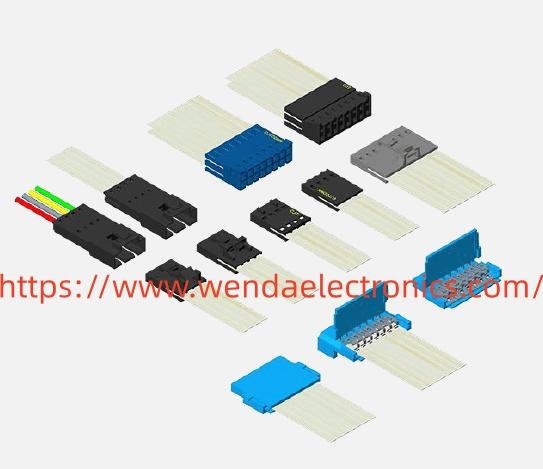
Electrical assemblies often contain multiple conductors that must be connected, routed, and secured within a limited space. In these applications, Cable Strip Connectors can support organized wiring by providing a defined interface between conductors and other electrical components. Their suitability depends on the conductor arrangement, contact structure, insulation, mounting method, and surrounding operating conditions. Evaluating these elements together helps product developers select connection components that fit the complete electrical system rather than focusing on a single feature.
Conductive materials are fundamental to connector performance. Copper and copper-based alloys are widely used for electrical contacts because they combine useful conductivity with the ability to be formed into different contact geometries. Depending on the application, surface plating may help improve corrosion resistance or maintain a suitable contact interface. The material and finish should be considered together because the electrical connection depends on the interaction between the contact surfaces, not simply the properties of the base metal.
Insulating materials provide another important layer of protection. Connector housings and supporting structures are often made from engineering plastics selected for electrical insulation, mechanical stability, and suitability for the surrounding environment. Heat exposure, vibration, cleaning agents, and the possibility of moisture may influence the material choice. A housing must also retain its shape during assembly and everyday use so that conductive parts remain properly positioned. The complete material combination should therefore be evaluated according to the intended application.
A practical buying process begins with understanding how the connector will be installed. Buyers should identify the type of conductor, the way wires will be prepared, the connection method, and the available mounting space. They should also clarify whether the assembly will remain fixed or need to be disconnected during maintenance. These details help determine which connector structure is suitable and whether additional accessories or installation tools are required. Clear drawings and representative samples can help suppliers understand the intended arrangement.
Compatibility between the conductor and contact is particularly important. Wire construction, insulation characteristics, and conductor preparation can influence how securely a connection is made. If the contact method does not suit the wire, assembly may become difficult or the connection may be less stable than intended. Product developers should review the complete wire-and-connector combination before approving a design. For manufacturing projects, consistent preparation and assembly procedures can also help reduce variation between finished units.
The connector's internal structure affects how electrical contact is established and maintained. Contact geometry, clamping arrangements, terminal positioning, and the stability of the connection all contribute to its behavior during use. Some designs are intended for permanent installation, while others provide a more serviceable interface. The preferred arrangement depends on whether the product prioritizes compact assembly, ease of replacement, or frequent access for inspection. Selecting the structure according to the application can simplify both initial installation and later servicing.
Mechanical retention is another consideration. A connection needs to remain secure when the surrounding equipment experiences routine movement or vibration. Housing locks, mounting features, strain relief, and cable routing can help reduce unwanted movement at the contact point. The cable should not place unnecessary pulling force on the electrical interface, and the connector should be supported appropriately within the assembly. These mechanical details are particularly relevant when wiring is installed in equipment that moves or is handled regularly.
Manufacturing consistency influences how easily connectors can be incorporated into production. Metal stamping, terminal forming, plating, plastic molding, and assembly may all contribute to the finished component. Each process needs to maintain the features required for contact alignment, housing fit, and dependable installation. Inspection can focus on terminal condition, insulation integrity, dimensional consistency, and the engagement of connected parts. For buyers, understanding a supplier's production and inspection approach can help clarify how quality is managed throughout manufacturing.
User experience is often determined by small installation details. Clearly defined insertion points, accessible release features, and a housing that is easy to orient can help technicians work more efficiently. Where several connections are placed close together, identification features or differentiated housing designs may reduce confusion during assembly and maintenance. A connector should be straightforward to handle without encouraging incorrect installation. Considering the needs of the people who assemble and service the product can therefore improve the overall wiring experience.
Maintenance requirements also influence the selection process. Connections installed deep inside equipment may be difficult to reach after the product is assembled, while accessible wiring interfaces can simplify troubleshooting and replacement. Designers should consider whether technicians need room to inspect the connector, release a wire, or remove an adjacent component. Suitable labeling and documentation can further support maintenance by helping users identify connection locations and follow the intended servicing procedure.
Appearance and layout remain relevant even when connectors are not visible to the end user. An orderly wiring arrangement can make the interior of an electrical enclosure easier to inspect and help prevent cables from obstructing other components. Housing shape, mounting orientation, cable exit direction, and identification features all influence how naturally the connector fits into the design. A compact form may be valuable where space is limited, but it should not make installation or servicing unnecessarily difficult.
Zhejiang Wenda Electronics Co., Ltd. works in electronic connector development and manufacturing, where contact materials, insulation structures, assembly compatibility, and practical product integration are important considerations. Businesses developing wiring systems can discuss conductor types, installation methods, environmental conditions, mounting needs, and maintenance expectations when evaluating suitable connector options. Further information about the company's products and capabilities is available at https://www.wendaelectronics.com

 English
 Arabic
 Spanish
 Portuguese
 Deutsch
 Turkish
 Dutch
Dutch
 Italiano
 Russian
 Romaian
 Portuguese (Brazil)
 Greek
Greek
