


What Does Bed Bug Poop Look Like? Signs to Check in Your Home
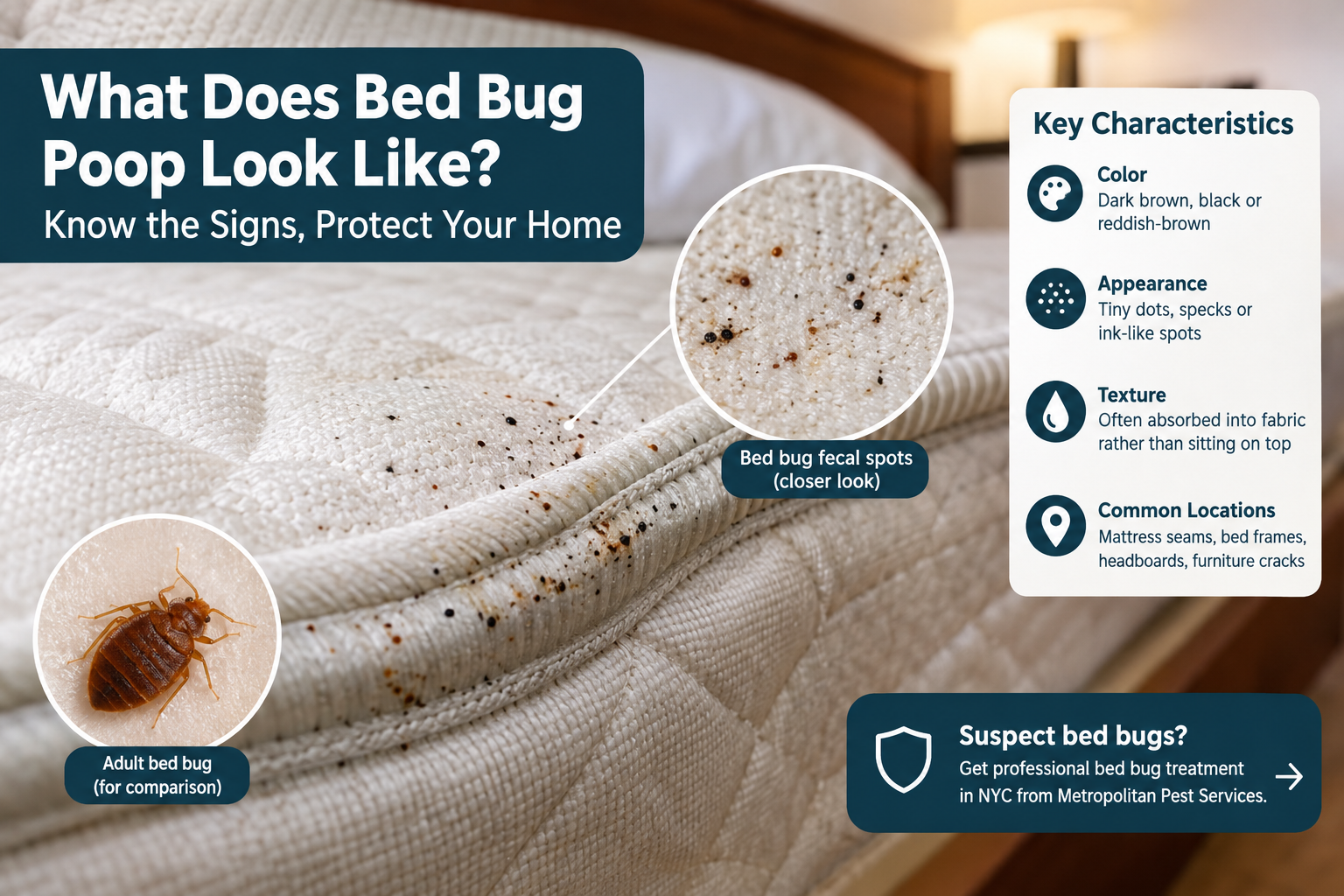
Finding tiny black spots on your mattress, pillowcase, or bedsheets can be concerning. You may wonder whether the marks are ordinary dirt, ink, mold, or evidence of bed bugs. Knowing what bed bug droppings look like can help you identify a possible infestation before it spreads.
Bed bug feces usually appear as tiny dark brown, reddish-brown, or black spots. They may resemble ink dots or small splashes from a fine-tip marker because the digested blood in the droppings can soak into fabric. These marks often appear near mattress seams, bed frames, headboards, and other places where bed bugs hide.
If you discover suspicious stains, do not rely on appearance alone. Check for other signs of bed bugs and consider professional pest control if you suspect an infestation. For New York residents searching for bed bugs removal NYC services, early identification is an important first step toward effective treatment.
What Does Bed Bug Poop Look Like?
Bed bug poop, also called bed bug feces or fecal spotting, consists of waste produced after bed bugs feed on blood. Unlike ordinary dust, these droppings often leave dark marks on surfaces close to their hiding places.
Here are the main characteristics to look for:
-
Color: Dark brown, black, or reddish-brown.
-
Appearance: Tiny dots, specks, or irregular spots that may look like ink stains.
-
Texture: Often absorbed into fabric rather than sitting loosely on the surface.
-
Pattern: Multiple spots may cluster along mattress seams, bedding edges, or wooden bed frames.
-
Location: Commonly found near places where bed bugs rest and hide.
The marks can vary depending on the surface and the age of the stain. On light-colored bedding, they may be easier to notice. On dark furniture or patterned fabric, they can be much harder to identify.
The US Environmental Protection Agency (EPA) identifies dark excrement spots as one of the physical signs to look for when checking for bed bugs.
Where Should You Look for Bed Bug Droppings?
Bed bugs tend to hide close to the places where people sleep or rest. Their droppings can therefore provide useful clues about where an infestation may be developing.
1. Mattress Seams and Edges
Inspect the stitching, piping, folds, labels, and corners of your mattress. Pay particular attention to the underside and any narrow creases where insects can remain hidden.
Small black or reddish-brown spots in these areas deserve closer inspection, especially if you also find shed skins or live insects.
2. Bed Sheets and Pillowcases
Dark spots on sheets, pillowcases, and blankets may be associated with bed bug activity. However, similar marks can come from other sources, including dirt, ink, and ordinary stains.
Look for repeated spotting rather than assuming that one mark proves an infestation.
3. Bed Frames and Headboards
Wooden bed frames, screw holes, joints, and cracks around headboards provide sheltered hiding places. Bed bug fecal spots may appear as dark marks on these surfaces.
Use a flashlight to inspect narrow gaps, joints, and the underside of the frame.
4. Sofas and Upholstered Furniture
Bed bugs are not limited to beds. They can hide in sofas, recliners, and upholstered chairs, particularly where people spend long periods resting.
Check cushion seams, fabric folds, undersides, and gaps around the frame. If suspicious spots appear in more than one resting area, inspect those locations carefully.
5. Nearby Cracks and Crevices
Other potential hiding places include bedside tables, drawer joints, baseboards, and cracks in nearby furniture. In established infestations, bed bugs may occupy additional areas beyond the mattress.
The EPA recommends examining the bed, surrounding furniture, and nearby cracks rather than checking only the top of the mattress.
How to Tell Bed Bug Poop Apart From Other Stains
Not every dark spot is caused by bed bugs. Comparing the appearance and location of marks with other physical evidence can help you decide what to do next.
| Possible cause | Typical appearance | Helpful clue |
|---|---|---|
| Bed bug feces | Dark brown or black dots, sometimes reddish-brown | Often concentrated near hiding places; may soak into fabric |
| Blood stains | Red, rust-colored, or brown marks | May result from crushed bugs or small amounts of blood on bedding |
| Ordinary dirt | Gray or brown particles | Often loose, dusty, or associated with general use |
| Ink | Dark, sharply defined marks or smears | May follow a pen-like line or appear near writing materials |
| Mold or mildew | Discoloration that can appear as spots or patches | May occur in damp areas and can have a different growth pattern |
These comparisons are clues, not definitive tests. Bed bug feces may be mistaken for other stains, and visual inspection alone cannot always establish the cause.
Avoid scraping, rubbing, or using chemicals on a suspicious area before you have documented it. Take a clear photograph and inspect the surrounding area for additional evidence.
What Other Signs Confirm a Possible Bed Bug Infestation?
Bed bug droppings become more concerning when they appear alongside other signs. Check for the following:
Live Bed Bugs
Adult bed bugs are small, flat, reddish-brown insects roughly the size of an apple seed before feeding. Young bed bugs are smaller and may be pale or translucent.
Shed Skins
As bed bugs grow, they shed their outer skins. These pale, hollow-looking casings may appear in mattress seams, bed frames, and furniture crevices.
Eggs and Eggshells
Bed bug eggs are tiny, approximately 1 millimeter long, and whitish. They may be attached to protected surfaces in places where bed bugs hide.
Rust-Colored Blood Spots
Small reddish or rusty stains on sheets can result from crushed bed bugs or blood associated with feeding.
Possible Bite Reactions
Some people develop itchy marks after bed bug bites, while others show no obvious reaction. Bites alone are not a reliable way to confirm bed bugs because other insects and skin conditions can cause similar symptoms.
When several signs appear together, a thorough inspection is more useful than trying to identify the infestation from one stain.
What Should You Do If You Find Bed Bug Poop?
Finding suspicious spots does not automatically mean your home has an infestation. Take practical steps to investigate the problem without accidentally spreading insects to other areas.
-
Photograph the spots. Keep a clear record of their appearance and location.
-
Inspect nearby hiding places. Examine mattress seams, the box spring, headboard, bed frame, and upholstered furniture.
-
Avoid moving bedding and furniture unnecessarily. Moving potentially infested items around the home can spread bed bugs.
-
Handle laundry carefully. Place potentially affected items in sealed bags before transporting them. Follow appropriate hot-washing and high-heat drying guidance for the fabric.
-
Avoid unverified chemical treatments. Never apply pesticides to your body, and do not use outdoor pesticides indoors. Follow all product label instructions.
-
Arrange a professional inspection if evidence persists. A pest management professional can assess suspicious signs, identify likely hiding places, and recommend an appropriate treatment plan.
Cleaning may help reduce clutter and remove some visible evidence, but it does not necessarily eliminate bed bugs hiding inside furniture or cracks.
When Should You Contact a Professional for Bed Bugs Removal in NYC?
Consider professional assistance if you repeatedly find dark fecal spots, discover live bed bugs or shed skins, or notice suspicious evidence in multiple areas.
This is particularly important in New York City apartments and multi-unit buildings, where bed bugs can move between connected spaces. If you rent your home, notify your landlord or building management when you suspect an infestation and follow the applicable local reporting process.
A professional inspection can help determine whether the marks are consistent with bed bug activity and whether treatment is needed. Depending on the findings, a suitable plan may include targeted treatment, preparation instructions, and follow-up monitoring.
How Metropolitan Pest Services Can Help
If you suspect bed bugs in your New York home, Metropolitan Pest Services offers a dedicated bed bug removal and treatment service in NYC.
Rather than guessing from stains alone, start by identifying the evidence and getting advice on the next step. You can also visit the Metropolitan Pest Services website to explore its pest control services, including rodent control and roach control.
Concerned about black spots on your mattress or furniture? Contact Metropolitan Pest Services to discuss your findings and ask about arranging an inspection. Share where you found the marks and whether you have noticed live insects, shed skins, or other signs. This information can help guide the next steps.
Frequently Asked Questions
1. Is bed bug poop always black?
No. It may appear dark brown, black, or reddish-brown depending on the surface and the stain. Dark, ink-like spotting is a common clue, but color alone cannot confirm bed bugs.
2. Does bed bug poop smear when wiped?
Bed bug fecal spots can soak into fabric and may bleed or smear when dampened, sometimes resembling a marker stain. The result varies with the surface and the age of the mark, so this is not a definitive identification test.
3. Can bed bug droppings be found without seeing bed bugs?
Yes. Bed bugs are good at hiding, so you may notice fecal spots or shed skins before seeing a live insect. Additional inspection may be needed to establish whether bed bugs are present.
4. Do bed bug droppings mean I have a serious infestation?
Not necessarily. Droppings are evidence that may indicate bed bug activity, but their quantity alone cannot reliably establish the size or severity of an infestation. Look for other signs and arrange an inspection if you remain concerned.
5. Are bed bug droppings harmful?
The presence of droppings is mainly useful as a warning sign of possible pest activity. Avoid disturbing suspicious material unnecessarily, clean affected surfaces appropriately, and address any confirmed infestation. If you experience persistent symptoms or a health concern, consult a healthcare professional.
6. Can I get rid of bed bugs by cleaning my mattress?
Cleaning and vacuuming may help remove some visible insects and debris, but they do not reliably eliminate bugs and eggs hidden in seams, furniture, and cracks. A comprehensive treatment plan may be necessary.
7. Who should I contact for bed bugs removal in NYC?
If you find multiple signs of possible bed bug activity, contact a pest management professional experienced in bed bug inspections and treatment. Metropolitan Pest Services provides a dedicated NYC bed bug service that you can review on its website.
Conclusion
Bed bug poop usually appears as tiny dark, ink-like spots on bedding, mattresses, bed frames, and nearby furniture. These marks can help you identify a potential problem, but they should be considered alongside live insects, shed skins, eggs, and other physical evidence.
If suspicious spotting keeps appearing, avoid relying on cleaning alone or using pesticides without proper guidance. Early identification and an appropriate treatment plan can help prevent a possible infestation from spreading.
For homeowners, tenants, and property managers looking into bed bugs removal NYC options, Metropolitan Pest Services offers a dedicated bed bug treatment service. Visit the website to learn more and ask about an inspection for your property.

 English
 Arabic
 French
 Spanish
 Portuguese
 Deutsch
 Turkish
 Dutch
Dutch
 Italiano
 Russian
 Portuguese (Brazil)
 Greek
Greek
