


What Board Types Work on a Folding and Gluing Machine
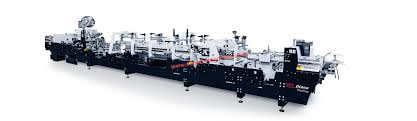
A plant manager feeding recycled board into a Folding and Gluing Machine is asking old fiber to behave like new, and cenwanmachine treats that request as a tuning conversation between paper memory, glue chemistry, and mechanical patience; when a carton made from recovered fiber cracks at the crease instead of folding along it, which part of the line should answer first? Recycled board arrives with a biography. Its fibers are shorter, its surface carries loose flecks, its stiffness wanders from sheet to sheet, and its appetite for moisture shifts with every storage hour. None of these traits forbid gluing, but together they punish the lazy setup, because a machine tuned for virgin board assumes strength the recycled sheet may not offer and cleanliness the recycled sheet refuses to keep.
Moisture speaks first. Recycled fiber drinks glue differently, often carrying hidden dampness that dulls adhesive grab or hidden dryness that drinks the bond before pressure arrives. Wise operators condition board in the plant for a day before converting, letting the stack breathe toward the workshop's own humidity rather than the truck's. Glue suppliers can adjust open time for thirsty sheets, but no formula rescues a crease that was never properly scored. The scoring wheels must bite deep enough to break the fiber network yet shallow enough to spare the liner, and recycled liners forgive shallow scoring far less than fresh ones, cracking white along the bend when the fold rails ask for obedience.
Dust is the silent saboteur of the whole affair. Recycled sheets shed fine particles that settle on belts, roller faces, and photocells, and a layer invisible to the eye is enough to let a panel skate sideways by a millimeter, which is exactly the distance a glue flap needs to miss its target. Cleaning rituals grow stricter with recycled stock: wipe the transport path at every break, blow down sensor windows, and watch the side-lay registration with fresh suspicion during the first hour of every shift. Registration that drifts without reason usually traces to contamination before it traces to mechanics.
Glue choice deserves equal respect. Cold emulsion adhesives that formed instant bonds on virgin kraft may flash-dry on porous recycled faces or string across nozzles that never struggled before. Operators should widen their inspection from the box to the bead itself, checking that lines stay continuous, that squeeze-out stays modest, and that compression belts hold pressure long enough for the bond to set. Hot-melt systems bring speed yet punish hesitation, since a paused line lets nozzles skin over while recycled dust races to cling. Matching adhesive to fiber is not chemistry class; it is damage control written in daylight.
Speed becomes an honest question rather than a bragging right. A line that sprints on virgin board may need to walk with recycled stock until the crew learns its moods, because slower belts give scoring time to work and give glue time to grip before the counter stack leans on fresh bonds. Running slower is not failure; it is tuition paid toward a day when the same crew runs recycled stock at near full pace because they know which roll of board behaves and which one sulks. Records make that knowledge transferable, so the logbook deserves the same care as the machine.
Case histories across packaging plants repeat the same lesson in different accents. Carton makers running high recycled content learn to demand consistent caliper from their board supplier, to reject loads that arrive with wavy edges, and to keep virgin liner options for clients whose brands cannot tolerate a crease shadow. Machines reward this discipline: rollers last longer, belts track straighter, and the delivery pile stops whispering complaints. The shift from suspicion to routine happens when recycled board stops being a special job and becomes Tuesday, and Tuesday runs clean because the setup sheet, the adhesive, and the scoring pressure were all chosen with old fiber in mind.
Buyers evaluating equipment for mixed fiber work should ask how feed sections handle dusty sheets, how scoring pressure adjusts across the width, and how quickly the glue system purges between adhesives. Plants curious about frame layouts, folding sections, and board-handling philosophy for recycled carton work can review the details at https://www.cenwanmachine.com/ where CenWan presents its folding and gluing machine range with the adjustment range and build notes that let recovered fiber leave the stack as a square, sealed carton rather than a statistic on the reject scale.

 English
 Arabic
 Spanish
 Portuguese
 Deutsch
 Turkish
 Dutch
Dutch
 Italiano
 Russian
 Romaian
 Portuguese (Brazil)
 Greek
Greek
