


Exploring the Engineering Behind Modern Ring Blower Systems
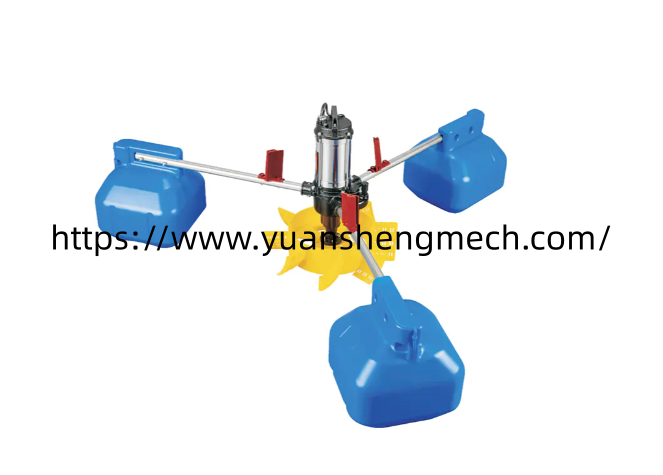
Air movement is an important part of many industrial and environmental processes, from supplying air to aquaculture tanks to supporting ventilation and wastewater treatment systems. When evaluating a Vortex Ring Blower, buyers should consider the relationship between construction materials, airflow requirements, installation conditions, and maintenance practices. Looking at these elements together helps businesses identify equipment that fits their operating environment rather than choosing solely by product appearance or a general description.
Material selection affects how a blower responds to continuous operation and environmental exposure. The housing needs to protect internal components while supporting stable installation, and the impeller must maintain its intended shape during rotation. Metal alloys are commonly used in blower construction because they can provide structural strength and help dissipate heat. The suitability of a particular material depends on the operating environment, exposure to moisture, and the demands placed on the equipment. Buyers should also consider the condition of connection points and protective surfaces.
Internal components deserve equal attention. Bearings, seals, fasteners, and electrical enclosures each perform different functions and may face different forms of wear. Their quality and compatibility influence maintenance needs and the consistency of operation. Where equipment is installed in humid agricultural facilities or near water treatment processes, suitable protection against corrosion and contamination becomes particularly relevant. Asking about inspection procedures, spare parts, and recommended cleaning methods helps purchasers assess whether the construction is appropriate for their application.
Choosing a blower starts with identifying the task it must perform. Aquaculture facilities may require air delivery to diffusers or aeration lines, while wastewater treatment operations may use blowers to supply air for biological processes. Industrial applications can involve suction, conveying, or localized ventilation. These uses place different demands on the equipment, so buyers should describe the complete system to the supplier, including pipework, air distribution components, environmental conditions, and the required operating pattern.
Compatibility with the wider installation is another purchasing consideration. The blower must work with connected hoses, valves, filters, diffusers, or other air-handling components as required by the application. Poorly matched equipment can lead to excessive resistance, unstable airflow, or unnecessary operating strain. Purchasers should therefore clarify the intended pressure and airflow conditions with the manufacturer, rather than assuming that similar-looking products are interchangeable. Noise expectations, available installation space, and access for servicing should also be included in the evaluation.
The operating principle distinguishes vortex blowers from many conventional air-moving devices. A motor rotates an impeller inside a specially shaped housing. Air enters the unit and is accelerated through a side channel, where repeated circulation transfers energy to the moving air before it reaches the outlet. This process allows the blower to provide airflow for systems that require pressure or vacuum, depending on its design and configuration. The internal arrangement is important because it influences how air moves through the unit and how the equipment responds to the connected system.
Oil-free airflow can be useful in applications where introducing lubricant into the air stream is undesirable. In suitable designs, the air does not require oil lubrication inside the conveying path, which can simplify routine upkeep and help avoid lubricant contamination. However, buyers should verify the design and operating requirements of the specific product rather than assume every blower has identical characteristics. Proper ventilation around the motor, correct electrical installation, and adherence to manufacturer instructions remain important for safe operation.
User experience is shaped by installation and daily maintenance as much as by internal engineering. A blower with clearly arranged connections and accessible service points can be easier to integrate into an existing facility. Operators benefit from understandable instructions covering startup, shutdown, cleaning, and routine inspection. In aquaculture settings, the blower may connect to air distribution lines that extend across a pond or tank system, making the arrangement of piping and diffusers important to the overall workflow. Planning these elements together can help avoid unnecessary adjustments after installation.
The external design also affects practical usability. A compact housing may simplify placement where floor space is limited, while a stable base helps keep the unit securely positioned during operation. Conveniently arranged inlet and outlet connections can reduce complications when routing pipes or hoses. Protective covers and orderly cable placement can make the installation easier to inspect, while a layout that permits airflow around the motor supports appropriate operating conditions. Visual simplicity is valuable when it reflects easier access and clearer organization, not merely a streamlined appearance.
Taizhou Yuansheng Aquacul Ture Machinery Co., Ltd. supplies vortex air blowers alongside aquaculture aerators, Roots blowers, and water pumps for a range of water management and industrial applications. Buyers can discuss their airflow objectives, connected equipment, installation environment, and servicing needs with the company when evaluating a suitable blower solution. Further information about its products and manufacturing business is available at https://www.yuanshengmech.com/.

 English
 Arabic
 French
 Spanish
 Portuguese
 Deutsch
 Turkish
 Dutch
Dutch
 Italiano
 Russian
 Portuguese (Brazil)
 Greek
Greek
