


Ultrasonic Surgical Instrument Cleaner: An Effective Solution for Precision Cleaning in Healthcare
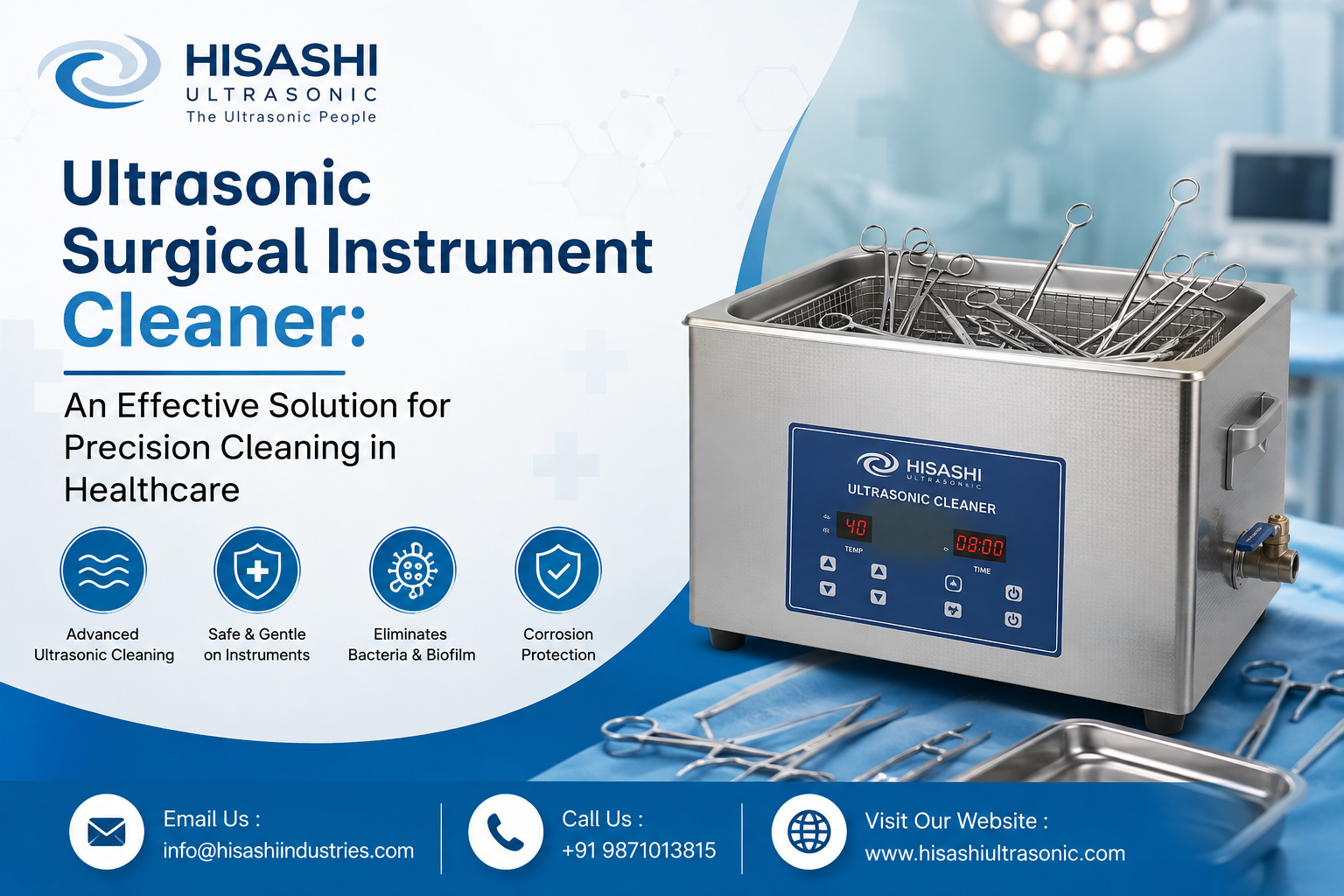
Reusable surgical instruments can carry blood, tissue residue, and other contaminants after use. Effective cleaning is the essential first step before disinfection or sterilization, because soil left on an instrument can interfere with those later stages.
Ultrasonic cleaning can help remove soil from hinges, serrations, and other hard-to-reach areas where manual scrubbing may struggle. Choosing the right ultrasonic cleaner for surgical instruments matters, because capacity, controls, and compatibility all affect how well the machine fits your workflow. This guide covers what to look for before you buy.
What Is an Ultrasonic Cleaner for Surgical Instruments?
An ultrasonic cleaner sends high-frequency sound waves through a liquid. These waves create microscopic bubbles that collapse in a process called cavitation, which helps dislodge contaminants from compatible instrument surfaces.
A typical medical ultrasonic cleaner includes:
-
A cleaning tank or chamber
-
Ultrasonic transducers
-
An ultrasonic generator
-
Cleaning solution
-
A timer and control system
-
A heating function, where provided
-
An instrument basket or suitable loading arrangement
Configurations vary by model. The machine must be compatible with your instruments, their materials, and the instrument manufacturer’s reprocessing instructions.
Benefits of Ultrasonic Cleaning in Healthcare Facilities
When used within an appropriate workflow, suitable equipment can offer practical advantages:
-
Cleaning intricate surfaces: Cavitation can help remove soil from compatible instruments with joints and complex shapes.
-
Less manual scrubbing: Some manual effort can be reduced when ultrasonic cleaning is built into the process.
-
Repeatable cycles: Timers and defined procedures help standardise cleaning.
-
Support for reprocessing: Ultrasonic cleaning can be one stage of a validated workflow before disinfection and sterilization.
-
Operational efficiency: A well-chosen machine helps teams organise instrument cleaning around their workload.
It is important to be clear: ultrasonic cleaning helps remove soil and contaminants, but it does not replace the required disinfection or sterilization process. It does not make instruments sterile on its own.
Choosing the Right Tank Capacity
Tank capacity is one of the most important buying factors. Consider:
-
Number of instruments processed per cycle
-
Size and shape of the instruments
-
Basket dimensions and loading arrangement
-
Clearance needed for complete immersion
-
Daily instrument-processing volume
-
Available installation space
-
Future workload and expansion
Total tank volume is not the same as practical usable capacity. Baskets, solution levels, and instrument shapes reduce the space actually available. Check the internal dimensions and basket size rather than relying on litres alone.
As general principles, a smaller unit may suit a clinic with lower daily volumes, while a larger or customised system may be more appropriate for a busy hospital CSSD. These are guidelines, not fixed rules.
Important Features to Consider Before Buying
Ultrasonic frequency and power: Both influence cleaning behaviour. The right configuration depends on instrument type, soil, geometry, and your validated cleaning process.
Temperature control: Heating may help certain cleaning solutions remove particular soils, but operating temperature must follow the cleaning chemistry and instrument manufacturer’s instructions.
Digital timer and controls: These help operators set repeatable cycles and monitor routine operation.
Tank construction: Check the material, internal dimensions, usable volume, and compatibility with your intended cleaning chemistry.
Baskets and arrangement: Suitable baskets organise instruments and support proper exposure to the cleaning solution.
Drainage and maintenance: Where provided, drainage and accessible maintenance features simplify routine operation.
Multi-stage options: Higher-throughput facilities may evaluate systems with separate cleaning, rinsing, and drying stages.
Technical support: Ask about installation, operator training, maintenance, spare parts, and after-sales support.
Not every feature is available in every model, so confirm specifications for the exact machine you are considering.
Comparison Table: Selecting a Suitable Ultrasonic Cleaner
|
Machine category |
Potential use |
What to evaluate |
|
Compact ultrasonic cleaner |
Lower-volume cleaning requirements |
Usable tank space and instrument compatibility |
|
Medium-capacity cleaner |
Routine processing of moderate instrument loads |
Basket dimensions, cycle controls, and workload |
|
Large-capacity cleaner |
Higher-volume instrument processing |
Batch size, power configuration, and available space |
|
Customised ultrasonic system |
Specific instrument geometries or operational needs |
Required workflow, technical specifications, and integration |
|
Multi-stage cleaning system |
Workflows involving multiple processing stages |
Cleaning, rinsing, drying, and process compatibility |
This table offers general guidance only. The right configuration depends on your facility’s actual requirements.
How to Select the Right Medical Ultrasonic Cleaning Machine
-
Identify the instruments: List their materials, sizes, and cleaning requirements.
-
Review manufacturer instructions: Confirm each instrument is compatible with ultrasonic cleaning.
-
Estimate daily workload: Count instruments and batches in a typical shift.
-
Choose tank dimensions: Ensure instruments fit without overcrowding.
-
Confirm technical specifications: Review frequency, power, temperature controls, and operating settings.
-
Evaluate cleaning chemistry: Select a compatible solution and follow its instructions.
-
Check workflow requirements: Plan how cleaning connects to rinsing, inspection, disinfection, and sterilization.
-
Review supplier support: Ask about assistance, installation, training, and maintenance.
-
Confirm the quotation: Verify the model, included features, warranty terms, price, and delivery.
The best machine is the one that meets your processing needs and can be operated according to your approved procedures.
Safe Use and Maintenance Considerations
Good results depend on correct practice as much as on the machine:
-
Follow instrument and cleaning-solution manufacturers’ instructions.
-
Use the specified chemistry and operating settings.
-
Avoid overloading the tank.
-
Arrange instruments according to the approved procedure.
-
Replace cleaning solution on the prescribed schedule.
-
Inspect instruments after cleaning and before further processing.
-
Maintain the equipment per the manufacturer’s recommendations.
Some instruments may not be suitable for ultrasonic cleaning. Facilities should follow applicable infection-prevention protocols and validated reprocessing procedures.
Medical Ultrasonic Cleaning Solutions from Hisashi Industries
Hisashi Industries, based in Greater Noida, Uttar Pradesh, manufactures ultrasonic cleaning systems for industrial and medical applications. To learn more, you can explore medical ultrasonic cleaning solutions on the company’s product page.
Prospective buyers can enquire about available configurations and discuss their instrument types, required tank dimensions, cleaning workload, and operational needs with the team. Specifications, pricing, and any certifications should be confirmed directly for the model you select.
Conclusion: Making an Informed Equipment Selection
Before buying, evaluate tank capacity, instrument compatibility, frequency, power, controls, maintenance, and workflow fit. A carefully chosen ultrasonic cleaner for surgical instruments supports your medical instrument reprocessing workflow, but it works alongside, not instead of, disinfection and sterilization.
If you are comparing equipment, visit the Hisashi Industries product page and contact the team for product details and technical guidance.
Frequently Asked Questions
1. Does an ultrasonic cleaner sterilize surgical instruments?
No. Ultrasonic cleaning helps remove soil and contaminants from compatible instruments, but it does not replace the required disinfection or sterilization steps. It is one stage of a complete reprocessing workflow. Follow instrument manufacturers’ instructions and applicable healthcare guidelines.
2. How do I choose the right tank size for a medical ultrasonic cleaner?
Start with the size, shape, and number of instruments per cycle. Then check the tank’s internal dimensions and basket size, not just its litre rating, to make sure instruments can be fully immersed without overcrowding. Also consider daily workload, installation space, and future growth.
3. Can all surgical instruments be cleaned in an ultrasonic cleaning machine?
Not necessarily. Some instruments, materials, or components may not be suitable for ultrasonic cleaning. Always check the instrument manufacturer’s reprocessing instructions first.
4. What features should I look for in an ultrasonic cleaning machine for medical instruments?
Evaluate ultrasonic frequency and power, temperature control, digital timer and controls, tank construction and usable capacity, suitable baskets, drainage and maintenance features, and technical support. Features vary by model, so confirm the specifications of the exact machine.
5. Can Hisashi Industries provide a customised ultrasonic cleaning system?
Hisashi Industries manufactures ultrasonic cleaning systems for industrial and medical applications. If you have specific instrument types, tank dimensions, or workflow needs, contact the team to discuss suitable configurations. Confirm specifications and pricing for any model directly with the company.
Contact Us
Company Name: Hisashi Industries
Email Us: info@hisashiindustries.com
Call Us: +91 9871013815
Address: Khasra No. 483, near Eco Tech 12, Sadullapur, Greater Noida, Uttar Pradesh – 203207

 English
 Arabic
 French
 Spanish
 Portuguese
 Deutsch
 Turkish
 Dutch
Dutch
 Italiano
 Russian
 Romaian
 Portuguese (Brazil)
