


Water Tank Cleaning Service in Sonipat: A Complete Guide
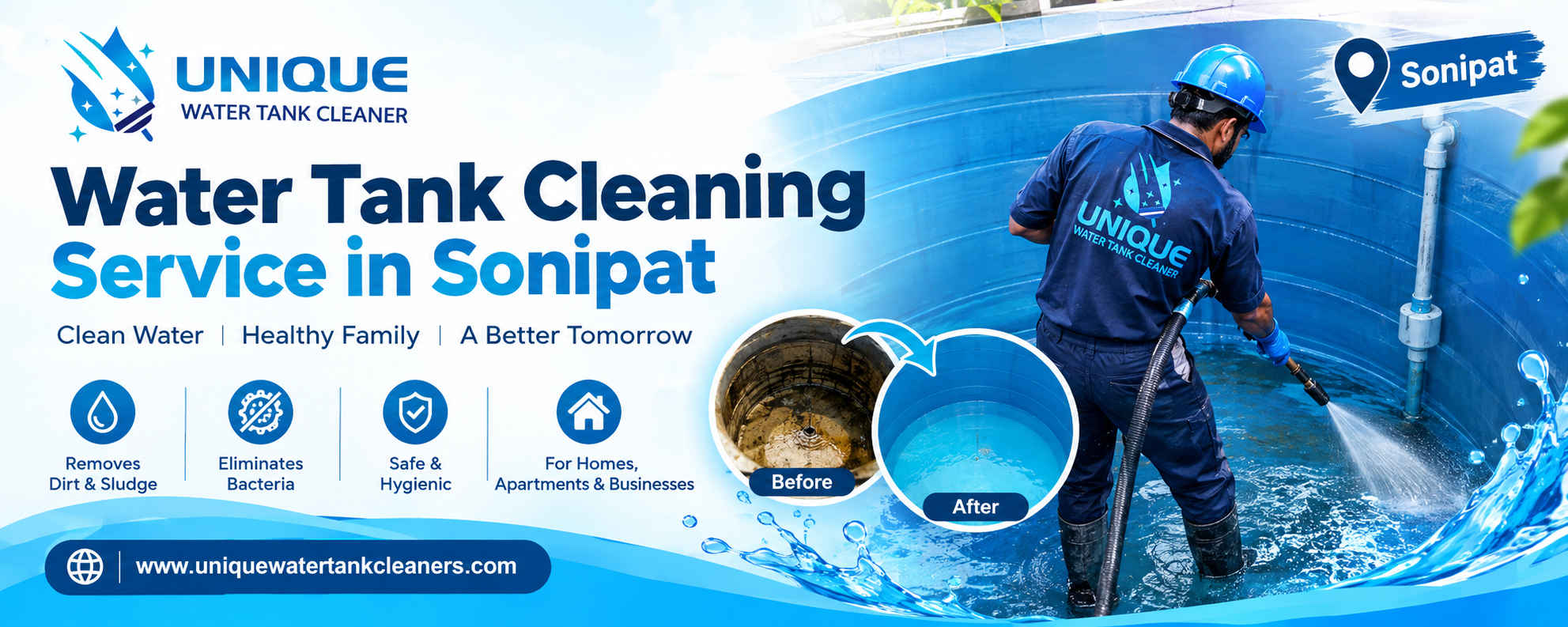
Clean water is essential for drinking, cooking, bathing, and everyday household activities. However, even when the water supply appears clean, dirt, sediment, algae, and microorganisms can accumulate inside a storage tank over time. For homeowners, housing societies, offices, and commercial buildings, regular tank maintenance is an important part of maintaining water hygiene.
A professional Water Tank Cleaning Service in Sonipat helps remove accumulated sludge, clean internal surfaces, and sanitize the tank using appropriate methods. Unique Water Tank Cleaners helps customers understand the importance of proper tank maintenance and the steps involved in professional cleaning. Whether you use an overhead tank or an underground reservoir, this guide explains when cleaning is needed, how the process works, and what you can do to maintain cleaner stored water.
Quick Answer:
Water storage tanks should generally be inspected regularly and cleaned approximately every three to six months, depending on water quality, tank condition, usage, and the level of contamination. Tanks that collect visible sediment, develop an unpleasant smell, or show signs of algae may need earlier cleaning.
Professional cleaning typically involves inspection, draining, sludge removal, scrubbing, rinsing, and suitable disinfection. The tank should be refilled only when the cleaning process is complete and any disinfectant has been used according to appropriate safety instructions.
Why Is Regular Water Tank Cleaning Important in Sonipat?
Water tanks can collect contaminants that are not always visible from the tap. Dust can enter through poorly fitted covers, sediment can settle at the bottom, and stagnant water in neglected tanks can encourage microbial growth.
1. Removes Sludge and Sediment
Sand, rust particles, mud, and other suspended materials can settle at the bottom of a storage tank. Over time, this sediment may accumulate and affect water quality. Removing it helps keep the tank cleaner and reduces the chance of deposits entering the plumbing system.
2. Helps Control Algae and Microbial Growth
Algae may develop when sunlight enters a tank, particularly through damaged covers or translucent walls. Bacteria and other microorganisms may also persist in contaminated tanks. Proper physical cleaning followed by appropriate disinfection helps reduce these risks.
3. Addresses Unpleasant Smells and Appearance
Water that develops an unusual smell, colour, or visible particles should not be ignored. Tank contamination can be one possible cause, although problems may also originate from the incoming water supply or plumbing. Cleaning the tank is a sensible maintenance step, but persistent issues may require water testing.
4. Supports Better Household Hygiene
Water is used for much more than drinking. It is also used for washing utensils, bathing, cleaning food preparation surfaces, and other daily activities. Maintaining a clean storage tank is therefore an important part of a household's overall water hygiene routine.
What Are the Signs Your Water Tank Needs Cleaning?
Do not wait until the tank becomes heavily contaminated. Watch for these warning signs:
-
Visible mud, sediment, or particles in stored water.
-
Slippery deposits or algae on accessible internal surfaces.
-
An unusual smell or change in water colour.
-
Dirt accumulating around the tank cover or inlet.
-
Long intervals since the previous cleaning.
-
Insects or other unwanted material entering through an unsecured opening.
If several signs appear together, arrange an inspection and avoid assuming that clear-looking water is necessarily safe. If contamination is suspected, use a verified safe water source for drinking and food preparation until the issue has been assessed.
How Does Professional Water Tank Cleaning Work?
A systematic cleaning process addresses both visible dirt and hygiene concerns. The exact method depends on the tank's size, construction, access, and condition.
Step 1: Tank Inspection
The cleaning team checks the tank's material, access points, sediment level, and general condition. The inspection helps identify cracks, damaged covers, standing deposits, and other maintenance concerns.
Step 2: Draining the Stored Water
Water is drained using a suitable method, with attention to safe disposal and the property's drainage arrangements. The process should avoid unnecessary water wastage wherever practical.
Step 3: Sludge and Dirt Removal
Accumulated mud, sand, and other deposits are removed from the tank floor and corners. Appropriate tools or sludge-removal equipment can help clean areas where sediment tends to collect.
Step 4: Internal Surface Cleaning
The tank's walls, floor, and accessible corners are cleaned to loosen deposits and biofilm. Pressure-cleaning equipment may be used when appropriate for the tank material and its condition.
Step 5: Rinsing and Disinfection
Loose residue is rinsed away. Where disinfection is required, a suitable product must be used at the correct concentration and contact time according to its label and applicable public-health guidance. Disinfectants should never be mixed, and cleaning chemicals must not leave unsafe residues in the water.
Step 6: Final Inspection and Refill
Before the tank is returned to service, the cleaning team checks for remaining dirt and ensures that the tank is appropriately rinsed and ready for refilling. The cover should be secured to help prevent fresh contamination.
For enclosed underground tanks, confined-space hazards require particular care. Nobody should enter a tank without the appropriate risk assessment, trained personnel, equipment, and safety procedures.
Overhead vs. Underground Water Tank Cleaning
Different tanks require different cleaning arrangements. The table below highlights common considerations.
|
Tank type |
Common concern |
Maintenance priority |
|
Overhead tank |
Dust, insects, algae, and sediment |
Secure the lid and inspect the interior |
|
Underground tank |
Sludge, seepage, and contamination through openings |
Check access points, structure, and drainage |
|
Residential tank |
Sediment and irregular maintenance |
Establish a recurring cleaning schedule |
|
Society or commercial tank |
High water demand and shared storage |
Coordinate cleaning and safe water availability |
A large housing society may need a planned cleaning schedule for multiple tanks so that residents continue to have access to water during maintenance.
How Often Should a Water Tank Be Cleaned?
The ideal frequency depends on how quickly contamination accumulates. A practical starting point is to inspect the tank every few months and plan cleaning approximately every three to six months, adjusting the schedule according to actual conditions and local guidance.
|
Situation |
Recommended action |
|
Routine household use |
Inspect regularly and schedule periodic cleaning |
|
Visible sediment or unusual smell |
Arrange an inspection promptly |
|
Tank exposed to dust or insects |
Check the cover and inspect more frequently |
|
Flooding or suspected contamination |
Assess immediately and follow appropriate disinfection guidance |
|
Shared society tank |
Maintain a documented cleaning and inspection schedule |
These intervals are general maintenance guidance, not a guarantee of water safety. Drinking-water testing may be necessary when contamination is suspected or water quality remains questionable after cleaning.
Practical Tips to Keep Your Water Tank Cleaner
Regular professional cleaning works best when combined with simple preventive measures.
Keep the tank lid securely fitted and repair damaged covers. Check that inlet openings and overflow pipes are protected against insects and unwanted material. Avoid allowing sunlight to enter the tank unnecessarily, particularly where algae growth is a concern.
Inspect accessible areas for leaks, cracks, corrosion, and accumulated dirt. Keep the surrounding area clean and make sure wastewater cannot flow back into the storage system. If your property has separate drinking-water and non-drinking-water storage, ensure that the tanks and pipes are clearly identified.
After cleaning, record the date, any problems identified, and the next planned inspection. Housing societies and commercial properties can maintain a simple maintenance log to help staff track recurring issues and arrange servicing on time.
Remember that tank cleaning cannot correct every water-quality problem. If the incoming supply is contaminated, the tank has structural damage, or water continues to smell or look unusual, investigate the underlying cause instead of repeatedly cleaning without testing.
Choosing a Water Tank Cleaning Service in Sonipat
Before hiring a cleaning provider, ask about the cleaning method, equipment, disinfection procedure, staff safety, and final inspection. A responsible provider should explain what the service includes and identify any visible damage that may require separate repair.
Avoid choosing a service on price alone. The cheapest option may not include thorough sludge removal, appropriate disinfection, or adequate safety precautions. Compare the scope of work, transparency, and suitability for your tank type.
Unique Water Tank Cleaners encourages property owners to treat tank cleaning as preventive maintenance rather than a last-minute response to visibly dirty water. Clear communication about the tank's capacity, location, accessibility, and condition can help a service provider assess the work more accurately.
Frequently Asked Questions
1. How often should I book a water tank cleaning service in Sonipat?
A practical starting point is every three to six months, with more frequent cleaning when sediment, algae, unusual smells, or contamination are detected. The right schedule depends on the tank's condition and water quality.
2. How long does professional water tank cleaning take?
The time required depends on tank capacity, access, sediment accumulation, and whether the property has multiple tanks. A small residential tank may take less time than a large underground society reservoir. Ask the provider for an estimate after explaining your tank's condition.
3. Is water tank cleaning enough to make drinking water safe?
No. Cleaning and suitable disinfection help address contamination inside the tank, but they cannot guarantee that the incoming supply is safe. Water testing and additional treatment may be necessary when contamination is suspected.
4. Can overhead and underground water tanks be cleaned using the same method?
Both require the removal of deposits and appropriate hygiene measures, but the equipment and safety procedures may differ. Underground tanks can present additional access, ventilation, and confined-space risks, so the cleaning approach must suit the specific structure.
5. How can I book Unique Water Tank Cleaners for service in Sonipat?
Contact Unique Water Tank Cleaners to discuss your tank type, approximate capacity, location, and cleaning requirements. Confirm service availability, pricing, the work included, and the expected schedule before booking.
Conclusion: Maintain Cleaner Stored Water with Regular Tank Care
Regular water tank maintenance helps reduce sediment accumulation, address visible contamination, and support better household and building hygiene. Inspecting the tank, keeping its cover secure, arranging appropriate cleaning, and investigating persistent water-quality problems are all important steps.
For homeowners, housing societies, and businesses looking for a Water Tank Cleaning Service in Sonipat, choosing a provider that explains its process and follows suitable hygiene and safety precautions can make maintenance more reliable.
Contact Unique Water Tank Cleaners today to discuss your water tank cleaning requirements.

 English
 Arabic
 French
 Portuguese
 Deutsch
 Turkish
 Dutch
Dutch
 Italiano
 Russian
 Romaian
 Portuguese (Brazil)
 Greek
Greek
