


Hurricane Season Home Prep for Venice and North Port Homeowners
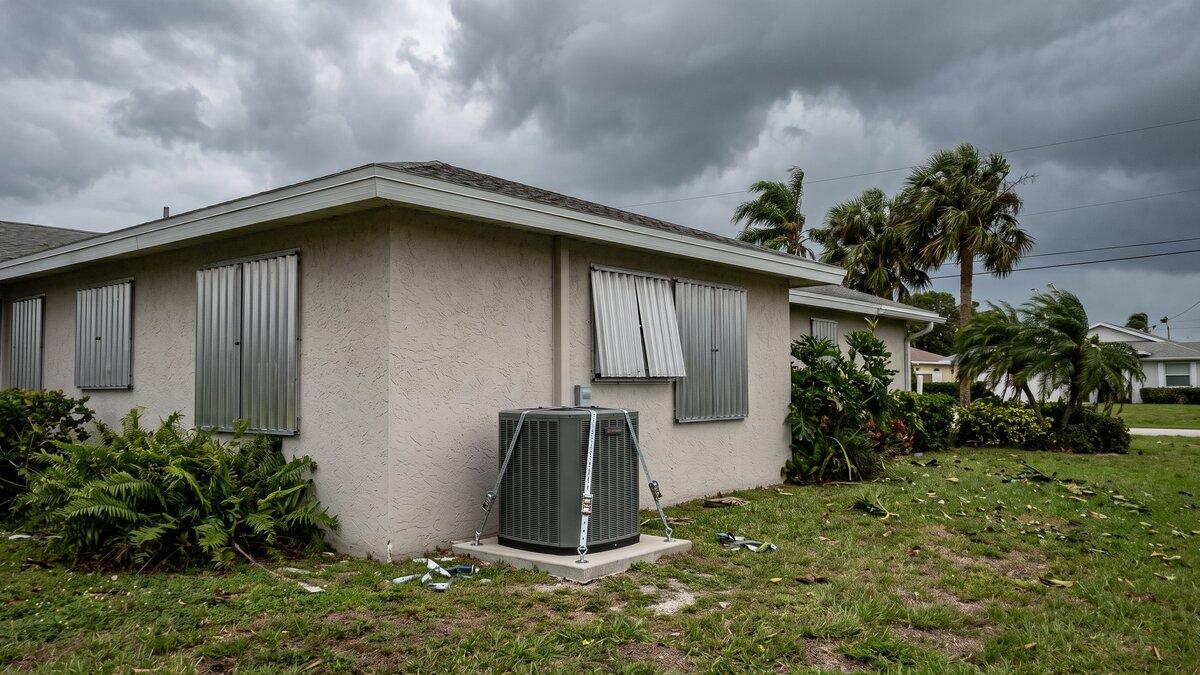
Hurricane season on the Gulf Coast runs from June 1 to November 30, and the time to prepare is before a storm has a name. For homes in Venice and North Port, that means knowing your evacuation zone, stocking supplies early, securing openings, and protecting the systems that are expensive to replace, starting with the air conditioner. This checklist covers what to do before, during and after a storm.
1. Know your evacuation zone
Sarasota County Emergency Management assigns each address to an evacuation zone based on storm surge risk. Venice's island and coastal neighborhoods sit in the most exposed zones; much of North Port is farther inland. Look up your zone on the county's website and decide in advance where you would go: a friend's house inland, a hotel, or a county shelter. If anyone in the household needs electricity for medical equipment, register with the county's special needs shelter program before the season starts.
2. Stock water, medicine and fuel
Plan for at least a week without power or water service. The usual guidance is one gallon of water per person per day. Refill prescriptions early, since pharmacies close before landfall. Fill vehicle tanks and any approved gas cans while lines are short, and keep cash on hand: card readers do not work without power.
- Water: one gallon per person per day, for at least seven days
- Non-perishable food and a manual can opener
- Medications for two weeks
- Flashlights, batteries, a battery or hand-crank radio
- Phone power banks, charged
- Pet food and carriers
3. Protect the air conditioner before and after the storm
Your AC is one of the most expensive parts of the house and one of the most exposed. Before the storm, set the thermostat a few degrees cooler to pre-cool the house, then switch the system off at the thermostat and at the breaker once the wind picks up. Power surges and flickers during a storm are hard on compressors and control boards.
After the storm, do not switch the AC back on right away. Walk around the outdoor unit first. Look for debris lodged in the fins, a unit shifted off its pad, damaged refrigerant lines, or a waterline on the casing.
If the outdoor unit sat in floodwater, leave it off until it is inspected. Roman's Service in North Port works 24/7, and Roman's Service technicians check the electrical connections and the pad before restarting the system. The company is based at 2735 Commerce Pkwy and takes calls at (941) 877-5976.
Floodwater, especially salt water from surge, can damage electrical components inside the unit even after it looks dry. Restarting it too soon can turn a repair into a replacement. If the unit stayed dry and only collected leaves, clear the debris, wait for stable power, and then restart.
4. Secure windows, doors and the garage
Put up shutters or panels early, while you still have daylight and calm weather. If your home uses panels, label each one for its window during the off-season so installation goes quickly. The garage door is often the weakest point of a house in high wind; if it is not rated for wind load, ask about a bracing kit. Bring in lanai furniture, grills, planters and anything else the wind could turn into a projectile.
5. Use a generator safely
Portable generators save food and keep fans running, but they kill people every hurricane season through carbon monoxide poisoning. Run a generator outdoors only, at least 20 feet from doors and windows, never in a garage, even with the door open. Do not plug a generator into a wall outlet; use a transfer switch installed by a licensed electrician. Install battery-powered carbon monoxide alarms inside the house.
6. Trim trees and clear the yard
Dead branches and top-heavy palms come down first. Trim them early in the season, not the week before a storm, when the county stops collecting yard waste and loose piles become debris. Clean gutters and check that drainage swales and storm drains near your home are clear.
7. Photograph the house for insurance
Walk through every room with your phone and record a video, including closets, the garage, appliances and the outdoor AC unit. Save it to cloud storage. After a storm, that video is the easiest proof of what you had and what condition it was in. Review your policy for the hurricane deductible, which is often a percentage of the home's insured value rather than a flat amount.
8. Put documents in a waterproof folder
Keep these in a sealed bag or waterproof folder you can grab in a minute: IDs, insurance policies, deed or lease, medical information, a list of medications, and the phone numbers of your insurer, your HVAC contractor and your family contacts. Photos of each document in cloud storage are a good backup.
9. After the storm: power lines, water and mold
Stay off the roads until officials say they are clear. Treat every downed line as live. Do not walk through standing water, which can hide debris and electrical hazards. If water entered the house, start drying it out quickly: open windows when the air outside is drier, run fans, and remove soaked drywall and carpet. Mold can start growing within a day or two in Florida's heat. Once the AC has been checked and restarted, it becomes your main tool for pulling moisture out of the house.
Before, During and After at a Glance
| Stage | Key tasks |
|---|---|
| Before the season | Know your zone, trim trees, label shutters, video the house |
| Storm in the forecast | Supplies, fuel, cash, shutters up, documents packed |
| Landfall | AC off at the thermostat and breaker, stay inside or evacuate as ordered |
| After | Check the outdoor AC before restarting, avoid floodwater, start drying |
FAQ
Where can I follow storm forecasts?
The National Hurricane Center, part of NOAA, issues official forecasts and advisories. Sarasota County Emergency Management posts local evacuation orders and shelter openings.
Should I cover my outdoor AC unit?
A tight cover can trap moisture and does little against wind. Securing the unit to its pad and shutting it off are more useful.
When is the peak of the season?
Historically, mid-August through October brings the most activity in the Atlantic basin.
A few hours of preparation in May and a careful look around the house after a storm prevent most of the costly damage. Do the work early, and let the storm be the only thing you have to wait out.

 English
 French
 Spanish
 Portuguese
 Deutsch
 Turkish
 Dutch
Dutch
 Italiano
 Russian
 Romaian
 Portuguese (Brazil)
 Greek
Greek
