


How to Choose the Best eCommerce Web Design Company in Dubai
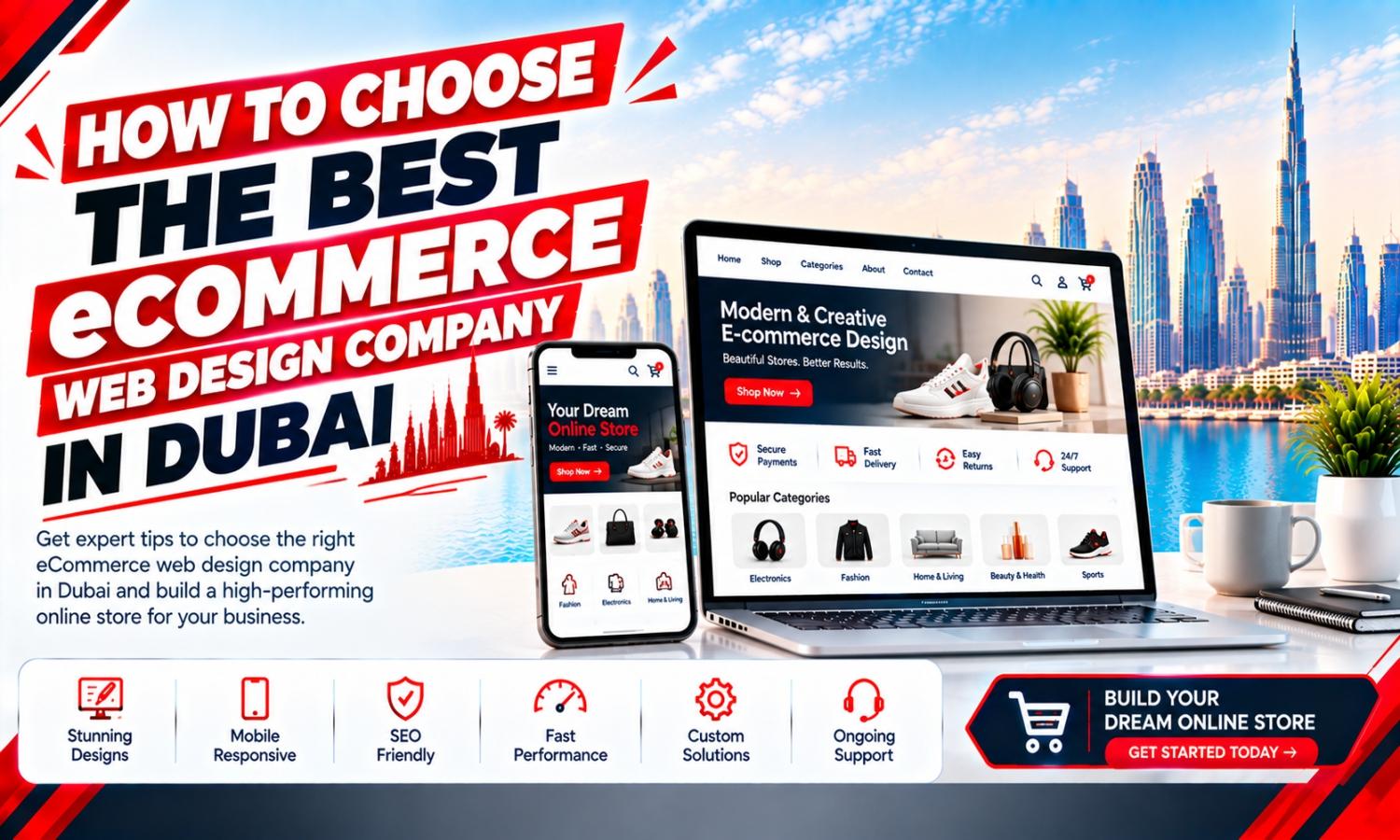
Choosing the right eCommerce web design company in Dubai involves more than comparing prices or website designs. Businesses should review each agency's portfolio, mobile experience, product page layouts, checkout process, payment integration, SEO knowledge, security measures, and ongoing support.
Dubai businesses operate in a competitive market where customers may compare several online stores before making a decision. Whether you sell fashion, electronics, beauty products, home accessories, or specialist goods, your website needs to reflect your brand while making shopping convenient.
The challenge is finding a web design partner that understands your business requirements, has the right technical skills, and can provide support after launch. Price matters, but so do usability, security, website performance, search engine readiness, and long-term maintenance.
This guide explains how to compare eCommerce web design companies in Dubai, which questions to ask before signing a contract, and what to consider when planning an online store for customers in the UAE.
The best agency is one that understands your customers, communicates clearly, and can build an online store that supports both a smooth shopping experience and long-term business growth.
1. What Does an eCommerce Web Design Company in Dubai Do?
Before contacting agencies, decide what your online store needs to accomplish. Without a clear project scope, it can be difficult to compare proposals or determine whether a provider understands your business.
A small retailer with 30 products may need a relatively simple store. A larger business with hundreds of products, multiple suppliers, and complex delivery rules may require additional functionality and integrations.
Identify your essential store features
Start by documenting the following requirements:
-
Product management: How many products will you sell? Do you need product variations, filters, comparison tools, or bulk inventory updates?
-
Customer accounts: Will customers be able to register, save addresses, review orders, and manage their accounts?
-
Payment options: Which payment methods will your customers use, subject to provider availability and merchant eligibility?
-
Shipping and delivery: Do you need delivery zones, different shipping rates, order tracking, or collection options?
-
Languages and currencies: Will you serve customers in Arabic and English, or sell internationally?
-
Business integrations: Does the store need to connect with inventory software, accounting systems, customer management tools, or courier services?
Separate essential features from improvements that can be added later. This helps keep the initial project manageable without overlooking important business needs.
Prepare a clear project brief
Your brief should explain your products, target customers, competitors, required features, approximate budget, and preferred launch date.
Share it with each shortlisted agency. When every provider receives the same information, you can compare quotations more fairly and identify differences in scope.
2. How to Evaluate an eCommerce Agency's Portfolio
A portfolio gives you an opportunity to assess an agency's design and development experience. However, an attractive homepage alone does not prove that an online store works well.
Visit the websites listed in the agency's portfolio and test their main shopping features. Browse product categories, use search and filters, open product pages, add items to the cart, and review the checkout process.
Look for experience relevant to your business
Different industries have different requirements. A fashion retailer may need size guides, colour variations, and detailed product photography. An electronics business may need technical specifications, comparison features, and product filters.
Look for projects with requirements similar to yours. Ask the agency what work it completed, which features it developed, and whether the website is still being maintained.
If case studies are available, examine the business problem, the work performed, and any results supported by evidence. Be cautious of impressive performance claims that lack context or verifiable details.
Questions to ask about previous projects
-
Which parts of the website did your team design and develop?
-
What technical challenges did the project involve?
-
How did you test usability and performance?
-
Can you provide references or explain the project's outcomes?
-
Who handles support and updates after launch?
Clear answers can help you distinguish between an agency with relevant experience and one that mainly presents visual mock-ups.
3.Why Mobile-Friendly eCommerce Web Design Matters
Customers may discover products through search engines, social media, advertisements, or direct links on their smartphones. If the website is difficult to use on a smaller screen, customers may struggle to browse products or complete an order.
A responsive eCommerce website adjusts its layout to different screen sizes. Text should remain readable, navigation should be accessible, product images should display properly, and buttons should be easy to tap.
Test the complete mobile shopping journey
Do not stop at the homepage. Test category pages, product details, filters, forms, the cart, and checkout.
Pay attention to issues such as overlapping text, slow-loading images, difficult menus, or forms that require unnecessary effort. If possible, test on more than one device and connection type.
Ask the agency how it measures performance and what happens when a page fails to meet its targets. Google's Core Web Vitals can help assess loading performance, responsiveness, and visual stability.
A useful starting point is to ask how the agency monitors Largest Contentful Paint (LCP), Interaction to Next Paint (INP), and Cumulative Layout Shift (CLS). These metrics help identify issues that can affect the browsing experience.
4. Essential Features of a Successful eCommerce Website
Good eCommerce design makes it easier for shoppers to understand their options and complete purchases. Complicated navigation, unclear product information, unexpected fees, and confusing checkout forms can create friction.
A well-planned store should help customers move naturally from browsing to purchasing.
Essential product page elements
Product pages should answer the questions customers are likely to ask before ordering. Depending on the product, useful information may include:
-
Clear product names, descriptions, and specifications.
-
Accurate images and useful product views.
-
Available sizes, colours, or other variations.
-
Price, availability, and relevant charges.
-
Delivery estimates, return conditions, and warranty information where applicable.
-
Clear add-to-cart buttons and useful related products.
Product descriptions should be written for the intended customer rather than copied from other websites or filled with repeated search terms.
Make checkout straightforward
Review the number of steps required to place an order. Ask whether guest checkout is appropriate, whether customers can correct their details easily, and whether the final price is clear before payment.
A good checkout process should communicate shipping costs, payment options, and order confirmation details. The exact setup will depend on your products, customers, and operational requirements.
Accessibility also matters. Readable contrast, clear labels, useful error messages, and keyboard-friendly controls help more people use the website comfortably.
5. Payment Gateway and Delivery Integration in the UAE
Payment and delivery arrangements deserve particular attention when building an online store for the UAE market.
A business may accept card payments, digital wallets, cash on delivery, or other options depending on its provider, business model, and eligibility. Before development begins, confirm which payment methods are supported and what setup each requires.
Questions about payment integration
Ask who will arrange the merchant account, configure the gateway, test successful and failed transactions, and manage any verification requirements.
Clarify how refunds, payment notifications, and order status updates will work. Also establish which party is responsible for gateway fees and ongoing maintenance.
Never assume that every payment method is automatically available to every business.
Plan shipping and local requirements
Your store may need delivery zones, different shipping charges, estimated delivery dates, tracking information, or special rules for certain products.
If you sell to Arabic-speaking customers, discuss Arabic content and right-to-left layouts early in the project. Check how product descriptions, navigation, forms, notifications, and translated content will be managed.
If you plan to sell outside the UAE, consider how the website will handle different currencies, shipping destinations, taxes, and regional restrictions. Requirements depend on the business and the markets it serves, so obtain appropriate professional advice where needed.
6. eCommerce Website Development, SEO, and Performance
The right technical solution depends on your budget, product range, internal skills, and plans for future growth.
Some stores can operate effectively with standard eCommerce features. Others require custom pricing rules, advanced product configurations, external integrations, or specialised order workflows.
A good agency should explain why it recommends a particular approach rather than choosing technology simply because it is familiar.
Understand the difference between standard and custom features
Ask the provider to identify which functions are included in the quoted price and which require custom development or third-party services.
Find out whether you can manage products, prices, inventory, orders, and website content without contacting a developer for every routine change.
Also clarify ownership of the website, domain, hosting account, source code where applicable, and business data. Make sure you understand any recurring licence or subscription fees.
Consider future growth
Think about what your business may need in the next two or three years. You might expand your product catalogue, introduce new delivery options, connect additional systems, or enter another market.
The goal is not to pay for every possible feature in advance. It is to choose a solution that meets today's requirements without creating avoidable barriers to future improvements.
7. How Much Does eCommerce Web Design Cost in Dubai?
Search engine optimization should be considered during website planning, not treated as an afterthought.
An online store can have an excellent visual design yet struggle to attract organic traffic if its pages are poorly organised, important products cannot be crawled, or product information is incomplete.
When comparing an eCommerce web design company in Dubai, ask which technical SEO tasks are included in the development scope.
Important eCommerce SEO requirements
A well-planned store should consider:
-
Logical category and product page structures.
-
Descriptive URLs, page titles, and meta descriptions.
-
Unique, useful product and category content.
-
Appropriate internal links between related pages.
-
XML sitemaps and crawlable navigation.
-
Canonical tags and duplicate URL management.
-
Image compression and descriptive alternative text.
-
Mobile usability and page performance.
-
Structured data where relevant and supported.
Large product catalogues require particular attention to filters, sorting parameters, pagination, and duplicate URLs. Ask how the agency plans to manage these issues if they apply to your store.
Clarify whether keyword research, content writing, redirects, Search Console setup, and ongoing SEO are included or billed separately.
Technical SEO provides a foundation, but it does not guarantee rankings. Search visibility also depends on content quality, competition, website authority, and other factors.
8. Questions to Ask Before Hiring an eCommerce Web Design Agency
Launching the website is only one stage of the project. Online stores need updates, monitoring, backups, and support to keep working as expected.
Ask the agency what its maintenance service covers and what happens when a problem affects customers or prevents orders from being processed.
Security questions to discuss
Depending on the chosen architecture, a maintenance plan may include software updates, access controls, secure connections, backup procedures, vulnerability checks, and recovery planning.
Businesses handling payments should understand the responsibilities of their payment provider and their own website environment. Confirm that the integration and overall setup meet applicable requirements.
Ask how backups are stored, how often they are created, and whether recovery procedures are tested. A backup is more useful when the business knows it can restore the website and its important data.
Establish a clear support agreement
Before signing, confirm the support period, response arrangements, routine maintenance costs, and charges for additional development.
Also establish who will manage hosting, renewals, security updates, and technical issues after the initial support period ends.
Clear maintenance terms help you plan ongoing costs and reduce uncertainty when problems arise.
9. Compare Pricing, Deliverables, and Contracts
The lowest quotation is not always the least expensive option over the life of a website. A low initial price may exclude important features, product setup, integrations, testing, training, or ongoing support.
Request an itemised proposal so you can see exactly what each provider is offering.
What an eCommerce website quotation should include
|
Project area |
What to confirm |
|
Design |
Page layouts, responsive design, and revision limits |
|
Development |
Included features, custom functionality, and integrations |
|
Content |
Product data, copywriting, images, and content entry |
|
Testing |
Mobile testing, checkout testing, and defect correction |
|
Launch |
Domain, hosting, deployment, and handover |
|
Training |
Guidance for managing products and orders |
|
Maintenance |
Support period, updates, backups, and ongoing fees |
Ask about payment milestones, project timelines, dependencies, and how changes to the original scope will be priced.
When comparing offers, calculate the likely total cost of ownership. Hosting, payment processing, premium services, product photography, content production, and future development may create additional costs.
A written agreement should clarify deliverables, responsibilities, ownership, acceptance criteria, and the process for handling delays or disagreements.
10. Choose an Agency That Understands Your Business Goals
The right web design partner should take time to understand your customers, products, operations, and commercial goals before recommending a solution.
During initial discussions, notice whether the agency asks useful questions or immediately proposes a package without understanding your needs.
Look for clear communication, realistic timelines, documented processes, and an honest explanation of potential limitations.
Businesses comparing providers can review A-One Web Design's eCommerce website design services to learn more about the type of support available for planning and building an online store.
When assessing any provider, including A-One Web Design, use the same criteria: relevant project experience, technical suitability, transparent pricing, communication, and support arrangements.
Be cautious of promises that guarantee a particular Google ranking, sales figure, or launch date when the outcome depends on factors outside the provider's control.
The best working relationship is built on clear expectations, informed decisions, and a shared understanding of what the project needs to achieve.
A Practical Checklist Before Hiring an eCommerce Web Design Company
Before making your final decision, check that you can answer these questions:
-
Does the agency have relevant eCommerce project experience?
-
Have you tested its previous websites on mobile devices?
-
Are the required payment and delivery integrations feasible?
-
Is the project scope documented in writing?
-
Are technical SEO and performance requirements addressed?
-
Have ownership, access, and ongoing costs been clarified?
-
Is post-launch support included or available under a clear agreement?
-
Can the agency explain its recommendations in terms you understand?
If important questions remain unanswered, request clarification before committing to the project.
Frequently Asked Questions
1. How do I choose the best eCommerce web design company in Dubai?
Compare agencies based on relevant portfolio projects, technical capabilities, mobile usability, payment integration experience, SEO planning, pricing transparency, and ongoing support. Request a written proposal and test websites they have built before making your decision.
2. How much does an eCommerce website cost in Dubai?
The cost depends on the number of products, design requirements, custom features, integrations, content, and maintenance arrangements. A basic store will generally require less work than a large catalogue with custom workflows. Request itemised quotations from several agencies to compare the actual scope and total expected costs.
3. How long does it take to build an eCommerce website?
The timeline depends on the complexity of the store, the availability of product content, the number of integrations, and how quickly decisions are approved. A straightforward project may take several weeks, while a more complex build can take several months. Ask for a project schedule with clear milestones.
4. What features should an eCommerce website have?
Common requirements include organised product categories, search and filters, detailed product pages, a shopping cart, suitable payment methods, delivery information, order notifications, mobile-friendly layouts, and a manageable product administration system. Additional features depend on the business model.
5. Is mobile-friendly eCommerce web design important for businesses in Dubai?
Yes. A responsive website helps customers browse products, read descriptions, and complete purchases on different screen sizes. Mobile usability also supports a better overall customer experience. Businesses should test the entire purchase process on mobile devices rather than checking the homepage alone.
6. Should I choose custom eCommerce website development or a ready-made solution?
A ready-made solution may suit businesses with standard requirements and limited development resources. Custom development may be appropriate when the business needs specialised workflows, integrations, or functionality that standard features cannot provide efficiently. Compare the costs, maintenance needs, flexibility, and ownership implications before deciding.
7. Does an eCommerce website need SEO during development?
Yes. Planning URL structures, navigation, product content, canonical tags, sitemaps, and performance early can help avoid technical problems later. However, SEO setup alone does not guarantee rankings. Ongoing content improvement, technical monitoring, and other SEO activities may still be needed.
8. What should I check before signing an eCommerce web design contract?
Confirm the deliverables, project milestones, total costs, payment terms, revision limits, ownership rights, hosting responsibilities, testing procedures, and maintenance arrangements. Make sure the contract explains how changes to the project scope will be handled.
Final Thoughts
Choosing an eCommerce web design company in Dubai requires more than comparing prices or selecting the most attractive portfolio. Businesses need to assess how well an agency understands their requirements and whether its proposed solution can support customers throughout the shopping journey.
Start with a clear project brief, evaluate relevant experience, and test the usability of previous projects. Then compare technical capabilities, SEO planning, security, payment and delivery requirements, and post-launch support.
Take time to review the contract and understand the ongoing costs before making a commitment. A carefully planned website can provide a practical foundation for serving customers, managing online orders, and supporting the future growth of your business.

 English
 Arabic
 French
 Spanish
 Portuguese
 Deutsch
 Turkish
 Dutch
Dutch
 Italiano
 Russian
 Romaian
 Portuguese (Brazil)
