


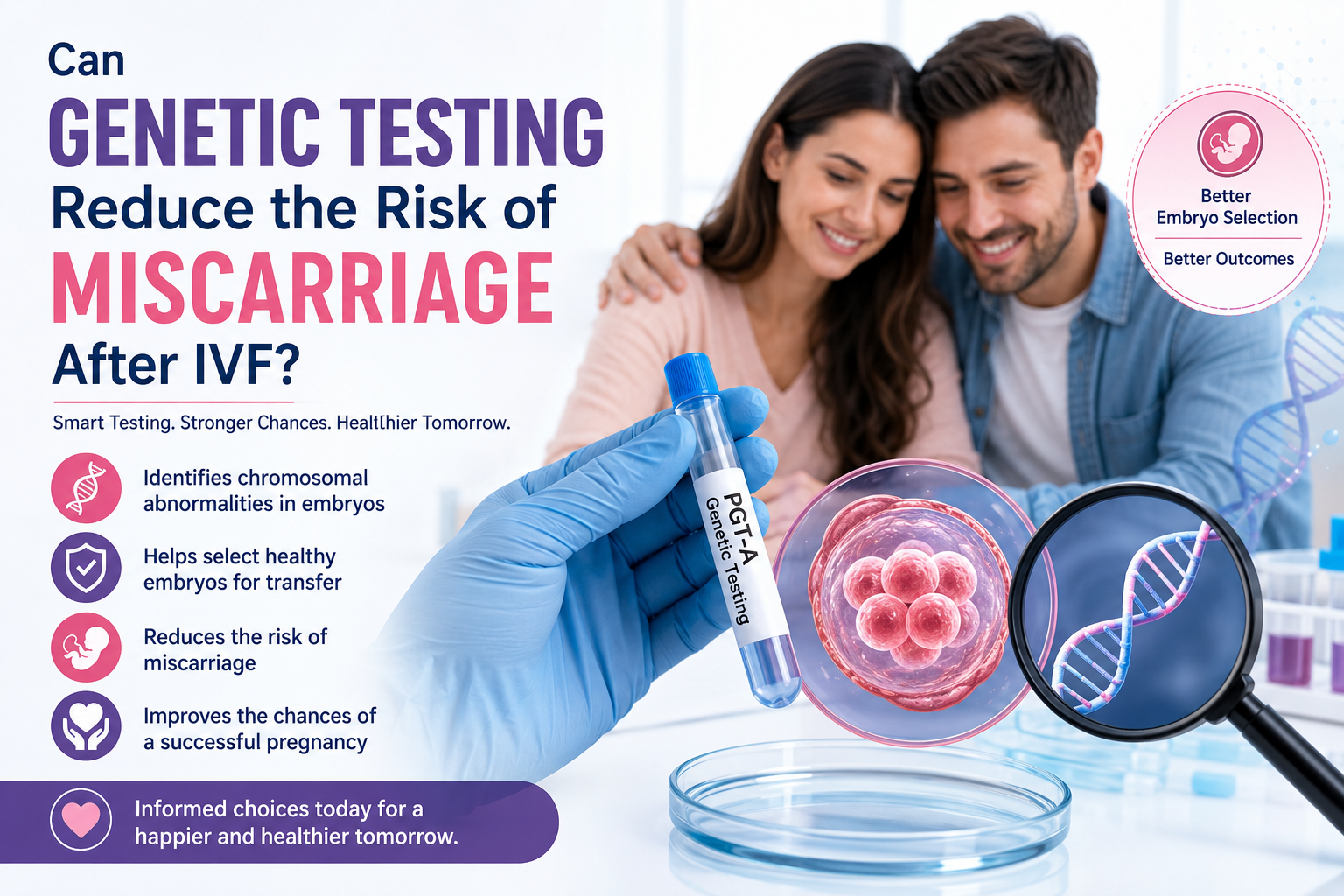
Can Genetic Testing Reduce Miscarriage After IVF?
Introduction
For many couples, In Vitro Fertilization (IVF) offers renewed hope after months or even years of struggling with infertility. Yet, even after a successful embryo transfer, the fear of miscarriage remains one of the biggest emotional challenges. This often leads to an important question: Can genetic testing reduce the risk of miscarriage after IVF?
The answer is encouraging. While genetic testing cannot completely prevent miscarriage, it can significantly improve the chances of selecting a healthy embryo for transfer. This helps reduce miscarriages caused by chromosomal abnormalities, which are among the most common reasons for pregnancy loss.
Think of IVF like planting seeds in a garden. Even with excellent soil and proper care, not every seed will grow into a healthy plant. Genetic testing helps identify the strongest seeds before planting, giving couples the best opportunity for a successful pregnancy.
If you're planning fertility treatment, consulting the best ivf specialist in new delhi
1. Understanding Miscarriage After IVF
A miscarriage is the loss of a pregnancy before 20 weeks. Unfortunately, miscarriages can happen naturally or after IVF treatment.
Many people believe IVF completely eliminates the risk of pregnancy loss. However, this isn't true. IVF helps achieve pregnancy but cannot guarantee that every pregnancy will continue successfully.
The good news is that modern fertility medicine has introduced advanced tools, including Preimplantation Genetic Testing (PGT), to improve embryo selection.
2. Why Do Miscarriages Happen?
Chromosomal Abnormalities
The most common cause of miscarriage is an abnormal number of chromosomes in the embryo. These abnormalities usually occur randomly during egg or sperm formation.
Maternal Age
As women get older, especially after age 35, the likelihood of chromosomal abnormalities increases.
Uterine Conditions
Fibroids, polyps, scar tissue, or abnormalities in the uterus may interfere with embryo implantation.
Hormonal Disorders
Conditions like thyroid disease, diabetes, or hormonal imbalance can increase miscarriage risk.
Immune and Blood Clotting Disorders
Certain autoimmune diseases and clotting disorders may affect blood supply to the developing embryo.
3. What Is Genetic Testing in IVF?
Genetic testing during IVF is called Preimplantation Genetic Testing (PGT).
It involves examining embryos before they are transferred into the uterus.
A few cells are carefully removed from each embryo in the laboratory without harming its development. These cells are then analyzed to determine whether the embryo has the correct number of chromosomes or carries specific inherited genetic disorders.
This allows fertility specialists to identify embryos with the highest chance of developing into a healthy pregnancy.
4. Types of Genetic Testing Used During IVF
PGT-A (Preimplantation Genetic Testing for Aneuploidy)
PGT-A checks whether an embryo has the correct number of chromosomes.
This is the most common genetic test performed during IVF.
It helps identify embryos that are more likely to implant successfully and less likely to result in miscarriage.
Benefits
- Detects chromosomal abnormalities
- Improves embryo selection
- Reduces miscarriage risk
- May shorten time to pregnancy
PGT-M (Preimplantation Genetic Testing for Monogenic Disorders)
PGT-M identifies embryos carrying inherited diseases caused by a single gene mutation.
Examples include:
- Cystic fibrosis
- Thalassemia
- Sickle cell disease
- Huntington's disease
Families with a known inherited condition often benefit from this testing.
PGT-SR (Preimplantation Genetic Testing for Structural Rearrangements)
Some parents have balanced chromosomal rearrangements that don't affect their health but can lead to miscarriage.
PGT-SR identifies embryos without these structural abnormalities.
5. How PGT Helps Reduce Miscarriage Risk
One of the leading causes of miscarriage is embryos with abnormal chromosomes.
PGT helps by:
- Selecting chromosomally normal embryos
- Reducing failed implantation
- Lowering miscarriage rates
- Increasing the chance of a healthy baby
- Avoiding repeated unsuccessful IVF cycles
Although PGT cannot eliminate every cause of miscarriage, it significantly reduces losses related to chromosome abnormalities.
6. Who Should Consider Genetic Testing?
Not every IVF patient requires genetic testing.
However, it may be especially beneficial for:
- Women over 35 years old
- Couples with recurrent miscarriages
- Multiple failed IVF cycles
- Family history of inherited genetic disorders
- Male factor infertility with abnormal sperm
- Couples carrying balanced chromosomal rearrangements
- Previous pregnancy affected by genetic disease
A consultation with the best ivf specialist in new delhi can help determine whether genetic testing is recommended.
7. Benefits of Genetic Testing Before Embryo Transfer
Higher Chance of Successful Implantation
Healthy embryos are more likely to implant successfully.
Lower Risk of Miscarriage
Selecting chromosomally normal embryos decreases pregnancy loss caused by genetic abnormalities.
Reduced Emotional Stress
Repeated miscarriages can be emotionally devastating.
Genetic testing provides greater confidence when choosing embryos for transfer.
Potentially Fewer IVF Cycles
Choosing healthier embryos first may reduce the number of treatment cycles needed.
Better Pregnancy Outcomes
Many studies suggest improved pregnancy success when genetically normal embryos are transferred in appropriately selected patients.
8. Limitations and Risks of Genetic Testing
Although PGT offers many advantages, it has limitations.
It Cannot Prevent Every Miscarriage
Miscarriages may still occur due to:
- Hormonal issues
- Uterine abnormalities
- Immune disorders
- Infection
- Unknown causes
Additional Cost
Genetic testing increases the overall cost of IVF treatment.
Not Every Embryo Can Be Tested Successfully
Occasionally, embryos may not produce conclusive results.
No Guarantee of Pregnancy
Even a genetically normal embryo may fail to implant.
PGT improves the odds but cannot promise success.
9. Success Rates with Genetic Testing
Several clinical studies have shown that transferring chromosomally normal embryos can improve pregnancy outcomes in selected patients.
Potential benefits include:
- Higher implantation rates
- Lower miscarriage rates
- Increased live birth rates in appropriate cases
- Reduced time to achieving pregnancy
However, success depends on many factors, including maternal age, egg quality, sperm health, uterine health, lifestyle, and overall medical condition.
10. The IVF Process with Genetic Testing
The process generally follows these steps:
Step 1: Ovarian Stimulation
Fertility medications stimulate multiple eggs.
Step 2: Egg Retrieval
Eggs are collected using a minimally invasive procedure.
Step 3: Fertilization
Eggs are fertilized with sperm in the laboratory.
Step 4: Embryo Culture
Embryos grow for approximately five to six days.
Step 5: Embryo Biopsy
A small number of cells are removed for genetic analysis.
Step 6: Genetic Testing
The laboratory evaluates chromosome number or specific genetic conditions.
Step 7: Frozen Embryo Transfer
Healthy embryos are frozen while results are processed. The selected embryo is transferred during a later cycle.
11. Emotional Benefits for Couples
IVF can be emotionally demanding.
Experiencing multiple miscarriages often adds anxiety, sadness, and uncertainty.
Genetic testing cannot remove every worry, but it often provides reassurance by improving embryo selection.
Many couples feel more confident knowing that their embryo has undergone careful genetic evaluation before transfer.
12. Choosing the Right Fertility Specialist
Technology alone does not determine IVF success.
The expertise of your fertility team plays a crucial role.
When selecting a fertility clinic, consider:
- Experience with genetic testing
- Qualified embryologists
- Advanced laboratory facilities
- Transparent success rates
- Personalized treatment plans
- Comprehensive counseling
Consulting the best ivf specialist in new delhi ensures you receive individualized guidance based on your medical history, age, and fertility goals.
13. Lifestyle Tips for a Healthy Pregnancy
While genetic testing improves embryo selection, healthy habits also support successful pregnancy outcomes.
Consider these steps:
- Maintain a healthy weight.
- Eat a balanced, nutrient-rich diet.
- Avoid smoking and alcohol.
- Limit excessive caffeine.
- Exercise regularly.
- Sleep 7–8 hours each night.
- Manage stress with relaxation techniques.
- Take prenatal vitamins, including folic acid, as recommended.
- Attend all scheduled fertility appointments.
A healthy lifestyle complements medical treatment and supports both fertility and pregnancy.
14. Final Thoughts
Genetic testing has transformed modern IVF by helping fertility specialists identify embryos with the greatest potential for healthy development. Although it cannot eliminate every cause of miscarriage, it significantly reduces the risk associated with chromosomal abnormalities and offers hope to many couples, particularly those with recurrent pregnancy loss, advanced maternal age, or inherited genetic conditions.
The decision to undergo genetic testing should always be personalized. A detailed discussion with the best ivf specialist in new delhi can help you understand the benefits, limitations, costs, and whether this technology aligns with your fertility journey. With the right medical expertise, advanced laboratory techniques, and healthy lifestyle choices, many couples can move closer to achieving their dream of building a family.
Frequently Asked Questions (FAQs)
1. Can genetic testing completely prevent miscarriage after IVF?
No. Genetic testing reduces miscarriages caused by chromosomal abnormalities but cannot prevent pregnancy loss due to hormonal, uterine, immune, or other medical factors.
2. Is genetic testing recommended for every IVF patient?
Not always. It is commonly recommended for women of advanced maternal age, couples with recurrent miscarriages, repeated IVF failures, or those with known inherited genetic disorders.
3. Does embryo biopsy harm the embryo?
When performed by experienced embryologists using modern techniques, embryo biopsy is generally considered safe and has minimal impact on embryo development.
4. How long does it take to receive genetic testing results?
Results are typically available within one to two weeks, depending on the laboratory and the type of genetic testing performed.
5. Should I consult the best ivf specialist in new delhi before deciding on genetic testing?
Yes. An experienced fertility specialist can evaluate your medical history, explain the advantages and limitations of genetic testing, and recommend the most appropriate treatment plan for your individual circumstances.

 English
 Arabic
 French
 Spanish
 Portuguese
 Deutsch
 Turkish
 Dutch
Dutch
 Italiano
 Russian
 Romaian
 Portuguese (Brazil)
