


How Board-to-Board Connectors Support Compact Electronic Design
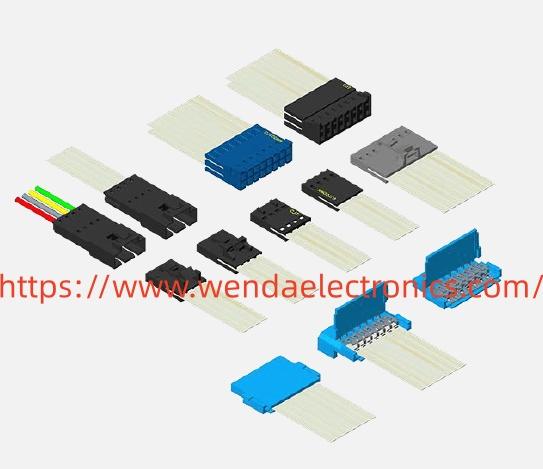
Modern electronic products often contain several circuit boards that must work together within a limited enclosure. A Board to Board Connector provides a direct connection between separate printed circuit boards, helping designers organize electrical pathways without relying on additional cable assemblies in every situation. Zhejiang Wenda Electronics Co., Ltd. develops precision electronic connectors for applications across consumer electronics, automotive systems, communication equipment, and other electronic products.
Material selection is fundamental to connector construction. Conductive contacts are commonly made from copper alloys because they combine electrical conductivity with useful mechanical characteristics. Surface plating may be applied to contact areas to support stable electrical contact and help manage wear or oxidation, depending on the connector design. The insulating housing is often produced from an engineering plastic selected for its electrical insulation, dimensional stability, and suitability for the assembly process.
These materials must work together as a complete system. Contacts need to maintain their intended position within the housing, while the housing must support the structure during insertion and removal. The material choice also needs to suit the manufacturing process and the environment in which the electronic device will operate. Buyers should therefore consider contact materials, plating, insulation, and mechanical construction together rather than evaluating only the visible exterior.
The selection process begins with the architecture of the electronic product. Engineers need to determine how the circuit boards will be positioned relative to each other and whether the connection will be vertical, parallel, or arranged in another configuration. Available space, component placement, assembly direction, and access for inspection can all influence the appropriate connector style. Reviewing the board layout early can help avoid interference with nearby components or enclosure features.
Electrical compatibility is equally important. The connector must support the intended circuit functions, including power delivery or signal transmission as required by the application. Buyers should review the circuit design, contact arrangement, insulation needs, and relevant environmental conditions before selecting a product. For sensitive electronic systems, signal integrity and contact stability should be considered alongside the physical connection between the boards.
Connector technology supports compact product architecture by allowing electrical pathways to pass directly between circuit boards. Depending on the design, connectors may use pin-and-socket arrangements, surface-mounted contacts, or other contact structures. The mating interface needs to align correctly so that the contacts engage as intended. Housing guides and retention features can help control positioning and reduce the risk of incorrect assembly during manufacturing.
Manufacturing consistency influences the quality of this connection. Contact forming, plating, plastic molding, terminal insertion, and final assembly all affect the finished component. Small variations in contact position or housing shape can complicate automated placement or mating. Precision tooling and inspection processes help manufacturers maintain consistent construction and identify defects that could affect assembly or electrical performance.
Zhejiang Wenda Electronics Co., Ltd. describes its capabilities as including connector design and development, precision processing, molding, automated assembly, and inspection. These manufacturing activities are relevant to buyers who need connectors that fit established production workflows. When discussing a new project, sharing board drawings, application details, assembly methods, and environmental requirements can help the supplier understand the intended connection more accurately.
User experience in electronics manufacturing begins with installation. A connector that aligns naturally with the board layout can simplify assembly and reduce the need for repeated manual adjustment. Clear orientation features can also help prevent incorrect mating, while a suitable retention structure helps keep the connection in place during normal use. For products that require servicing, the method of separating and reconnecting boards should be considered during the initial design stage.
Reliability during everyday operation depends on more than the initial fit. Electronic devices may experience vibration, temperature changes, repeated handling, or exposure to dust and moisture. The suitability of a connector depends on its construction and the conditions specified for its use. Engineers should assess these environmental demands and avoid assuming that every connector is appropriate for every setting.
Maintenance and repair also influence connector selection. In some devices, direct board-to-board connections allow internal modules to be arranged neatly and may simplify replacement of a board assembly. In other designs, a tightly packed enclosure can make access difficult. Considering the service process during product development helps engineers balance compact packaging with practical inspection and repair.
Design and appearance matter because connectors occupy space within the product's internal structure. A compact housing can help organize components, while a suitable mating orientation can simplify board stacking and enclosure planning. Although the connector is often hidden after assembly, its shape influences the overall layout, component spacing, and ease of manufacturing. A well-integrated design can support a cleaner internal arrangement without sacrificing accessibility.
Customization may be useful when standard connector options do not match a product's board layout or assembly requirements. Buyers may need a particular contact arrangement, housing form, mounting approach, or connection direction. Early cooperation between the electronics designer and connector supplier can help establish the requirements before tooling and production decisions are finalized. This is especially relevant for OEM projects where the connector must fit a product-specific structure.
For engineers and purchasing teams, evaluating conductive materials, insulation, mating design, circuit compatibility, manufacturing consistency, installation, and maintenance can help clarify connector requirements. Zhejiang Wenda Electronics Co., Ltd. offers precision electronic connector products and development capabilities for different electronic applications. Further information about its connector range and related solutions is available at https://www.wendaelectronics.com.

 English
 Arabic
 French
 Spanish
 Portuguese
 Deutsch
 Turkish
 Dutch
Dutch
 Russian
 Romaian
 Portuguese (Brazil)
 Greek
Greek
