


Are Local Tour Guides Included in Turkey Tours?
Introduction
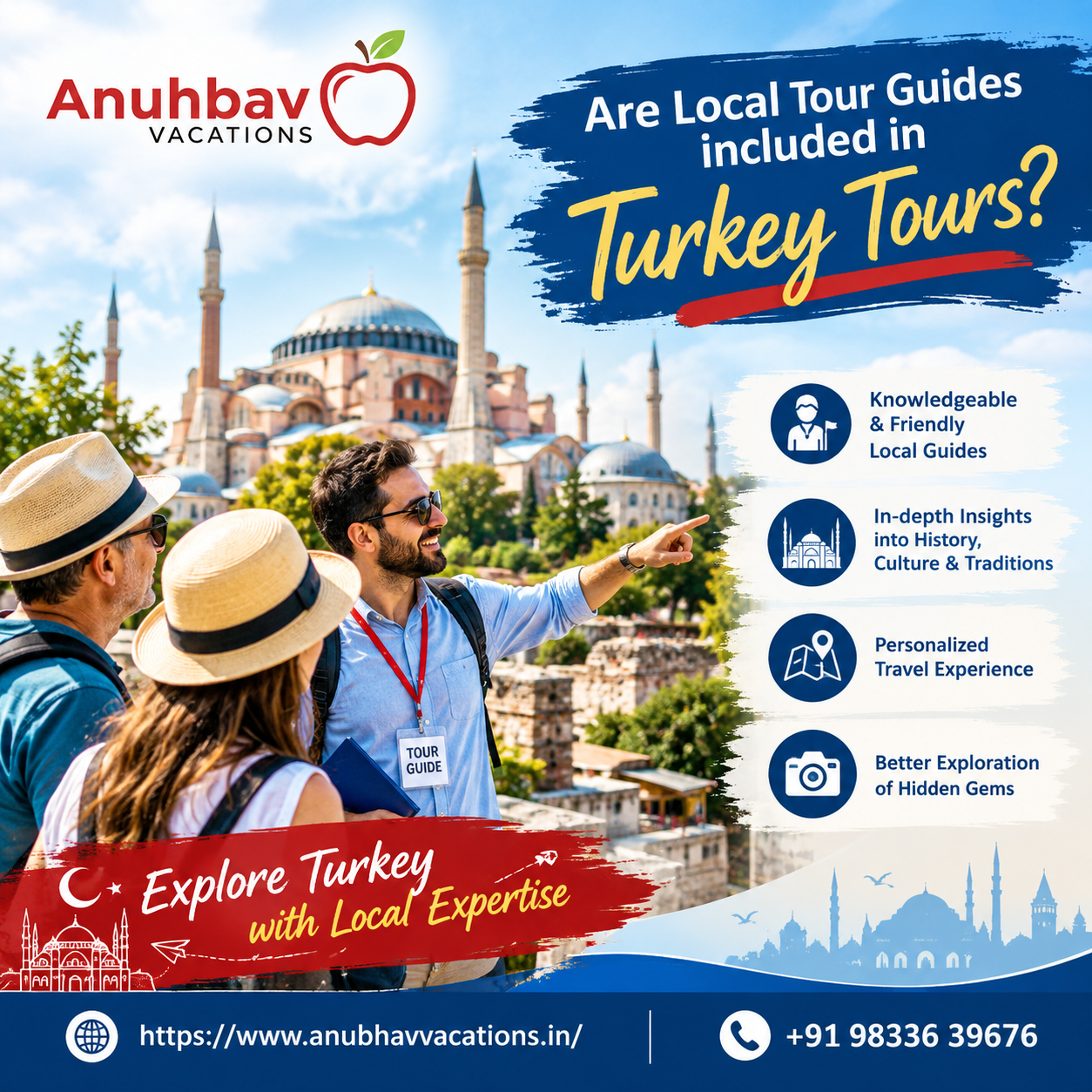
Local tour guides can make a major difference when exploring a country with a long and diverse history, and Turkey is an excellent example. From ancient ruins and Ottoman landmarks to traditional markets, religious monuments, and natural landscapes, there is a wide variety of experiences to discover. For this reason, travellers often wonder whether local guides are included when planning turkey tours.
The answer depends on the itinerary, tour operator, destination, and type of travel package selected. Some organised tours include professional local guides for scheduled sightseeing, while others may provide guides only for specific attractions or excursions. Independent travel arrangements may not include guiding services at all.
A local guide can provide historical background, explain cultural traditions, help travellers understand local customs, and make visits to major attractions more meaningful. Guides may also assist with practical information such as meeting points, transportation arrangements, and sightseeing schedules.
Why Are Local Tour Guides Useful in Turkey?
Turkey has a fascinating combination of cultures and historical periods. Ancient Greek, Roman, Byzantine, Seljuk, and Ottoman influences can be found across different parts of the country.
Without context, some historic buildings and archaeological sites may simply appear to be impressive structures. A knowledgeable guide can explain why they were built, who used them, and how they fit into the wider history of the region.
For example, visiting an ancient theatre becomes more interesting when travellers understand how public performances functioned in ancient society. Similarly, walking through an Ottoman-era neighbourhood can become more meaningful when the architectural details and cultural traditions are explained.
Guides can therefore turn sightseeing from simple observation into a deeper learning experience.
Are Guides Included in Organised Turkey Tours?
Many organised itineraries include some form of guided sightseeing, but the exact arrangement varies.
A tour may include a professional guide for an entire journey or provide local guides at selected destinations. Some itineraries use destination-specific guides who specialise in the history and attractions of a particular region.
Travellers should carefully review the itinerary to determine whether guiding services are included throughout the journey or only during selected excursions.
The itinerary may also specify whether the guide accompanies the group throughout the day or joins only for particular sightseeing sessions.
What Does a Local Tour Guide Usually Do?
A local tour guide can perform several roles during a sightseeing experience.
Explaining Historical Attractions
One of the most important responsibilities is providing historical and cultural information.
At ancient sites, guides can explain archaeological remains, historical events, architectural styles, and the significance of individual structures.
This can be particularly helpful at locations such as Ephesus, where numerous ruins are spread across a large archaeological area.
Providing Cultural Context
A guide can explain local customs, traditions, food, religious practices, and social etiquette.
Understanding cultural context can help international visitors interact respectfully with local communities.
Managing Sightseeing
Guides may help groups stay on schedule by explaining meeting points and planned stops.
This can be especially useful when a tour includes several attractions in one day.
Answering Questions
Travellers often have questions that are not covered by guidebooks. Local guides can provide explanations based on their knowledge of the destination.
They may also recommend appropriate places to experience local food, markets, crafts, or cultural activities, depending on the tour's structure.
Can Guides Be Available in Major Turkish Cities?
Yes. Major tourist destinations in Turkey commonly have access to professional guides and guided sightseeing services.
Istanbul
Istanbul has an extraordinary mixture of Byzantine and Ottoman heritage. Guides can explain attractions such as Hagia Sophia, the Blue Mosque, Topkapi Palace, the Grand Bazaar, and other historic landmarks.
Because Istanbul has such a layered history, a guide can help visitors understand how the city changed over different periods.
Cappadocia
Cappadocia is famous for its unusual rock formations, cave settlements, underground cities, and valleys.
A local guide can explain how volcanic activity created the landscape and how communities adapted the natural rock formations for homes, churches, storage areas, and defensive purposes.
Ephesus
Ephesus is one of the most important archaeological sites in Turkey.
A guide can explain the significance of the Library of Celsus, Great Theatre, Curetes Street, temples, residential areas, and other remains.
Because the archaeological area is extensive, guided sightseeing can also help travellers understand how the different parts of the ancient city were connected.
Pamukkale
Pamukkale combines natural scenery with historical heritage.
Guides can explain the formation of the white travertine terraces and the history of the ancient city of Hierapolis located nearby.
Antalya
Antalya provides access to coastal scenery as well as archaeological attractions in the surrounding region.
Depending on the itinerary, local guides may explain the history of ancient sites and introduce travellers to the cultural character of the Mediterranean region.
Are Guides Available for Historical Sites?
Guided visits can be especially valuable at historical and archaeological attractions.
Many ancient sites contain structures whose original purpose may not be immediately obvious. A guide can explain the function of temples, theatres, public baths, marketplaces, roads, and residential buildings.
This additional information can help travellers visualise what life may have been like during the period when the site was active.
Historical sites can also have multiple layers of development. A structure may have been built during one period and modified by later civilisations. Guides can explain these changes and provide a clearer understanding of the site's history.
Are Local Guides Different From Tour Leaders?
Yes. A tour leader and a local sightseeing guide may have different responsibilities.
A tour leader may accompany a group throughout a broader journey and coordinate daily travel arrangements. A local guide may join the group at a particular destination to provide specialised information about local attractions.
Some organised itineraries may use both roles.
For example, a tour leader can coordinate the overall schedule while a local guide provides detailed explanations at an archaeological site.
Travellers should check the itinerary carefully if this distinction is important to them.
What Languages Can Local Guides Speak?
The availability of languages depends on the destination and tour arrangement.
English is widely used in international tourism, particularly in major tourist destinations. Other languages may also be available depending on the tour operator and guide.
Travellers should confirm their preferred language before booking if language support is an important requirement.
Clear communication can make guided sightseeing much more comfortable and help travellers ask questions confidently.
Can Indian Travellers Benefit From Local Guides?
Yes. Travellers from India may particularly appreciate guides who can provide clear explanations about Turkish history, culture, food, traditions, and practical travel customs.
When planning an india to turkey tour package, travellers may visit several regions with different cultural characteristics. A local guide can explain these differences and help visitors understand what makes each destination distinctive.
Guides can also help explain local dining customs, appropriate behaviour at religious sites, and practical aspects of sightseeing.
However, the availability of specific language support or specialised services should always be confirmed with the tour provider before departure.
Do Guides Help With Cultural Etiquette?
They can. Turkey has diverse cultural traditions, and visitors may encounter religious sites, traditional neighbourhoods, local markets, and community spaces.
A guide can explain appropriate behaviour, such as suitable clothing for certain religious sites, photography etiquette, and respectful conduct.
This can help international travellers avoid accidental cultural misunderstandings.
Guides may also explain when visitors should remove shoes, where photography may be restricted, or how to behave in particular cultural environments.
Can Guides Recommend Local Food?
Guides may provide information about regional dishes and popular local food experiences.
Turkey's cuisine varies by region. Istanbul, the Aegean coast, central Anatolia, and southeastern areas each have distinctive culinary traditions.
A local guide may explain the ingredients and history behind particular dishes or suggest places that fit the group's itinerary.
Travellers with dietary restrictions should still communicate their requirements clearly and confirm ingredients directly when necessary.
Are Guides Useful for Shopping Experiences?
A guide can provide useful cultural and practical context when visiting traditional markets.
Turkey has many famous bazaars and local shopping areas where travellers can find textiles, ceramics, spices, jewellery, leather goods, handicrafts, and other products.
A guide may explain traditional products and help visitors understand regional differences.
However, travellers should make purchasing decisions independently and compare products before buying.
Can Local Guides Help at Religious Sites?
Guides can be particularly useful when visiting mosques and other religious landmarks.
They can explain architectural features, historical background, and cultural significance while also informing visitors about appropriate behaviour.
Travellers should follow the rules displayed at religious sites, including dress requirements, visiting hours, and photography restrictions.
Respectful behaviour is important regardless of whether a guide is present.
Are Guides Included Every Day?
Not necessarily. The level of guiding depends on the tour structure.
Some itineraries may provide guided sightseeing on selected days and free time on others. This arrangement can give travellers a balance between organised activities and independent exploration.
For example, a group may have a guided historical tour in the morning and free time in the afternoon.
Other itineraries may have a guide accompanying the group for most of the journey.
The itinerary details should therefore be reviewed carefully before booking.
What Should I Check About Guide Services Before Booking?
Travellers should look for clear information about guide services in the itinerary.
Important points include:
-
Whether a professional guide is included
-
Which sightseeing days are guided
-
Whether guides are local or accompany the group
-
Available guide languages
-
Whether entrance tickets are separate
-
Whether private guiding is available
-
Whether guided excursions are optional
-
How long guided sightseeing sessions last
Understanding these details can prevent confusion after the trip begins.
Are Private Guides Available?
Private guides may be available for travellers who want a more personalised experience.
A private guide can focus on the traveller's interests and adjust the pace of sightseeing. This may be useful for families, couples, photographers, history enthusiasts, or travellers with specific cultural interests.
Private arrangements can also provide greater flexibility than a large group tour.
Availability depends on the destination and service provider, so travellers should confirm arrangements in advance.
Can Guides Help During Archaeological Tours?
Yes. Archaeological attractions are among the places where professional guiding can be especially valuable.
A site may contain ruins from different periods, and understanding the chronology can make the experience much easier.
A guide can explain how cities developed, how buildings were used, and how political or religious changes influenced architecture.
At Ephesus, for example, visitors can learn about the city's commercial importance, Roman administration, religious traditions, and urban planning.
At ancient sites around Antalya and the Aegean region, guides can similarly provide context about different civilisations.
What Are the Benefits of Guided Sightseeing?
Guided sightseeing offers several advantages.
Better Historical Understanding
Instead of simply seeing ruins, travellers learn why they matter.
Easier Navigation
Large attractions can be confusing. Guides can help groups follow an organised route.
Cultural Context
Local customs and traditions become easier to understand when explained by someone familiar with the region.
Time Management
A guide can help groups stay on schedule when several attractions are planned.
Questions and Interaction
Travellers can ask questions and receive explanations during the visit.
These benefits can make a guided itinerary particularly useful for first-time visitors.
Is Independent Sightseeing Better Than Guided Tours?
It depends on personal preference.
Independent travellers may enjoy having complete control over their schedule. They can spend as much time as they like at an attraction and change plans according to their interests.
Guided tours, however, can provide historical context and reduce some of the logistical challenges of visiting unfamiliar destinations.
Many travellers prefer a combination of both. They may choose guided visits for major historical sites while keeping free time for shopping, dining, photography, or relaxing.
How Can Guides Improve the Overall Turkey Travel Experience?
A good local guide can connect individual attractions into a broader story.
Instead of viewing Istanbul's monuments, Cappadocia's valleys, Ephesus's ruins, and Pamukkale's landscapes as unrelated destinations, travellers can understand how geography, history, religion, trade, and culture influenced each region.
This broader context can make the entire journey more meaningful.
Guides may also introduce travellers to details they might overlook when exploring alone, such as architectural symbols, traditional practices, historical figures, and local stories.
Planning a Guided Turkish Holiday
When choosing turkey tours, travellers should decide how much guided sightseeing they prefer.
History enthusiasts may want extensive guided visits, while travellers seeking relaxation may prefer shorter guided sessions combined with free time.
Families should consider the attention span and walking requirements of children. Senior travellers may want a slower pace with adequate breaks. Couples may prefer a balance between organised sightseeing and independent exploration.
Reviewing the itinerary in advance can help travellers select an arrangement that matches their interests.
Why Local Knowledge Matters?
Local knowledge can be particularly valuable because guidebooks and online resources cannot always explain the atmosphere and everyday character of a destination.
A local guide can provide context about neighbourhoods, traditions, regional foods, historical events, and cultural practices.
This doesn't mean every traveller needs a guide for every activity. Instead, guided services can be selected strategically for places where historical and cultural context adds significant value.
Making the Most of a Guided Tour
Travellers can make guided experiences more enjoyable by preparing a few questions in advance.
If you are interested in architecture, ask about building techniques. If history is your main interest, ask about important historical events. If food is important, ask about regional specialities.
Listening carefully and respecting the guide's instructions can also help the group stay organised.
Travellers should remember that guides are there to provide information and assistance, but site rules and local regulations always take priority.
Conclusion
Local tour guides can be included in turkey tours, but the exact arrangement depends on the itinerary and tour provider. Some organised journeys include guides for major sightseeing activities, while others provide local experts only at selected attractions.
A knowledgeable guide can add considerable value by explaining Turkey's history, architecture, traditions, religious heritage, archaeological sites, and local culture. This can be particularly useful at destinations such as Istanbul, Cappadocia, Ephesus, Pamukkale, and Antalya.
Travellers should carefully check whether guiding services are included, which destinations are covered, what languages are available, and whether any excursions are optional. A combination of guided sightseeing and independent exploration can often provide a comfortable balance.
For international travellers, including those booking an india to turkey tour package, local guides can make unfamiliar historical and cultural sites easier to understand while helping visitors experience Turkey with greater confidence and cultural awareness.
FAQ Questions
1. Are local guides included in turkey tour packages from India?
Yes, local guides may be included depending on the selected itinerary and tour operator. turkey tour packages from India can include guided sightseeing at major attractions, while some itineraries may provide guides only for specific destinations or excursions. Travellers should check the inclusions before booking.
2. Do local guides speak English in Turkey?
English-speaking guides are commonly available in major tourist destinations, although availability depends on the location and tour arrangement. Travellers who require another language should confirm this requirement before booking.
3. Are guides available at historical sites in Turkey?
Guided services can be available at many major historical and archaeological attractions. Guides can explain the background, architecture, cultural significance, and historical events associated with the sites.
4. Can I choose between guided and independent sightseeing?
Depending on the itinerary, travellers may have guided activities as well as free time for independent exploration. Checking the daily schedule before booking can help determine how much flexibility is available.
5. Why should I use a local guide in Turkey?
A local guide can provide historical and cultural context, help with navigation, explain local customs, answer questions, and make visits to major attractions more meaningful. This can be especially useful for first-time visitors.
Read Our Previous Blog --------------->Can Ephesus be included in a Turkey Holiday Package?

 English
 Arabic
 French
 Portuguese
 Deutsch
 Turkish
 Dutch
Dutch
 Italiano
 Russian
 Romaian
 Portuguese (Brazil)
 Greek
Greek
