


From Passion to Profession: Choosing Beauty Courses in India
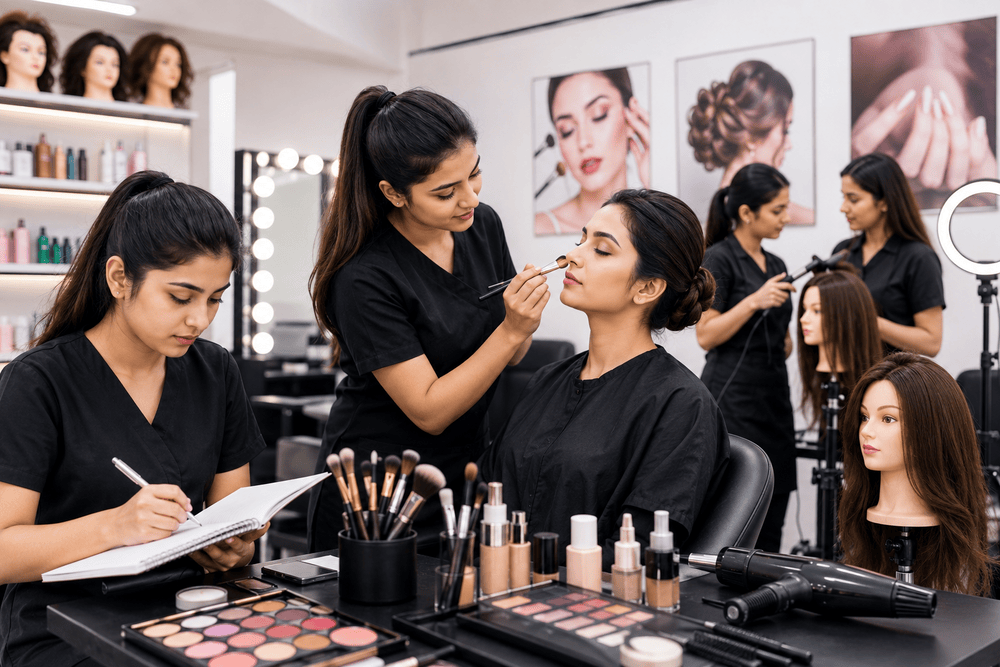
The beauty and wellness industry in India has changed significantly over the last few years. What was once seen mainly as salon-based work has grown into a broad career field covering makeup artistry, hairstyling, skincare, nail care, cosmetology, wellness, and independent beauty businesses.
For students and aspiring professionals, this growth brings plenty of opportunities. At the same time, it can make choosing the right course difficult. There are hundreds of training programs available, ranging from short workshops to professional diplomas. The important question is not simply which course is popular, but which one actually matches your career goals.
What Should You Expect From a Beauty Course?
A good beauty course should offer more than demonstrations and theoretical lessons. Beauty is a practical profession, so students need regular opportunities to work with professional tools, products, techniques, and real clients or models.
Depending on the specialization, training may cover areas such as:
-
Basic and advanced makeup techniques
-
Hair cutting, styling, coloring, and finishing
-
Skincare and beauty therapy
-
Nail care, nail art, and extensions
-
Facial and body treatments
-
Client consultation and salon etiquette
-
Product knowledge and hygiene
-
Professional communication
-
Salon operations and workplace practices
For example, someone interested in becoming a bridal makeup artist needs more than knowledge of foundation and eye makeup. They also need practice with different skin tones, face shapes, lighting conditions, product selection, time management, and client communication.
That is why practical exposure should be one of the first things you check when comparing courses.
Popular Beauty Courses in India
There is no single course that is right for everyone. Your choice should depend on your interests and the kind of work you want to do.
Makeup Courses
Makeup training is suitable for people interested in bridal makeup, fashion, editorial work, television, photography, or freelance services.
A strong program should cover fundamentals such as skin preparation, color theory, blending, contouring, highlighting, brows, and different makeup looks. Advanced training may introduce HD and airbrush techniques.
Hair Courses
Hair professionals work across salons, studios, fashion projects, events, and freelance businesses.
Training can include haircutting, styling, hair coloring, highlights, smoothening, texturizing, curls, and hair care. Since trends and techniques keep changing, students should look for programs that combine fundamental skills with modern methods.
Beauty Therapy Courses
Beauty therapy is broader than learning individual salon services. Students may learn skincare, facial treatments, manicure and pedicure techniques, client consultation, and other professional beauty services.
This can be a useful starting point for people who want to work in salons, spas, beauty clinics, or build a broader service portfolio.
Nail Courses
Nail artistry has become a specialized field of its own. Courses may include nail preparation, gel nails, acrylic techniques, extensions, French designs, sculpting, and professional nail care.
Creativity matters here, but technical accuracy and hygiene are equally important.
Cosmetology Courses
Cosmetology programs generally provide broader exposure to beauty, hair, skin, and related professional services. They can be useful for students who do not want to limit themselves to one specialization.
For someone considering a long-term career in the beauty industry, broader training can provide a foundation before moving into a specific area of expertise.
How to Choose the Right Course
Before enrolling, spend some time comparing programs instead of choosing one based only on advertisements or social media posts.
Here are five practical factors to consider.
1. Check the Curriculum
Read the complete course outline. Find out exactly what you will learn and how much practical training is included.
A course with a long list of topics is not automatically better. What matters is whether the curriculum provides enough depth and practice.
2. Look at Practical Training
Beauty is a hands-on profession. Ask how much time students spend actually performing treatments and techniques.
If possible, attend a demo class or visit the training centre before enrolling. Observe the classroom, equipment, trainers, and student work.
3. Research Certification
Certification can be useful when applying for jobs or building professional credibility. However, students should understand what the certificate represents.
Ask who issues it, whether the qualification is recognized or affiliated with an appropriate institution, and what exactly the certification covers.
4. Consider Career Support
A good training experience should prepare students for professional life, not just examinations.
Ask whether the institute provides internship opportunities, industry exposure, portfolio development, interview preparation, or placement assistance.
For example, Swiss School of Beauty lists practical training, internships, professional courses across makeup, hair, beauty, cosmetology, nail care and wellness, along with career-focused support.
5. Match the Course With Your Career Plan
Think about where you want to be two or three years from now.
Do you want to:
-
Work in a professional salon?
-
Become a freelance makeup artist?
-
Specialize in hair or nails?
-
Work in skincare and beauty therapy?
-
Open your own salon?
-
Build a personal beauty brand?
-
Explore opportunities outside India?
Your answer can help determine whether a short certificate, specialized course, or comprehensive diploma makes more sense.
Common Mistakes Students Should Avoid
One of the biggest mistakes is selecting a course only because it is inexpensive. Training quality, practical exposure, curriculum, and instructor experience can have a much greater impact on your career.
Another common mistake is expecting a certificate to replace practice. A certificate may prove that you completed training, but clients and employers ultimately notice your actual skills.
Students also sometimes try to learn too many specializations at once. Having broad knowledge is useful, but developing one strong core skill first can make it easier to establish yourself professionally.
Finally, don't ignore communication skills. A talented beauty professional still needs to understand client expectations, explain services clearly, handle feedback, and create a comfortable experience.
Why Practical Experience Matters
Imagine two students who complete the same makeup course. One spends most of the training watching demonstrations, while the other regularly practices on different faces and receives feedback from an instructor.
The second student is likely to feel more confident when dealing with a real client.
This is why hands-on learning, supervised practice, internships, and exposure to real salon environments can make a meaningful difference. Swiss School of Beauty, for example, highlights on-the-job training and internships as part of its approach to professional beauty education.
Students looking to compare programs can explore different beauty courses in india and consider the curriculum, specialization, practical exposure, and career support before making a decision.
Building a Career After Your Course
Completing training is only the beginning. The next stage is building experience and a professional portfolio.
Start by documenting your best work. Before-and-after photographs, makeup looks, hairstyles, nail designs, or skincare results can help demonstrate your ability.
Social media can also become a useful professional tool. A well-maintained portfolio on platforms such as Instagram can help freelancers attract potential clients and showcase their specialization.
For salon professionals, developing strong customer service skills can be just as important as technical ability. Repeat business often depends on trust, consistency, hygiene, communication, and the overall client experience.
Those who want to become entrepreneurs should also learn basic business skills such as pricing, appointment management, inventory planning, marketing, and financial management.
Final Thoughts
Choosing among the many beauty courses available in India requires more thought than simply selecting the course with the most attractive advertisement. Look closely at the curriculum, practical training, certification, trainers, facilities, career support, and opportunities for real-world experience.
Most importantly, choose a program that supports the career you actually want to build.
The beauty industry rewards creativity, but long-term success also depends on technical skill, discipline, communication, continuous learning, and the ability to understand clients. A well-chosen course can provide the foundation; consistent practice and professional development are what turn that foundation into a career.

 Arabic
 French
 Spanish
 Portuguese
 Deutsch
 Turkish
 Dutch
Dutch
 Italiano
 Russian
 Romaian
 Portuguese (Brazil)
 Greek
Greek
