


Android App Development Service for Healthcare: Key Features and Benefits
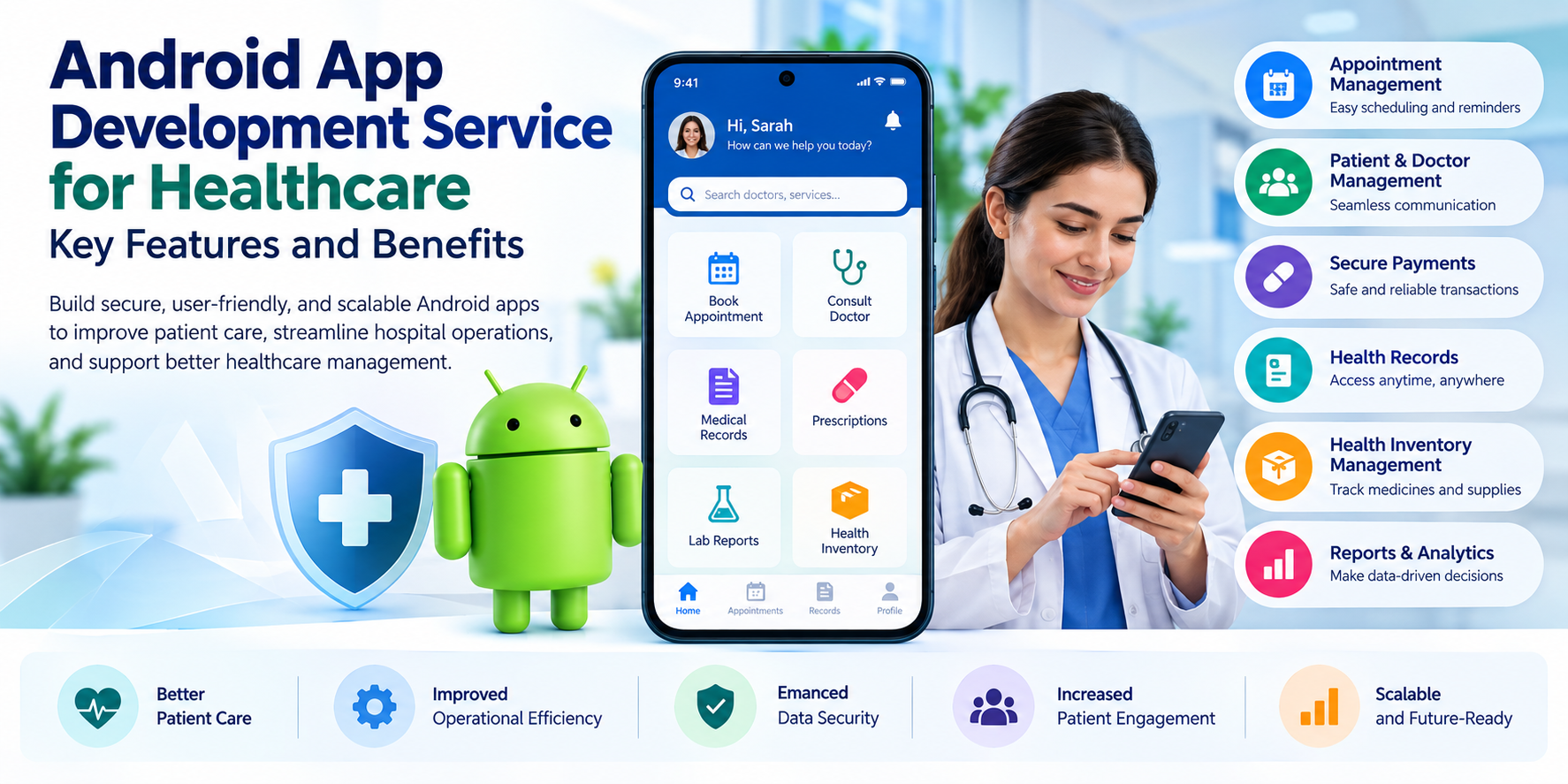
Healthcare is becoming increasingly connected through software, mobile applications, and digital systems. For businesses building healthcare solutions, an Android app can provide a practical way to connect patients, doctors, medical staff, pharmacies, and administrators through one platform. The regulatory side also matters when software is connected with medical devices or regulated functions. In 2026, the U.S. FDA's Quality Management System Regulation (QMSR) became effective and incorporates ISO 13485:2016 requirements for medical device quality management systems.
A well-planned android app development service can help healthcare businesses build applications that are secure, scalable, and designed around specific healthcare workflows. From patient engagement to health inventory management, the right features can make a healthcare application more useful and easier to manage.
Start With the Healthcare Problem You Want to Solve
Before development begins, identify the actual problem the application needs to address. A patient-facing app may focus on appointments, medical records, prescriptions, or communication, while a hospital application may need staff management, inventory, reporting, and administrative features.
Defining the purpose early helps the development team select suitable technologies and avoid adding unnecessary functionality.
Essential Features That Make Healthcare Apps More Useful
Healthcare applications need to support different users and workflows. Some important features include:
- Patient Profiles and Health Records: Allow users to manage relevant personal information, appointments, prescriptions, reports, and other permitted health data.
- Appointment Management: Patients can view available slots, schedule appointments, receive reminders, and manage upcoming consultations.
- Doctor and Staff Management: Healthcare providers can manage schedules, patient information, consultations, and assigned tasks based on their roles.
- Secure Communication: Messaging and notification features can help patients and healthcare professionals communicate through the application.
- Payment and Billing: If applicable, the app can support consultation payments, invoices, subscriptions, or other healthcare-related transactions.
- Reports and Analytics: Administrators can use dashboards and reports to understand operational activity and make better decisions.
Understand the Different Types of Healthcare Software
Not every healthcare application needs the same architecture or functionality. Understanding the types of healthcare software helps businesses define the right development scope.
Common examples include:
- Telemedicine applications
- Hospital management software
- Electronic health record systems
- Pharmacy management applications
- Medical appointment platforms
- Patient engagement applications
- Healthcare billing software
- Medical inventory systems
- Remote patient monitoring solutions
The selected software type should directly match the organization's users, workflows, compliance requirements, and business objectives.
Build Health Inventory Management Into the Workflow
Healthcare organizations often need to track medicines, equipment, supplies, and other resources. Health inventory management features can help monitor stock levels, product details, usage, reorder requirements, and movement between locations.
For example, an inventory module can provide role-based access, stock alerts, purchase records, supplier information, and reporting. Connecting inventory data with other business systems can also reduce manual data entry and improve operational visibility.
When QMS for Medical Device Workflows Matters
Healthcare software connected with medical devices requires additional consideration. If the application supports regulated medical device functions or becomes part of a medical device workflow, the development process may need to address applicable regulatory and quality requirements.
A QMS for medical device environment can involve documented processes, risk management, design controls, testing, validation, change management, and quality records. Therefore, businesses should determine the regulatory scope of the software before development starts rather than treating compliance as a final-stage activity.
Choose a Healthcare-Focused Android Development Approach
The technology architecture should be selected according to the application's purpose, integrations, security requirements, expected users, and future growth.
A professional development team should consider:
- Android platform requirements
- Backend and API architecture
- Database design
- Authentication and authorization
- Encryption and secure data handling
- Third-party healthcare integrations
- Cloud infrastructure
- Testing and monitoring
- Scalability and maintenance
The goal is not simply to create an Android application, but to build a reliable healthcare solution that can evolve with changing business and user requirements.
Why Businesses Invest in Healthcare Android Apps
A properly designed healthcare application can create value for both organizations and users. It can make services easier to access, reduce repetitive administrative work, organize information, and support better communication between different stakeholders.
For healthcare businesses, mobile applications can also become part of a wider digital ecosystem that includes web platforms, hospital systems, medical devices, payment services, and internal management software.
Choose the Right Android App Development Partner
Healthcare app development requires more than general mobile development experience. Look for an android app development service provider that understands healthcare workflows, security, integrations, testing, scalability, and regulatory considerations.
Before hiring an android app development company, review its healthcare-related experience, technical capabilities, development methodology, communication process, testing practices, and post-launch support.
Final Thoughts
Healthcare Android applications need to balance usability, security, scalability, and business requirements. Whether you are developing a telemedicine platform, hospital application, patient solution, or health inventory management system, the development process should begin with a clear understanding of the users and workflows.
Choosing an experienced healthcare-focused development partner can help turn the concept into a reliable Android solution while keeping future integrations, maintenance, and regulatory requirements in consideration.

 English
 French
 Spanish
 Portuguese
 Deutsch
 Turkish
 Dutch
Dutch
 Italiano
 Russian
 Romaian
 Portuguese (Brazil)
 Greek
Greek
