


Construction Site Safety Signage: Building a Safer and More Organized Worksite
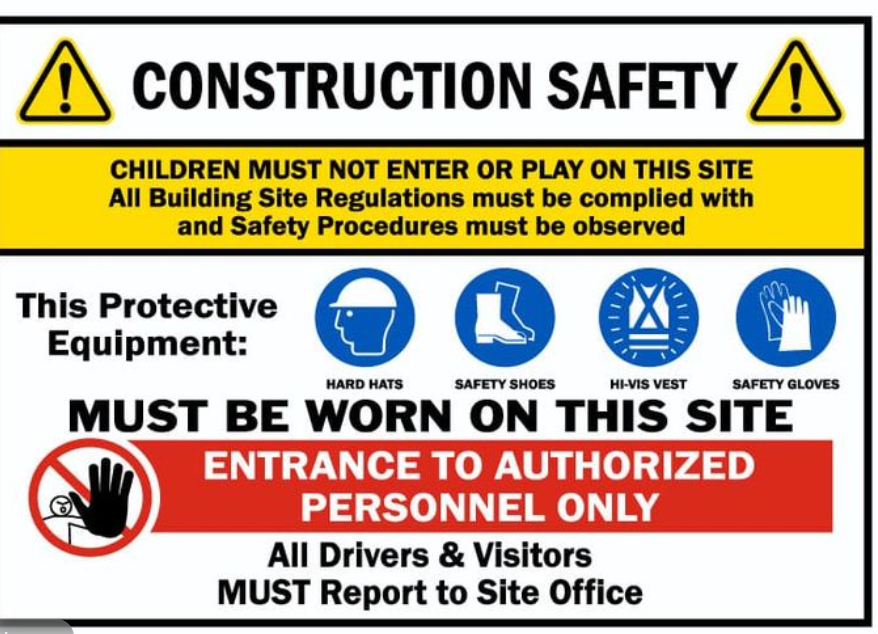
Construction sites are constantly changing environments where workers, contractors, visitors, and equipment operators must respond quickly to potential hazards. Clear construction site safety signage helps communicate important warnings, restrictions, directions, and mandatory precautions before people enter or move through potentially dangerous areas. When signs are positioned correctly and designed for quick recognition, they become an important part of a site's overall safety communication strategy.
Effective safety signage does more than display a warning. It helps establish expectations, identifies restricted areas, directs people toward safe routes, and reinforces the protective measures required for specific tasks. Construction companies, project managers, site supervisors, and contractors should therefore consider signage during the planning stage rather than treating it as something to install only after work has begun.
Why Construction Site Safety Signage Matters
Construction environments can contain numerous hazards, including moving machinery, uneven surfaces, falling-object risks, electrical equipment, excavation areas, temporary structures, and restricted work zones. Conditions can also change as a project progresses, meaning workers may encounter different hazards from one phase to another. Well-placed signs provide immediate visual information that can help people recognize these changing conditions. They are particularly useful at entrances, access points, equipment operating zones, temporary hazards, and areas where visitors may not understand the site's layout. Clear communication can complement other safety controls by ensuring that important information remains visible and understandable to people moving through the worksite.
Selecting the Right Signs for Different Hazards
Not every construction area requires the same type of sign. Warning signs can alert people to potential hazards, while prohibition signs communicate activities or access restrictions. Mandatory signs can identify required protective equipment or procedures, and directional signs can guide workers and visitors toward entrances, exits, emergency equipment, or designated routes. Construction managers should evaluate each location based on what people need to know before proceeding. A sign containing too much information may be overlooked, while an overly general message may fail to communicate the actual risk. Choosing the appropriate message for each location creates a more organized system and makes safety information easier to process.
Making Safety Messages Easy to Understand
Construction workers may encounter signs while walking, driving equipment, carrying materials, or performing tasks that require their attention elsewhere. This makes simplicity and visual clarity particularly important. Large, readable lettering, strong contrast, recognizable symbols, and concise wording can help people understand a message quickly. Signs should be positioned at appropriate heights and viewing distances, taking into account whether they are intended for pedestrians, vehicle operators, or both. Where multiple languages may be necessary, site managers should ensure that important instructions remain clear without creating an overcrowded design. The objective is to communicate the essential information quickly and consistently rather than attempting to explain every possible detail on a single sign.
Placement and Visibility on Active Jobsites
Even a well-designed safety sign has limited value if workers cannot see it when they need it. Signs should be positioned where people naturally make decisions, such as before entering a restricted area, approaching moving equipment, or reaching a change in site conditions. Visibility can be affected by temporary structures, stored materials, machinery, dust, weather, poor lighting, or other construction activity. Site supervisors should therefore inspect signage regularly and relocate or replace signs when conditions change. Temporary signs may also be necessary when hazards exist only during a particular phase of construction. Treating signage as part of the site's changing infrastructure helps maintain effective communication throughout the project.
Durability for Demanding Construction Conditions
Construction sites can expose signs to rain, snow, sunlight, dust, mud, impact, and frequent handling. Materials should therefore be selected according to where and how the sign will be used. Outdoor signs need to remain legible despite weather exposure, while signs positioned near equipment or high-traffic areas may require additional durability. Mounting methods are also important because a sign that becomes loose or falls can create a separate hazard. Regular inspections can identify fading, cracking, damaged mounting hardware, or other problems before the sign becomes ineffective. Investing in suitable materials and dependable installation can help ensure that safety messages remain visible throughout the expected service period.
Temporary and Changing Construction Hazards
Unlike permanent facilities, construction sites evolve continuously. Excavations may move, access routes can change, machinery can be relocated, and completed areas may become restricted during later stages of a project. Safety signage should therefore be reviewed whenever site conditions change. Temporary barriers, directional signs, hazard warnings, and access restrictions can help communicate these changes to workers and visitors. Project managers should also remove outdated signs when the associated hazard no longer exists. Leaving obsolete warnings in place can create confusion because people may become accustomed to seeing signs that when it supports, rather than replaces, other workplace safety measures. Physical barriers, training, personal protective equipment, controlled access, supervision, equipment procedures, and hazard assessments all contribute to a comprehensive safety approach. Signs can reinforce these controls by reminding workers of requirements and identifying important locations. For example, a restricted-area sign becomes more meaningful when paired with an appropriate physical barrier and established access no longer correspond to actual conditions. A current and carefully maintained signage system provides more useful information than a large collection of signs that have accumulated over time.
Integrating Signage Into a Broader Safety Program
Safety signage is most effective when it supports, rather than replaces, other workplace safety measures. Physical barriers, training, personal protective equipment, controlled access, supervision, equipment procedures, and hazard assessments all contribute to a comprehensive safety approach. Signs can reinforce these controls by reminding workers of requirements and identifying important locations. For example, a restricted-area sign becomes more meaningful when paired with an appropriate physical barrier and established access procedure. Construction companies should also ensure that employees and contractors understand the meaning of the signs used on their projects. Consistency between site procedures and visual communication helps create an environment where safety information is easier to recognize and follow.
Maintaining an Effective Signage System
A construction signage plan should be reviewed throughout the life of a project rather than created once and forgotten. Supervisors can periodically assess whether signs remain visible, relevant, readable, and correctly positioned. Damaged signs should be replaced, temporary signs should be updated as conditions change, and unnecessary signs should be removed. It is also useful to consider feedback from workers because those who spend the most time on a site may identify locations where additional warnings or clearer directions would be helpful. By making signage part of routine site management, construction companies can maintain a more organized communication system that adapts alongside the project.
Conclusion
Construction site safety signage is an essential component of effective workplace communication on active jobsites. Clear signs can help identify hazards, communicate restrictions, guide movement, reinforce required precautions, and provide important information as site conditions evolve. To achieve the best results, construction companies should focus on appropriate sign selection, clear messaging, strategic placement, durable materials, regular inspections, and timely updates. Most importantly, signage should work alongside established safety procedures and physical controls rather than being treated as a standalone solution. A carefully planned and maintained signage system helps create a more organized work environment where important safety information is visible, understandable, and available when people need it most.

 English
 Arabic
 French
 Spanish
 Portuguese
 Deutsch
 Turkish
 Italiano
 Russian
 Romaian
 Portuguese (Brazil)
 Greek
Greek
