


Social Media Strategies: How to Build a Stronger Online Presence
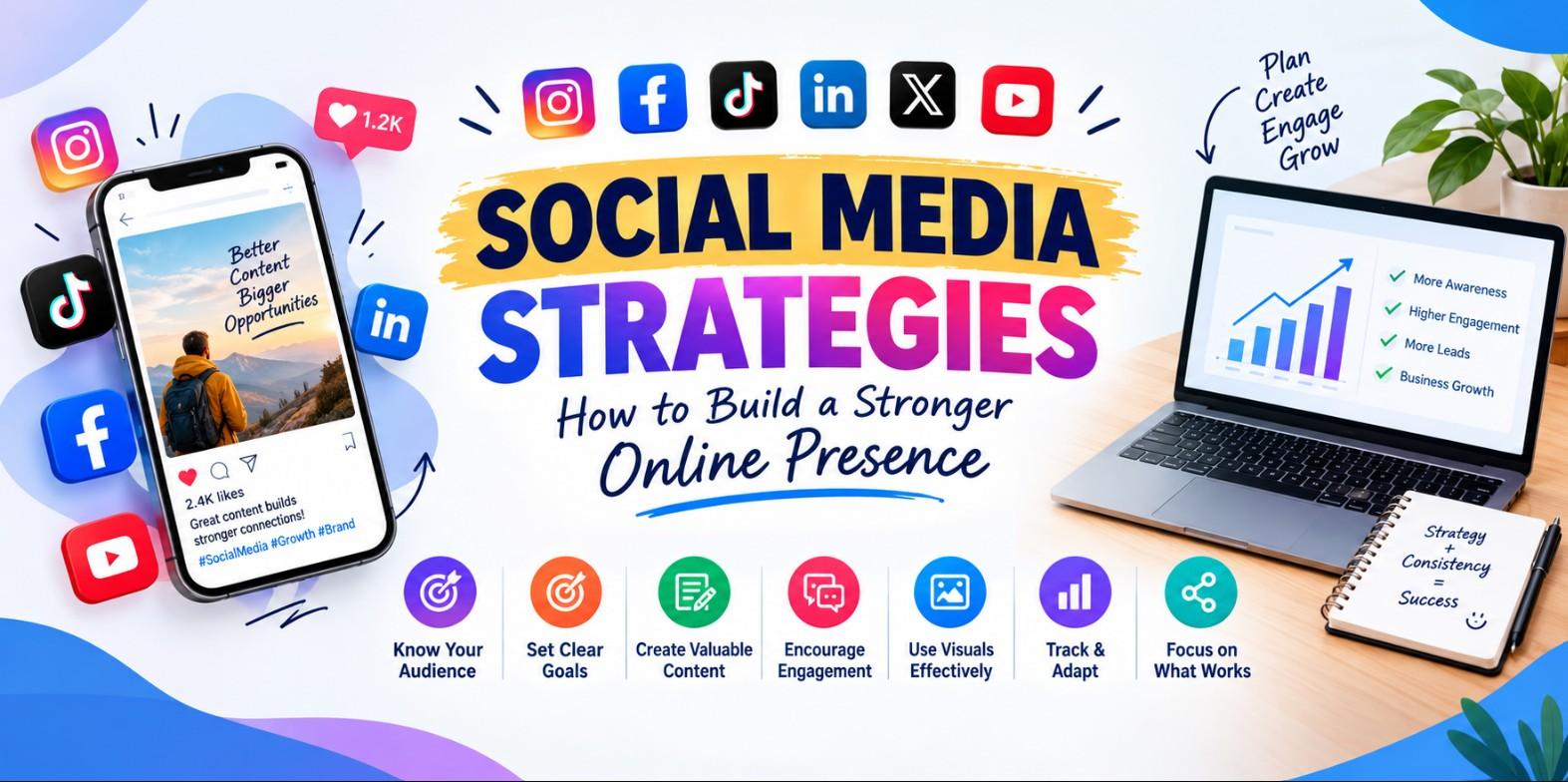
Social media has become one of the most powerful ways for businesses to connect with their audiences. Whether you run a small business, manage a growing brand, or work for an established company, having a clear social media strategy can make a significant difference.
Simply posting content whenever you have time is no longer enough. Successful brands understand their audience, create valuable content, stay consistent, and use data to improve their approach.
A well planned social media strategy helps businesses build brand awareness, increase engagement, generate leads, and develop lasting relationships with customers. The key is to focus less on being everywhere and more on being effective where your audience spends its time.
Understand Your Target Audience
Every successful social media strategy starts with understanding the people you want to reach. Before creating content, consider who your ideal customers are, what problems they face, what interests them, and which social platforms they use most often.
For example, a brand targeting professionals may find LinkedIn more valuable, while a business targeting younger consumers may achieve stronger engagement through Instagram or TikTok. Knowing your audience allows you to create content that feels relevant rather than promotional.
Audience research can also help you understand common questions, preferences, and buying habits. These insights can guide your content ideas and help you communicate in a more natural and relatable way.
Set Clear Social Media Goals
Posting without a goal makes it difficult to measure success. Your social media goals should support your broader business objectives.
Some businesses may focus on increasing brand awareness, while others may want to drive website traffic, generate leads, improve customer service, or increase sales. Choose specific goals that can be measured over time.
For instance, instead of saying you want more engagement, aim to increase meaningful interactions by a certain percentage within a specific period. Clear goals make it easier to evaluate what is working and where improvements are needed.
Create Valuable and Consistent Content
Content is at the heart of every effective social media strategy. However, creating more content does not necessarily mean achieving better results. Quality, relevance, and consistency are much more important.
A strong content strategy can include educational posts, short videos, customer stories, behind the scenes content, industry insights, product demonstrations, and helpful tips. The best content usually provides something useful instead of constantly asking people to buy.
Consistency also matters. An account that posts regularly is more likely to remain visible and recognizable to its audience. Creating a simple content calendar can make the process easier and prevent last minute posting.
Encourage Genuine Engagement
Social media is designed to be social. Businesses should not treat their accounts as one way advertising channels. Responding to comments, answering questions, acknowledging feedback, and joining relevant conversations can help create a stronger relationship with followers.
People appreciate brands that communicate like real people. A thoughtful response can turn a simple comment into a meaningful interaction and may even encourage customers to recommend the brand to others.
Engagement also provides valuable information. Questions and comments can reveal what your audience likes, dislikes, or wants to learn more about, giving you ideas for future content.
Use Visual Content Effectively
Visual content can make social media posts more noticeable and easier to understand. High quality images, short videos, infographics, and simple graphics can help communicate ideas quickly.
However, visuals do not always need to look highly polished. Authentic photographs, behind the scenes clips, and real customer experiences can often feel more trustworthy than overly produced promotional material.
The most effective visual content supports the message rather than distracting from it. Keep designs clear, use consistent branding, and make sure the content is easy to understand on mobile devices.
Monitor Performance and Adapt
A social media strategy should never remain exactly the same forever. Platforms, audience preferences, and content trends change constantly. Tracking performance helps businesses understand which efforts are producing meaningful results.
Pay attention to metrics such as engagement, reach, impressions, website visits, conversions, and audience growth. Do not focus only on follower numbers. A smaller audience that regularly interacts with your brand can be more valuable than thousands of inactive followers.
Use your results to make informed adjustments. If educational videos consistently outperform promotional posts, consider creating more educational video content. Testing different formats and topics can gradually reveal what works best for your audience.
Avoid Trying to Do Everything
One common mistake businesses make is trying to maintain an active presence on every social media platform. This can quickly become overwhelming and may reduce content quality.
Instead, focus on the platforms that provide the greatest opportunity to reach your target audience. A strong presence on two relevant platforms is often more effective than weak activity across five or six.
Your strategy should match your available resources. Consistency is easier when you choose a manageable number of platforms and create a realistic publishing schedule.
Frequently Asked Questions
What is a social media strategy?
A social media strategy is a planned approach to using social platforms to achieve specific business goals. It usually includes audience research, content planning, platform selection, engagement, and performance measurement.
How often should a business post on social media?
There is no universal posting schedule that works for every business. The ideal frequency depends on your audience, platform, content resources, and goals. Consistent, useful content is generally more important than posting excessively.
Which social media platform is best for business?
The best platform depends on your target audience and industry. Businesses should research where their potential customers spend time and prioritize those platforms rather than automatically joining every available network.
How can social media increase business growth?
Social media can support business growth by increasing brand visibility, building relationships, generating leads, driving traffic, and supporting customer retention. Results improve when social media activity is connected to clear business objectives.
Conclusion
A successful social media strategy is not about chasing every trend or publishing as much content as possible. It is about understanding your audience, setting meaningful goals, creating useful content, encouraging genuine conversations, and learning from performance data.
Businesses that approach social media with consistency and purpose can build stronger online communities and create more opportunities for long term growth. Start with a clear strategy, focus on what your audience actually values, and improve your approach as you learn what works.

 English
 Arabic
 French
 Spanish
 Portuguese
 Turkish
 Dutch
Dutch
 Italiano
 Russian
 Romaian
 Portuguese (Brazil)
 Greek
Greek
