


Train Logistics Services Company in India: Top Providers, Services & How to Choose
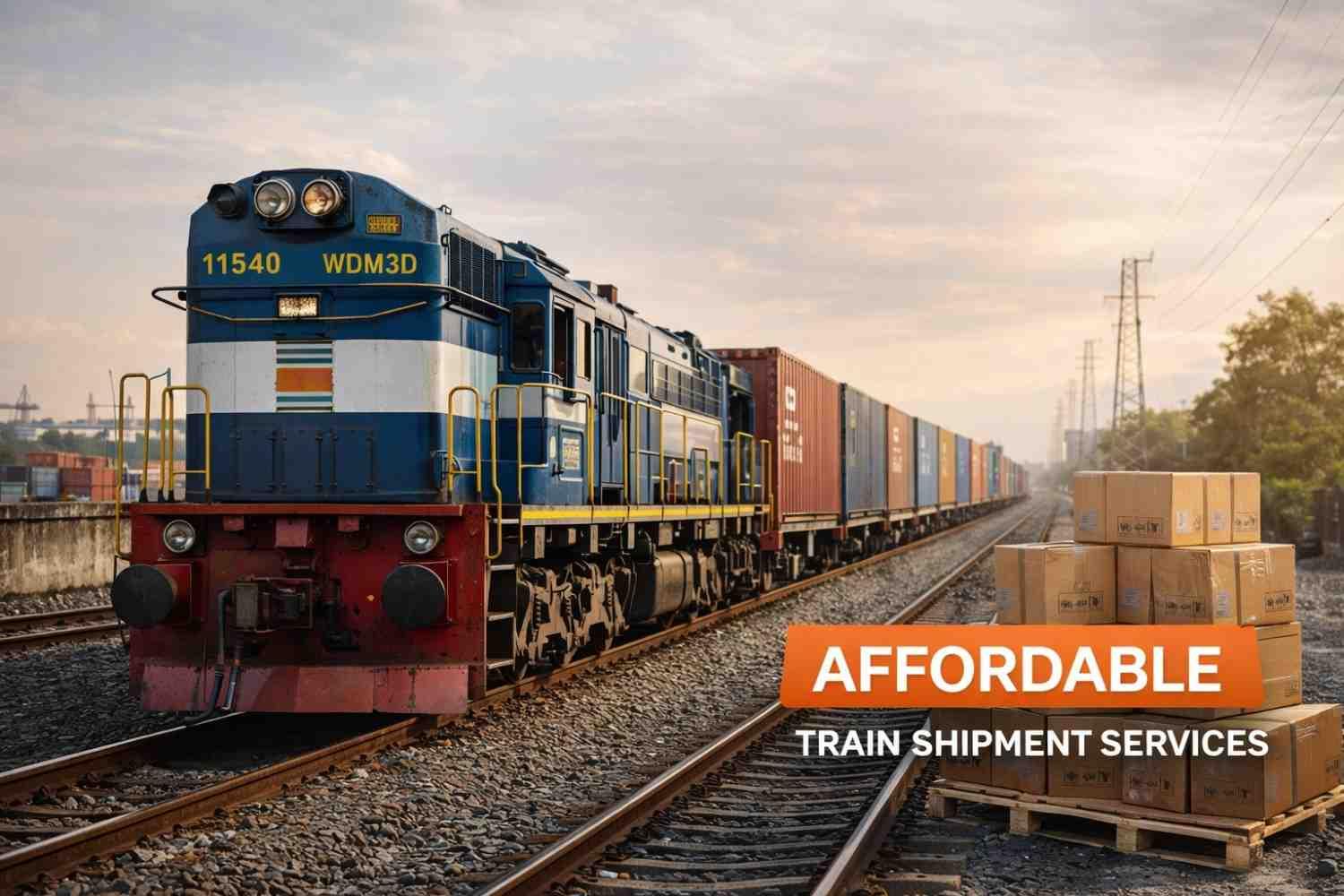
Choosing a train logistics services company in India is less straightforward than comparing road freight quotes. Rail can be highly effective for long-distance and high-volume movement, but the economics depend on the route, cargo type, terminal access, shipment size, handling requirements, and how the first and last mile are managed.
This is becoming more relevant as India's freight infrastructure changes. Dedicated Freight Corridors are improving rail capacity on important industrial routes, while logistics companies are investing in container trains, inland terminals, multimodal logistics parks, warehousing, and digital shipment visibility. In January 2026, the Ministry of Railways reported a record 892 train interchanges on the Dedicated Freight Corridor network, highlighting the increasing operational capacity of dedicated freight infrastructure.
For a business, however, better rail infrastructure does not automatically mean every shipment should move by train.
This guide compares major rail logistics providers operating in India, explains where each is strongest, discusses the practical limitations of rail freight, and shows how businesses can evaluate Train Cargo Services, bulk shipment by train, and long-distance rail logistics solutions without choosing a provider simply because it has a large network.
India's Rail Logistics Market in 2026
India's rail freight market is moving toward a more integrated model. Traditional bulk commodities remain important, but containerized cargo, industrial products, automobiles, agricultural goods, retail cargo, and domestic distribution are also creating demand for rail-linked logistics.
The infrastructure behind this shift is significant. In March 2025, the Ministry of Railways reported that 2,741 route kilometres, or 96.4% of the combined Eastern and Western Dedicated Freight Corridors, had been commissioned and were operational. The Eastern DFC covers the Ludhiana-Sonnagar route, while the Western DFC connects JNPT and Dadri.
For businesses, the practical benefit is not simply "faster trains." Dedicated freight infrastructure can provide additional capacity and reduce dependence on heavily congested mixed-use routes. It can make rail more competitive for long-distance movements where a shipment has enough volume to justify terminal handling and first/last-mile coordination.
The market is also becoming more multimodal. Major operators increasingly combine rail with road transportation, inland container depots, warehousing, ports, and logistics parks. Adani Logistics, for example, operates container and bulk rakes alongside road logistics and multi-modal logistics parks, while DP World combines rail and inland terminals with port, warehousing, and other supply-chain services.
That matters because a train only covers the rail portion of a shipment. If cargo spends several hours waiting for pickup, terminal handling, unloading, or final-mile transportation, the theoretical advantage of rail can quickly disappear.
How These Train Logistics Providers Were Selected
There is no official ranking of the "best" train logistics companies in India. The providers below were selected based on their relevance to commercial rail freight and the capabilities that matter to businesses, including:
-
Rail or container train operations
-
Inland terminals and rail-linked infrastructure
-
Domestic and EXIM cargo capabilities
-
Multimodal transportation
-
Bulk or containerized freight handling
-
First- and last-mile connectivity
-
Warehousing and value-added services
-
Technology and shipment visibility
-
Geographic reach
-
Suitability for different business models
The order is not a universal ranking. A company that is a strong choice for port-linked container cargo may be unsuitable for a small parcel shipment. Likewise, a business moving industrial bulk cargo should evaluate providers differently from an eCommerce seller.
Top Train Logistics Services Companies in India
1. Container Corporation of India (CONCOR)
Established: 1988
Headquarters: New Delhi
Primary Focus: Containerized rail freight, inland terminals, multimodal logistics
CONCOR is one of the most established names in India's containerized rail logistics sector. As a Government of India enterprise, CONCOR operates a large network of terminals and logistics infrastructure and provides rail freight services connecting inland markets with ports.
Its current website lists more than 68 terminals, including logistics parks, 15+ logistics parks, 422 wagons and more than 56,000 containers. These figures are company-reported and can change as assets and operations evolve.
CONCOR is particularly relevant for businesses moving containerized cargo, including EXIM shipments that need rail connectivity between inland production or distribution locations and ports. Its services also extend into end-to-end logistics, including managed freight terminals, assured-transit container trains and parcel services.
Its major advantage is infrastructure depth. Businesses already working with containerized supply chains can benefit from an established terminal network rather than arranging every part of the rail movement independently.
Key Services
-
Container rail transportation
-
Inland container terminals
-
Domestic container movement
-
EXIM container logistics
-
Door-to-door logistics services
-
Parcel services
-
Terminal and warehousing-related services
Key Strengths
CONCOR's main strength is its deep integration with India's rail and container infrastructure. Its network makes it particularly relevant for businesses that need structured rail movement rather than occasional point-to-point cargo transportation.
Best For
-
Manufacturers
-
Importers and exporters
-
Large distributors
-
Containerized domestic freight
-
Businesses with recurring rail volumes
Not Ideal For
Very small shipments where terminal handling and rail movement do not create a meaningful cost advantage may be better served by a parcel, road, or hybrid logistics solution.
|
Pros |
Cons |
|
Established rail and terminal infrastructure |
Better suited to structured freight requirements |
|
Strong container logistics capabilities |
Not every shipment benefits economically from rail |
|
Domestic and EXIM capabilities |
Terminal access can influence total cost |
|
Government-backed enterprise |
Businesses may still need first/last-mile arrangements |
2. Adani Logistics
Established: Logistics business within the Adani Group
Primary Focus: Integrated rail, road, warehousing, bulk and container logistics
Adani Logistics operates one of India's most diversified private logistics platforms, combining rail transportation with road logistics, warehousing, multi-modal logistics parks and cargo-handling infrastructure.
The company states that it operates 11 multi-modal logistics parks and serves domestic cargo customers in more than 50 locations. Its logistics fleet includes container and GPWIS rakes, while the broader operation covers retail, industrial, containerized, bulk, break-bulk, liquids, automotive and grain logistics.
Its 2024-25 annual report reported 132 rakes under operation, 12 MMLPs, 937 trucks and 3.1 million square feet of warehousing capacity.
This makes Adani particularly interesting for companies that need more than a train. A manufacturer may need rail movement from a production region, warehousing near a consumption market, and road delivery to the final destination. An integrated provider can potentially reduce the number of separate handoffs involved.
Key Services
-
Container train transportation
-
Bulk rail logistics
-
Domestic and EXIM rail transportation
-
Road logistics
-
Warehousing
-
Multi-modal logistics parks
-
Cargo aggregation
-
Value-added logistics services
-
Auto logistics
Key Strengths
Its biggest advantage is asset integration. Rail is connected with road, warehousing, terminals and logistics parks, making it suitable for complex supply chains.
Best For
-
Large manufacturers
-
Industrial cargo
-
Bulk shipments
-
Automotive businesses
-
Port-linked supply chains
-
Enterprises requiring multimodal logistics
Not Ideal For
A small business shipping occasional low-volume parcels may not need the infrastructure-heavy model of an integrated private rail logistics operator.
|
Pros |
Cons |
|
Strong multimodal infrastructure |
Infrastructure-heavy model may exceed small-business needs |
|
Container and bulk capabilities |
Suitability depends heavily on route and terminal |
|
Rail, road and warehousing integration |
Commercial terms vary by shipment requirements |
|
Strong industrial and port connectivity |
Less relevant for ordinary small-parcel shipping |
3. DP World India
Primary Focus: Container rail freight, inland terminals, multimodal and international supply chains
India Presence: Mumbai, NCR and other major logistics markets
DP World India has built a significant rail and inland logistics operation in India. Its rail business connects ports with inland cargo markets and operates container train services, including double-stack container trains.
DP World's current India rail network includes inland terminals serving industrial regions and ports. The company says its rail solutions are designed to provide efficient long-haul transportation, while its inland terminals combine rail, road, warehousing and other logistics functions.
In a 2024 announcement, DP World said it operated seven strategically located rail and inland terminals and had more than 100 owned container rakes and SFTO rakes, along with more than 16,000 containers. It also reported rail terminals at Pali, Modinagar, Panipat, Hazira, Hindaun, Ahmedabad and Hyderabad at that time.
DP World's strength becomes particularly clear for EXIM businesses. A company moving cargo from an inland manufacturing cluster to a port needs more than a train. It needs terminal handling, documentation, container management, road connectivity and port integration.
Key Services
-
Container train operations
-
Double-stack container services
-
Inland container terminals
-
Rail-linked warehousing
-
Road and first/last-mile services
-
EXIM logistics
-
Domestic cargo movement
-
Digital tracking and logistics visibility
Key Strengths
The combination of rail, inland terminals and global port connectivity makes DP World particularly suitable for containerized supply chains with international trade requirements.
Best For
-
Importers and exporters
-
Containerized freight
-
Manufacturers near industrial corridors
-
Businesses moving cargo between inland markets and ports
Not Ideal For
Businesses requiring small-parcel delivery rather than containerized or consolidated freight may find a dedicated parcel network more appropriate.
|
Pros |
Cons |
|
Strong container rail infrastructure |
Primarily attractive for larger cargo flows |
|
Port and inland-terminal integration |
Terminal location matters |
|
Multimodal capabilities |
Not designed around ordinary eCommerce parcels |
|
Digital visibility |
Commercial suitability varies by route |
4. Gateway Distriparks
Primary Focus: Rail transportation, ICDs, CFS, road transportation and warehousing
Corporate Office: New Delhi
Gateway Distriparks is an important player in India's intermodal container logistics market.
The company operates rail-linked Inland Container Depots and Container Freight Stations and connects these facilities with major maritime gateways including Nhava Sheva, Mundra and Pipavav. Its current website reports 34 trains, more than 550 trailers and 10 container terminals.
Its rail-linked facilities include locations such as Garhi-Harsaru in Gurugram, Sahnewal in Ludhiana, Piyala in Faridabad, Viramgam in Gujarat and Kashipur in Uttarakhand. The model combines rail movement with road transportation, container handling and warehousing.
Gateway is therefore particularly relevant for businesses whose logistics chain is built around containers and port connectivity rather than small individual parcels.
Key Services
-
Rail transportation
-
Inland Container Depots
-
Container Freight Stations
-
Road transportation
-
Warehousing
-
Container handling
-
EXIM logistics
-
Value-added services
Key Strengths
Its integrated ICD-CFS-rail model can simplify port-linked freight movement, especially for exporters and importers that require regular container flows.
Best For
-
EXIM businesses
-
Containerized freight
-
Manufacturers
-
Importers and exporters
-
Businesses using western port gateways
Not Ideal For
Businesses primarily shipping lightweight parcels to individual consumers may require a different operating model.
|
Pros |
Cons |
|
Strong ICD and CFS network |
Container-focused model |
|
Rail and road integration |
Best economics usually require suitable volumes |
|
Connections to major ports |
Geographic fit depends on origin and destination |
|
Warehousing and value-added services |
Less suitable for ordinary parcel shipping |
5. OnPoint Logistics
Primary Focus: Business logistics coordination, train express, road, air and 3PL services
Base: Noida, Uttar Pradesh
OnPoint Logistics takes a different approach from large rail asset operators such as CONCOR, Adani Logistics, DP World and Gateway Distriparks.
Its Train Express service is positioned around rail freight coordination for business shipments, offering flexible freight and parcel options, shipment tracking, cargo handling, scheduling and coordination for bulk and smaller shipments. The company also offers road express, air express and 3PL/inventory management services.
This distinction is important. OnPoint should not be presented as owning a large fleet of railway rakes or operating dedicated rail infrastructure unless that capability is independently established. Its value proposition is more relevant to businesses looking for a logistics partner that can coordinate transportation across different modes.
Its Train Express page specifically describes support for bulk shipment by train, small parcel solutions, long-distance rail logistics and shipment tracking.
Key Services
-
Train Express
-
Rail freight coordination
-
Bulk and parcel shipment solutions
-
Road Express
-
Air Express
-
3PL and inventory management
-
Scheduled deliveries
-
Appointment-based deliveries
-
Shipment tracking
Key Strengths
The main advantage is multimodal flexibility. A business does not always have the same logistics requirement for every shipment. One order may make sense by rail, another by road, and an urgent consignment may require air transportation.
Best For
-
MSMEs
-
Growing manufacturers
-
Businesses requiring multiple transportation modes
-
Companies seeking rail plus road coordination
-
Businesses that do not want to manage every logistics provider independently
Not Ideal For
A large industrial shipper requiring dedicated rail assets, private terminals or high-volume rake operations may need to contract directly with an asset-heavy rail operator.
|
Pros |
Cons |
|
Multimodal logistics capability |
Not positioned as a private railway asset operator |
|
Train, road and air options |
Rail suitability depends on route and partner network |
|
Shipment visibility |
Large industrial shippers may require dedicated rail infrastructure |
|
Useful for businesses managing different shipment types |
Exact commercial terms need route-level evaluation |
Train Logistics Companies in India: Comparison
|
Company |
Best For |
Primary Services |
Rail Focus |
B2B |
Multimodal |
|
CONCOR |
Containerized domestic & EXIM freight |
Rail, terminals, container logistics |
Very strong |
Yes |
Yes |
|
Adani Logistics |
Industrial and bulk supply chains |
Rail, road, warehousing, MMLPs |
Very strong |
Yes |
Yes |
|
DP World India |
Container and port-linked freight |
Rail, ICDs, ports, warehousing |
Very strong |
Yes |
Yes |
|
Gateway Distriparks |
EXIM container movement |
Rail, ICD, CFS, road |
Strong |
Yes |
Yes |
|
OnPoint Logistics |
Flexible business logistics |
Rail coordination, road, air, 3PL |
Service-focused |
Yes |
Yes |
The table should be used as a starting point rather than a winner-takes-all ranking. The right provider depends heavily on the cargo, route and operating model.
What Makes Rail Logistics Different From Road Transport?
Rail becomes particularly attractive when distance and shipment volume increase.
A truck provides flexibility. It can usually collect cargo directly from a warehouse and deliver it directly to another location. Rail works differently. Cargo normally interacts with terminals, railway infrastructure and another transportation mode for first- and last-mile movement.
This creates an important trade-off.
For example, a manufacturer moving several tonnes from a production facility in North India to a distant distribution hub may find rail attractive because the line-haul portion is long and the shipment can be consolidated.
A D2C seller shipping 50 individual parcels from a warehouse to customers across different cities has a very different problem. The flexibility of a parcel or road network may be more valuable than the lower theoretical cost per tonne of rail.
The practical question is therefore not:
"Is rail cheaper than road?"
It is:
"Will rail reduce my total delivered logistics cost while meeting the required service level?"
How to Choose the Right Train Logistics Services Company
1. Start With Your Shipment Profile
Record the average weight, dimensions, monthly volume, shipment frequency and cargo type.
A business moving regular heavy consignments should not evaluate providers using parcel-shipping criteria.
2. Check the Actual Origin-Destination Route
A provider may have excellent national rail coverage but still be inconvenient for your particular shipment.
Ask:
-
Which origin terminal will handle the cargo?
-
Which destination terminal will receive it?
-
How far are the terminals from your warehouses?
-
Is first-mile pickup available?
-
Is final-mile delivery available?
Terminal distance can have a surprisingly large effect on the final logistics bill.
3. Compare Transit Time, Not Just Rail Travel Time
A quoted rail transit time may not include pickup, terminal processing, loading, unloading and final delivery.
For time-sensitive goods, request an end-to-end SLA rather than only a line-haul estimate.
4. Evaluate Shipment Weight and Dimensions
Rail is particularly useful when cargo is heavy, bulky or moved in consolidated volumes.
For lightweight, fragmented shipments, the additional terminal handling involved in rail may reduce the expected cost advantage.
5. Understand B2B Versus B2C Requirements
B2B shipments often have fixed receiving windows, documentation requirements, unloading arrangements and scheduled delivery appointments.
B2C shipments need a different set of capabilities, including address-level delivery, customer notifications, failed-delivery management and reverse logistics.
6. Check Pin-Code and Terminal Serviceability
Do not rely only on the statement "pan-India coverage."
Ask for actual serviceability for your major origin and destination locations.
One issue businesses often discover after onboarding a carrier is that national coverage does not necessarily mean identical operational performance at every location.
7. Understand the Pricing Model
Ask for the complete commercial structure instead of comparing only the headline freight rate.
Important cost components may include:
-
Rail freight
-
Pickup charges
-
Terminal handling
-
Loading and unloading
-
Fuel-related charges
-
Documentation
-
Warehousing
-
Delivery charges
-
Special handling
-
Insurance
-
Remote-location charges
8. Review Tracking and Proof of Delivery
For B2B logistics, visibility is useful only when it helps someone take action.
A good system should make it possible to understand where the shipment is, whether it has reached the destination terminal, when delivery is expected and whether there is a problem requiring intervention.
9. Test Peak-Season Capacity
A logistics provider may perform well during normal months and struggle when demand suddenly increases.
Ask how the provider manages:
-
Festival demand
-
Seasonal production
-
Sales events
-
Sudden volume increases
-
Capacity shortages
-
Contingency routing
10. Look at Exception Handling
This is one of the most important selection criteria.
The real test of a logistics partner is often what happens when a shipment misses a connection, documentation is incomplete, cargo is damaged or the destination changes.
A provider with strong escalation processes can save considerably more money than a provider offering a slightly lower initial rate.
How Train Logistics Pricing Works in India
There is no single nationwide rate for train logistics.
The final price depends on several variables:
Cargo weight: Heavier cargo can make rail more economically attractive, particularly when moved in consolidated quantities.
Volume: Regular and larger shipments may provide better economics because fixed handling and coordination costs are spread across more cargo.
Distance: Rail tends to become more useful economically as the line-haul distance increases.
Cargo type: Containers, bulk cargo, automobiles, parcels and specialized cargo can have different handling requirements.
Origin and destination terminals: A cheap rail rate can become less attractive if the shipment requires expensive road transportation to reach a distant terminal.
Handling: Loading, unloading, stuffing, de-stuffing and warehousing can add to the total cost.
First and last mile: Rail rarely eliminates road transportation completely for door-to-door business shipments.
This is why "affordable train shipment services" should be evaluated using total logistics cost, not the rail freight component alone.
For example, imagine two providers quote similar rail rates. Provider A has a terminal 20 km from your warehouse, while Provider B's terminal is 120 km away. The second quote may look cheaper on paper but become more expensive after first-mile transportation and handling are included.
Technology in Modern Rail Logistics
Technology is becoming increasingly important in train cargo operations, but digital features should be evaluated based on operational usefulness.
Real-Time Tracking
Tracking helps businesses identify shipment movement and potential delays before they affect customers or production schedules.
Digital Proof of Delivery
Electronic delivery records reduce manual paperwork and provide a clearer audit trail.
API Integration
For larger businesses, APIs can connect transportation information with ERP, order-management or warehouse systems.
Shipment Alerts
Automated notifications can help logistics teams respond when a shipment reaches a terminal, departs, arrives or encounters an exception.
Analytics
Historical shipment data can help identify recurring delays, expensive routes, underperforming lanes and seasonal capacity requirements.
Technology does not automatically make a logistics provider better. A tracking dashboard is useful only if the underlying operational data is accurate and the logistics team acts on it.
Why Businesses May Need Multiple Logistics Partners
Using one provider for every shipment sounds simpler, but it can create unnecessary dependency.
A manufacturer may use rail for long-distance heavy cargo, road transport for regional distribution and air freight for urgent components.
An eCommerce business may use different carriers depending on delivery geography, shipment weight, service level and customer requirements.
Multiple providers can provide:
-
Better regional coverage
-
Alternative pricing
-
Backup capacity
-
Different transit-time options
-
Better handling for specific cargo categories
-
More flexibility during peak periods
The downside is operational complexity.
More providers mean more contracts, invoices, tracking systems, service-level discussions, reconciliations and escalation points.
This is where a multimodal logistics partner can become useful. Businesses that need rail for selected lanes but road or air for others may consider a provider such as OnPoint Logistics when centralized shipment coordination and multimodal options are more valuable than managing every carrier separately. OnPoint's stated service portfolio includes Train Express, Road Express, Air Express and 3PL/inventory management.
When Is Train Logistics a Good Choice?
Rail logistics is worth evaluating when:
-
Shipments travel long distances
-
Cargo is relatively heavy or bulky
-
Volumes are predictable
-
Routes connect efficiently with rail terminals
-
Delivery does not require extremely tight door-to-door timing
-
Cargo can be consolidated
-
The business has recurring freight requirements
-
Road congestion makes long-haul transportation less attractive
Rail may be less suitable when:
-
Shipments are very small and fragmented
-
Delivery addresses are widely dispersed
-
Same-day delivery is required
-
Origin or destination is far from a suitable rail terminal
-
Cargo requires highly flexible pickup timing
-
Shipment volume is too inconsistent to benefit from consolidation
Final Verdict: How Should Businesses Choose?
There is no universally best train logistics services company in India.
CONCOR is highly relevant for established containerized rail and terminal requirements. Adani Logistics is particularly strong where rail needs to work alongside bulk, road, warehousing and multimodal infrastructure. DP World is well suited to containerized and port-connected supply chains. Gateway Distriparks has a strong intermodal and ICD-CFS model for EXIM cargo. OnPoint Logistics offers a different proposition, focusing on coordinated logistics services across train, road, air and 3PL requirements.
The best choice depends on the actual shipment.
Before signing a contract, test your main origin-destination lanes, verify terminal accessibility, compare complete delivered costs, review transit performance and confirm how exceptions will be handled. Do not select a provider only because its advertised rail rate is low.
For businesses that need a combination of rail freight with road, air, 3PL or scheduled delivery support, OnPoint Logistics can be considered as part of the evaluation, particularly where flexible multimodal coordination is important. Its Train Express service is designed around rail freight and parcel movement with shipment visibility and coordination.
The most reliable logistics decision is usually the one that works consistently across your actual lanes, volumes and delivery requirements, not simply the provider with the biggest name.
FAQs
Q1. What are the top train logistics services companies in India?
Major providers relevant to commercial rail logistics include CONCOR, Adani Logistics, DP World India and Gateway Distriparks. Other logistics providers, including OnPoint Logistics, offer rail-related services as part of broader multimodal logistics solutions. The right choice depends on cargo type, route, volume, terminal access and delivery requirements.
Q2. Which company is best for bulk shipment by train in India?
For bulk and industrial freight, providers with dedicated rail, bulk-handling and multimodal infrastructure are generally more relevant. Adani Logistics has capabilities covering bulk cargo, GPWIS rakes, rail transportation, road logistics and warehousing. However, the best provider should be selected based on the exact commodity, origin, destination and required handling arrangements.
Q3. Is train transportation cheaper than road transportation?
Train transportation can be more economical for suitable long-distance and high-volume shipments, but it is not automatically cheaper. Businesses should compare the complete delivered cost, including first-mile transportation, terminal handling, rail freight, unloading and final-mile delivery.
Q4. What types of goods can be transported by train in India?
Rail can handle many types of cargo, including containers, industrial goods, bulk commodities, agricultural products, automobiles and other commercial freight. The permitted cargo and handling process depend on the service, equipment, railway regulations and provider.
Q5. How do I choose a rail logistics company in India?
Start with your shipment weight, dimensions, volume, origin, destination, delivery timeline and cargo type. Then compare terminal locations, serviceability, transit commitments, first/last-mile support, pricing, tracking, handling capabilities and peak-season capacity. Always evaluate the complete logistics cost rather than only the quoted rail freight.

 Arabic
 French
 Spanish
 Portuguese
 Deutsch
 Turkish
 Dutch
Dutch
 Italiano
 Russian
 Romaian
 Portuguese (Brazil)
 Greek
Greek
