


Top Benefits of Installing Smart Locker Systems in UAE
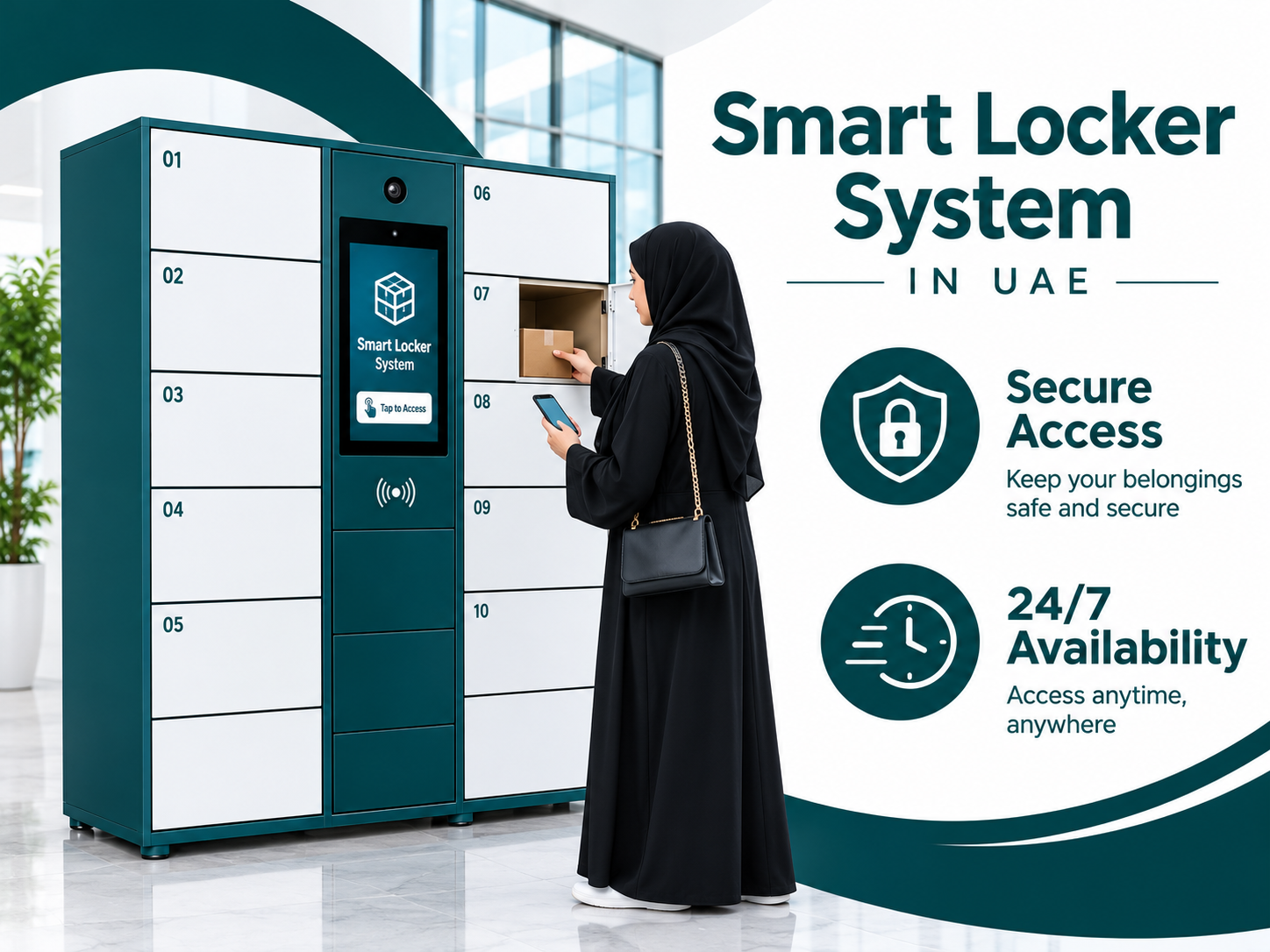
A Smart Locker System gives UAE organizations a secure, contactless, and fully recorded place to store belongings, devices, parcels, and documents, and the benefits show up in time saved, losses avoided, and happier users. This article ranks nine practical benefits, shows how to put numbers on each one, and explains how to plan an installation that delivers them.
Part One: Why Organizations Are Installing Lockers Now
Offices are changing. Hybrid work means fewer fixed desks, so people need somewhere to leave a bag, a laptop, or a lunch. Online shopping means more parcels arriving at buildings, and receptions are overwhelmed. Hygiene and privacy are now expected, not optional.
Traditional answers do not scale. Shared keys are lost, drawers are forced, and staffed counters create queues and cost. Connected storage replaces these with a single self-service point that is open all day, never forgets a name, and reports on itself.
Part Two: Nine Benefits, Ranked by Business Impact
Benefit One: Faster Handovers
A Digital Locker System sends each user a code, link, or mobile credential, so a handover takes seconds and needs no staff. Credentials can be single use or time limited and can be cancelled instantly when a booking ends or a person leaves, which removes the delay of collecting keys.
Benefit Two: Stronger Security and Accountability
An Electronic Locker System replaces mechanical keys with electronic locks, a central controller, and door sensors. Every opening is logged with a name and a time, doors can raise an alert when forced or left open, and battery backup keeps them working during a power cut.
Many UAE facility managers begin by studying connected storage options for UAE organizations to see which of these benefits matter most for their own sites.
Benefit Three: Touch Free Hygiene
Face Recognition Locker Access lets an enrolled user look at a screen and have the right door open with no code, card, or touch. It suits laboratories, hospitals, and offices where hands are full or gloved, provided clear consent, a liveness check, and an alternative method are offered.
Benefit Four: Central Control
Locker Management Software gives administrators one dashboard for every bank of doors. They assign compartments, set rules, send notifications, track usage, and export reports, whether the lockers sit in one lobby or across ten buildings.
Benefit Five: Better Use of Space
Lockers use vertical space and shared compartments. One bank of doors can serve far more people than the same area of personal cupboards, because a compartment is assigned only while it is needed and then released for the next user.
Benefit Six: Lower Running Costs
Less staff time goes on handing over keys, signing for parcels, and searching for lost items. Fewer replacement keys and locks are bought, and fewer disputes need investigation because a clear record shows who opened which door.
Benefit Seven: Sustainability
Digital credentials remove plastic cards and paper logbooks, and shared compartments reduce the number of cabinets manufactured and shipped. These small savings add up, and they support corporate sustainability reports and the national net zero ambition.
Benefit Eight: Useful Data
Usage reports show which doors are busy at which hours, how long items stay, and where faults occur. Managers can then add doors where queues form, adjust sizes, and remove unused compartments, so the investment improves over time.
Benefit Nine: A Better Experience
People remember small moments. A locker that opens at once, in their own language, with no waiting, makes an office feel modern and respectful. That impression helps recruitment, tenant satisfaction, and customer loyalty.
Part Three: Putting Numbers on the Benefits
A simple model helps leaders compare cost and benefit. Count the minutes staff spend each day on key handovers, parcel signing, and lost property, multiply by the hourly cost, and add the cost of replaced keys and cabinets. Compare the yearly total with the yearly cost of the locker service.
As an illustration only, if a reception team spends ninety minutes a day on handovers and a self-service point removes two thirds of that work, the saved hours across a year can be significant before losses avoided are even counted. Each organization should replace these figures with its own.
Do not forget softer measures: queue length at peak hours, user satisfaction, number of lost item reports, and number of security incidents involving storage. Track them before and after installation so the improvement is visible and believable.
Part Four: One Platform, Many Uses
TekLocker brings the doors, the software, the credentials, and the reports together as one managed platform. Cloud management lets a head office oversee many sites, and open interfaces let the platform connect to staff directories, booking tools, and retail or courier systems.
A Locker System that is connected to the right workflow becomes a service: a parcel pickup point for online orders, a laptop and equipment exchange, a belongings store for hybrid staff, a document handover point for legal and finance teams, or a safe storage point for hospital and campus visitors.
Smart Locker Systems for Modern Corporate Offices are among the fastest growing uses in the country. Hybrid desks, shared meeting rooms, and tower lobbies all need secure storage that does not depend on a person at a counter, and lockers give staff a reliable place to leave a bag and collect a device.
Part Five: UAE Rules and Standards
User data is personal data. Federal Decree Law Number 45 of 2021 sets duties on consent, purpose, storage, and security, so notices, retention limits, and access rights must be built in from the start. The Telecommunications and Digital Government Regulatory Authority guides digital practice, and the Dubai Electronic Security Center sets expectations for Dubai entities.
UAE PASS supports national digital identity and can anchor sign in for government related locker services. Civil Defence rules govern fire safety, and suppliers with ISO 27001 aligned practices and ISO 14001 environmental practices bring extra confidence.
Part Six: Delivery Across the Emirates
A Smart Locker System UAE project should plan for the whole country from the start, with shared policies, one credential style, central reports, and support in Arabic and English. Consistent settings let a company with sites in several emirates manage every locker from one place.
Smart Locker System Dubai projects often serve towers, malls, hotels, and business parks such as Dubai Internet City and the Dubai International Financial Centre. High traffic, many tenants, and fast, clear, multilingual screens shape the work.
Smart Locker System Abu Dhabi projects often serve government entities, healthcare, universities, and financial firms in areas such as Masdar City, Al Maryah Island, and Abu Dhabi Global Market. Strict governance and detailed audit trails are central.
Part Seven: Planning an Installation That Delivers
Start with a needs review. List who needs storage, what they store, and when. Survey the site for floor space, power, and network points, and choose compartment sizes to match: tall units for bags, medium units for laptops, small units for documents and phones.
Place banks of doors where people already walk, such as lobbies, corridors, and entrances. Add clear signs in Arabic and English, a short instruction label on each bank, and backup batteries so doors still open during outages.
Write the rules before launch: how long an item may stay, what happens to abandoned items, who may override a door, and how data is kept and deleted. A named owner and a trained administrator keep the lockers useful long after installation day.
A short assessment is the best first step, and a storage needs review and pilot plan for UAE sites will show how many doors and which sizes are really needed.
Part Eight: Proof Points That Build Trust
Ask every supplier for a live demonstration, a data protection statement, a site survey, installation drawings, staff training, and a support agreement with clear response times. References from offices, malls, and hospitals with similar volumes give practical evidence of performance.
Check how doors behave in a power cut or network loss, how a stuck door is released, how firmware updates are delivered, and how quickly a lost credential is cancelled. A pilot at one site often reveals more than any brochure.
Part Nine: Getting Started and Measuring
Begin with one site and one user group. Train staff, share a short guide with everyone who will use the doors, and track door usage, fault reports, and queue times for the first month. Then adjust compartment sizes and rules and expand to other sites.
Report a handful of numbers monthly: share of doors in use, average time to store and collect, fault reports, unreturned items, and user satisfaction. Share results with leadership in plain language so the program grows with their support.
Keep users informed throughout. A short announcement before launch, a clear guide at each bank of doors, and a simple way to report faults build confidence quickly. People adopt a system they understand, and early positive experiences spread by word of mouth inside any organization.
Conclusion
Smart Locker System technology brings UAE organizations faster handovers, stronger security, lower costs, and a better experience. Locker System projects work best when TekLocker, an Electronic Locker System, and a Digital Locker System share one platform, as in Smart Locker Systems for Modern Corporate Offices. Face Recognition Locker Access and Locker Management Software add hygiene, convenience, and central control. A planned Smart Locker System UAE rollout, including Smart Locker System Dubai and Smart Locker System Abu Dhabi sites, keeps every location compliant and consistent. Contact Tektronix today to plan your storage assessment.

 English
 Arabic
 French
 Spanish
 Deutsch
 Turkish
 Dutch
 Italiano
 Russian
 Romaian
 Portuguese (Brazil)
 Greek
