


Does Enfant Riches Deprime Clothing Deserve Its Museum Level Prices
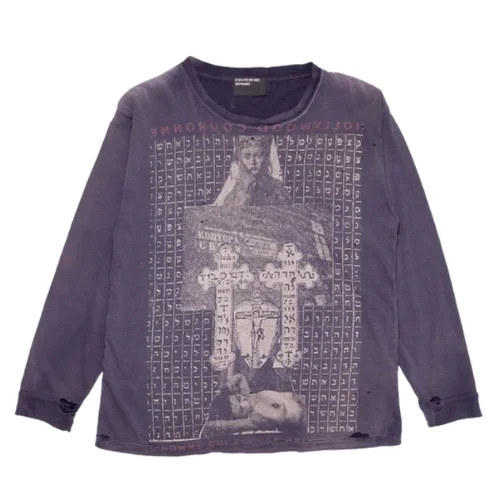
Few pricing structures in modern fashion provoke as much disbelief—and fascination—as that of Enfants Riches Déprimés. When a shredded cashmere sweater commands the cost of a compact car and a hand-painted leather jacket rivals a blue-chip contemporary print, critical skepticism is unavoidable. Asking whether Enfants Riches Déprimés clothing deserves its museum-level prices requires separating conventional garment manufacturing economics from the speculative logic of the contemporary art market, where intellectual autonomy, extreme scarcity, and cultural provocation carry far greater financial weight than raw yardage.
Material Substance Beneath the Confrontational Exterior
Examining the seasonal pieces presented across enfantrichesdeprime.com confirms that the house avoids the most glaring sin of hype-driven luxury: cheap base production. Founder Henri Alexander Levy develops custom-milled heavyweight cotton fleeces, high-density loop-back jerseys, Italian cashmere yarns, and thick full-grain hides manufactured across specialized workshops in Los Angeles, Italy, and France. Every zipper, snap, and rivet is selected for substantial mechanical weight, ensuring that even the most aggressively distressed silhouettes rest on a foundation of genuine physical durability rather than disposable blank merchandise.
Calculating the Real Cost of Hand-Applied Destruction
Unlike mass-luxury houses that rely on automated laser distressing and uniform chemical baths to process thousands of identical garments, Enfants Riches Déprimés treats decay as labor-intensive studio craft. Technicians manually abrade seams, apply multi-stage pigment washes, execute razor slashes, and hand-paint graphic back panels on small-batch runs. Because every piece requires hours of individualized human intervention—and carries a high rejection rate when manual distressing goes too far—the true per-unit production cost far exceeds that of clean, unwashed luxury basics.
Four Economic Forces Driving Museum-Level Valuations
Breaking down how an Enfants Riches Déprimés garment arrives at its retail price reveals four distinct value drivers beyond fabric and thread:
-
Micro-Batch Production Economics: Manufacturing runs often number in the dozens rather than thousands, eliminating economies of scale and multiplying pattern-making, milling, and dyeing costs per garment.
-
Art-Market Pricing Psychology: Levy positions outerwear and knitwear as wearable editions rather than seasonal commodities, pricing garments like limited-run sculptures to deter casual luxury consumers.
-
Zero Marketing or Wholesale Dilution: By refusing traditional advertising campaigns and restricting distribution to an ultra-tight circle of global boutiques, the house preserves pricing power without relying on high-volume diffusion lines.
-
Intense Secondary-Market Validation: Strong resale demand for archival leather jackets and rare early knits reinforces primary retail pricing, convincing collectors that pieces function as tangible cultural assets.
Where the Price Tag Crosses Into Ideological Theater
Even accounting for small-batch European and American craftsmanship, a candid audit reveals a sharp divide across product categories. Hand-painted biker jackets, heavily engineered wool coats, and intricate intarsia knits display tangible artisanal labor that aligns more credibly with their steep valuations. By contrast, distressed cotton t-shirts and hoodies—regardless of custom fabric milling and complex dye baths—cannot justify four-figure retail tags on physical inputs alone; at that tier, the buyer is undeniably paying for ideological gatekeeping and psychological distance from the mainstream.
Comparing Heritage Couture Houses With Punk Elitism
Traditional Parisian couture houses justify astronomical prices through centuries of archival heritage, embroidery ateliers, and formal tailoring rigor. Enfants Riches Déprimés achieves comparable price points through the exact opposite mechanism: radical anti-institutionalism. By turning aristocratic nihilism, obscure literary allusions, and deliberate visual ruin into a closed ecosystem, Levy proves that total refusal to compromise aesthetic vision for commercial scale can command the same financial premium as centuries-old savoir-faire.
Value as a Filter Rather Than a Promise of Perfection
In conventional luxury, high prices imply impeccable longevity, seamless tailoring, and universal social approval. Enfants Riches Déprimés deliberately breaks that contract. Buyers are paying immense sums for garments that are intentionally frayed, faded, uncomfortable to polite sensibilities, and fragile in delicate knit constructions. Here, price operates not as a guarantee of pristine durability, but as an ideological barrier—ensuring the garments circulate solely among collectors willing to invest heavily in uncompromising cultural dissent.
Art-Object Valuation or Calculated Luxury Provocation?
Ultimately, whether Enfants Riches Déprimés clothing deserves its museum-level prices depends on the framework used to judge it. Evaluated strictly through traditional textile and tailoring metrics, its entry-level jersey pieces remain wildly overpriced even alongside top-tier luxury competitors. Yet viewed through the lens of contemporary art editions—where extreme scarcity, uncompromised creative control, and singular cultural commentary dictate worth—the label has successfully engineered a self-sustaining valuation model that few modern houses can match.
Frequently Asked Questions (FAQ)
Q1: Why are Enfants Riches Déprimés clothes priced higher than most established luxury brands?
The label produces garments in extremely small quantities using custom-milled textiles, Italian cashmere, and labor-intensive hand-distressing, while intentionally using high prices to restrict distribution and preserve exclusivity.
Q2: Which Enfants Riches Déprimés garments offer the strongest material value for their price?
Hand-painted full-grain leather jackets, heavy wool outerwear, and complex knitwear represent the highest concentration of raw material cost and artisanal labor compared to basic distressed jersey pieces.
Q3: Do Enfants Riches Déprimés pieces retain their value like collectible art objects?
Select archival outerwear, rare runway knits, and early graphic pieces frequently maintain or exceed retail value on the secondary collector market, though more common seasonal tees tend to fluctuate depending on condition and demand.

 English
 Arabic
 French
 Portuguese
 Deutsch
 Turkish
 Dutch
 Italiano
 Russian
 Romaian
 Portuguese (Brazil)
 Greek
