


Container Technology Market: Revolutionizing Application Deployment Across Modern Enterprises
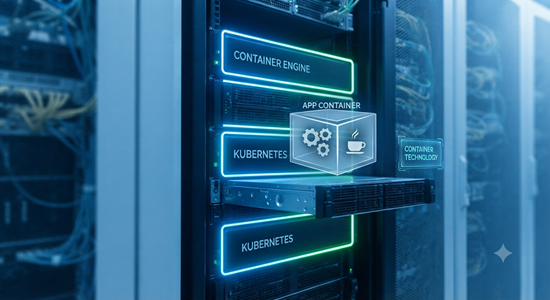
The Container Technology Market represents a transformative force in software development and infrastructure management, enabling organizations to package applications with their dependencies for consistent deployment across diverse computing environments. This comprehensive guide explores how containerization is reshaping how businesses build, ship, and run applications, delivering unprecedented agility, scalability, and operational efficiency. From startups seeking rapid iteration capabilities to enterprises managing complex distributed systems, container technology has become foundational to modern software delivery practices. Understanding the dynamics shaping this market provides valuable insights for stakeholders evaluating technology investments, platform strategies, or competitive positioning within the cloud-native infrastructure landscape.
Core Principles Enabling Portable and Consistent Application Runtime
Container technology operates on fundamental principles that isolate applications within lightweight, portable units that include everything needed to run consistently across environments. Unlike virtual machines that virtualize entire hardware stacks, containers share the host operating system kernel while isolating application processes, resulting in significantly lower overhead and faster startup times. This architectural approach enables developers to package applications with their exact dependencies, eliminating the "it works on my machine" problem that plagued traditional deployment approaches. Containers provide consistency from development through testing and production, reducing deployment failures and accelerating release cycles. The portability of containers enables organizations to move workloads between on-premises infrastructure, private clouds, and public cloud platforms without modification, providing flexibility that supports diverse operational requirements and business strategies.
Kubernetes Emerging as Dominant Orchestration Platform
Kubernetes has emerged as the dominant orchestration platform within the container technology market, providing the automation and management capabilities required to operate containerized applications at scale. This open-source platform handles deployment, scaling, and management of containerized workloads, enabling organizations to declare desired states and rely on automated reconciliation to maintain them. Kubernetes provides service discovery, load balancing, storage orchestration, and automated rollouts and rollbacks that simplify operations while improving reliability. Its extensive ecosystem of tools and integrations supports diverse requirements including monitoring, logging, security, and networking. The widespread adoption of Kubernetes has created a large talent pool and extensive community support, reducing adoption barriers for organizations considering containerization. While alternatives exist, Kubernetes has become the de facto standard for container orchestration, shaping how organizations approach application deployment.
Cloud-Based Deployment Dominating Implementation Approaches
Cloud-based deployment has become the dominant approach within the container technology market, offering scalability, flexibility, and cost-effectiveness that traditional on-premises infrastructure struggles to match. Cloud platforms provide managed container services that abstract away infrastructure complexity, enabling organizations to focus on application development rather than operational overhead. Elastic scaling capabilities automatically adjust resources based on demand, optimizing costs while ensuring performance during peak periods. Cloud providers offer comprehensive container ecosystems including orchestration services, registries, and development tools that accelerate time-to-value. Integration with broader cloud services including databases, messaging, and analytics enables comprehensive application architectures. While on-premises and hybrid deployments remain relevant for certain requirements, cloud-based container adoption continues accelerating as organizations recognize the operational and economic benefits.
Security Focus Intensifying Across Container Lifecycles
Security focus is intensifying across container lifecycles within the container technology market, as organizations recognize the unique security considerations that containerized environments present. Container images require scanning for vulnerabilities before deployment, ensuring that applications do not introduce security risks into production environments. Runtime protection capabilities monitor container behavior for anomalous activity that might indicate compromise or misconfiguration. Network segmentation and policy enforcement controls communication between containers, limiting the blast radius of potential security incidents. Access controls and secrets management protect sensitive credentials and configuration data. Supply chain security practices verify the integrity of container images from build through deployment. As container adoption expands, security capabilities become increasingly important differentiators for platforms and services, driving investment in comprehensive security solutions.
➤ Latest Market Intelligence from Market Research Future:
India Education Consulting Market

 English
 Arabic
 French
 Portuguese
 Deutsch
 Turkish
 Dutch
 Italiano
 Russian
 Romaian
 Portuguese (Brazil)
 Greek
