


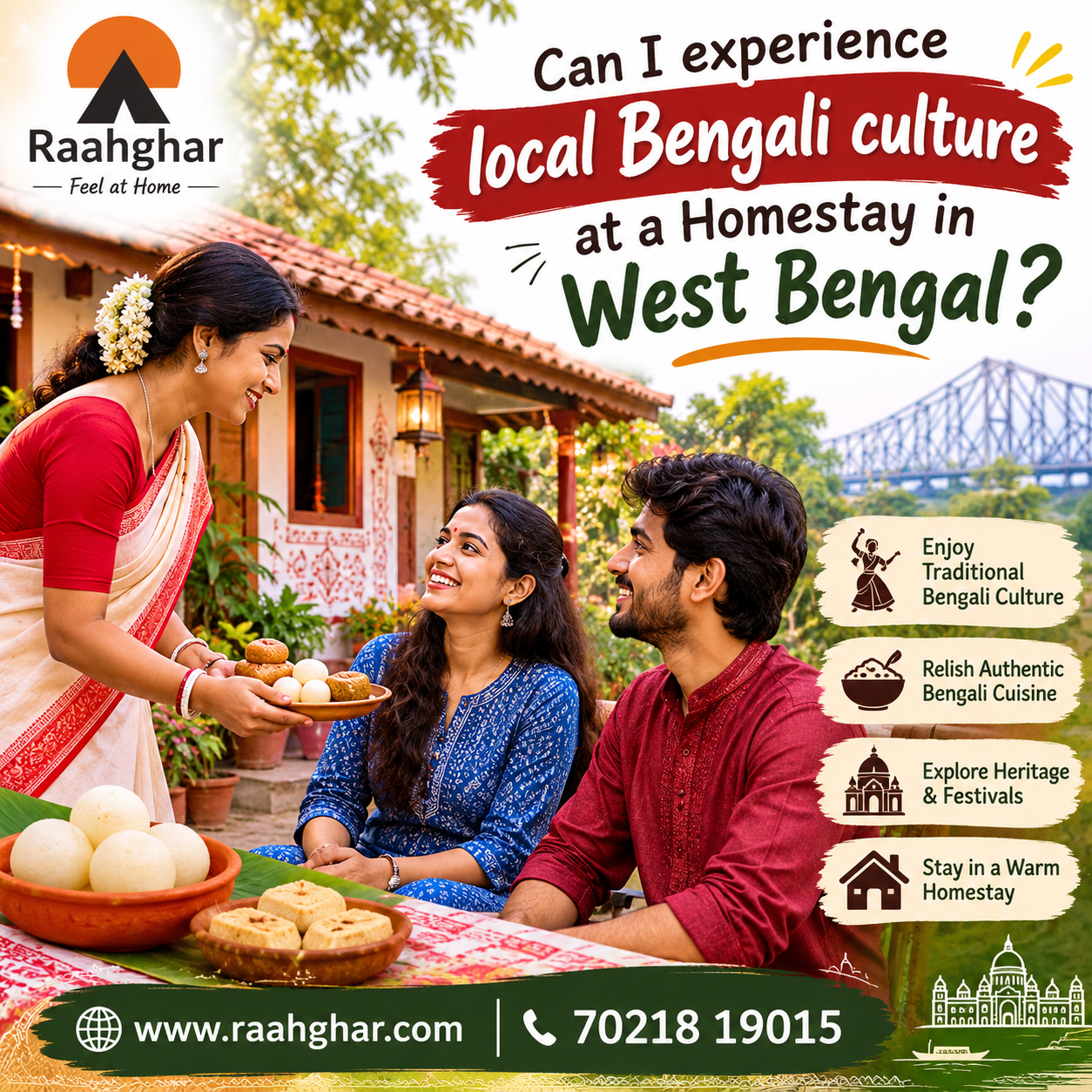
Can I Experience Local Bengali Culture at a Homestay in West Bengal?
Introduction
West Bengal is a culturally rich state in eastern India, famous for its traditional festivals, delicious Bengali cuisine, historical landmarks, beautiful landscapes, folk music, handicrafts, and warm hospitality. From the lively streets of Kolkata to the peaceful surroundings of Shantiniketan, the tea gardens of Darjeeling, and the scenic villages of the Sundarbans, the state offers travellers several opportunities to experience its diverse cultural heritage. Every region has its own traditions, lifestyle, food habits, and stories that make travelling across West Bengal a memorable experience.
For travellers who want to understand a destination beyond its popular tourist attractions, choosing the right accommodation can make a significant difference. A homestay offers an opportunity to experience local lifestyles, interact with residents, discover traditional food, and understand regional customs more closely. Booking a Homestay in West Bengal can make your holiday more meaningful by allowing you to enjoy comfortable accommodation while discovering the cultural identity of the region.
Unlike conventional hotels, a homestay can provide a more personal and welcoming environment. Depending on the property and its facilities, guests may enjoy homemade Bengali meals, learn about local traditions, explore nearby villages, and receive recommendations from hosts about lesser-known attractions. Whether you are interested in traditional Bengali festivals, local handicrafts, regional cuisine, or rural lifestyles, West Bengal offers plenty of opportunities to discover something new.
In this blog, we will explore how visitors can experience authentic Bengali culture while staying at a homestay, which destinations offer interesting cultural experiences, and what travellers should consider before choosing their accommodation.
Why Is West Bengal Famous for Its Rich Bengali Culture?
West Bengal has a long history of literature, art, music, architecture, festivals, and traditional customs. Its cultural identity has developed through different historical periods and regional influences, creating a diverse environment that attracts travellers from across India and beyond.
Bengali culture is particularly recognised for its love of literature, poetry, music, traditional food, and artistic celebrations. Festivals such as Durga Puja, Poila Boishakh, and Saraswati Puja are important parts of everyday cultural life.
The state also has a variety of regional traditions. While Kolkata is known for its urban cultural heritage, Darjeeling has a distinctive Himalayan identity, Shantiniketan is associated with art and education, and the Sundarbans offer opportunities to understand traditional communities living close to nature.
For visitors, exploring these differences can make a holiday more interesting. Staying in a homely environment can provide opportunities to learn about local customs, interact with residents, and discover experiences that may not always be included in conventional sightseeing itineraries.
How Can Guests Experience Bengali Culture While Staying at a Homestay?
A homestay can provide an excellent opportunity to understand local traditions through everyday activities, food, conversations, and cultural experiences. The exact experiences depend on the location, host, and facilities offered by the property.
Here are some ways visitors can discover Bengali culture during their stay.
1. Enjoy Traditional Bengali Homemade Food
Food is one of the most enjoyable ways to understand Bengali culture. Bengali cuisine is famous for its distinctive flavours, traditional cooking techniques, freshwater fish preparations, rice-based meals, vegetable dishes, and delicious sweets.
Depending on the property's meal arrangements, guests may get an opportunity to enjoy traditional homemade Bengali dishes prepared using regional ingredients and family recipes.
Some popular dishes to explore include:
-
Shorshe Ilish, a traditional hilsa preparation with mustard.
-
Aloo Posto, made using potatoes and poppy seeds.
-
Luchi served with traditional vegetable curry.
-
Cholar Dal, a popular Bengali lentil preparation.
-
Shukto, a traditional mixed vegetable dish.
-
Kosha Mangsho, a slow-cooked Bengali mutton preparation.
-
Mishti Doi, a traditional sweetened yoghurt dessert.
-
Sandesh and Rasgulla, popular Bengali sweets.
Visitors can also learn about the ingredients and cooking methods used in regional dishes. Some hosts may be willing to explain traditional recipes or recommend local restaurants where guests can explore authentic Bengali cuisine.
2. Learn About Traditional Bengali Festivals
Festivals are an important part of Bengali cultural identity. They bring communities together through celebrations, food, music, decorations, religious traditions, and cultural performances.
Durga Puja is one of the most significant festivals in West Bengal. During this celebration, beautifully decorated pandals, artistic idols, traditional rituals, cultural programmes, and community gatherings transform different parts of the state.
Other important festivals include:
-
Poila Boishakh: Bengali New Year celebrated with traditional food, cultural programmes, and family gatherings.
-
Saraswati Puja: A festival associated with learning, education, and the arts.
-
Kali Puja: A major festival celebrated with devotion, decorations, and traditional rituals.
-
Dol Jatra: A colourful spring festival associated with colours and celebrations.
-
Poush Mela: A popular cultural fair held in Shantiniketan, showcasing folk music, handicrafts, and regional traditions.
Travellers planning their visit around festival dates may get opportunities to observe local celebrations and understand their cultural significance.
3. Discover Bengali Music, Dance, and Folk Traditions
West Bengal has a rich musical heritage that includes classical influences, folk traditions, devotional songs, and modern Bengali music.
Visitors interested in cultural activities can explore different forms of traditional music and dance depending on their destination.
Some important cultural traditions include:
-
Baul Music: A traditional folk music tradition associated with spiritual philosophy and travelling musicians.
-
Rabindra Sangeet: Songs composed by Rabindranath Tagore that hold an important place in Bengali cultural life.
-
Nazrul Geeti: Musical compositions associated with Kazi Nazrul Islam.
-
Chhau Dance: A traditional masked dance form associated with regions including Purulia.
-
Jhumur: A folk music and dance tradition popular in parts of western Bengal.
Some cultural destinations and local communities organise performances or events where visitors can experience these traditions. Travellers should check local schedules and availability before planning their visit.
4. Explore Traditional Bengali Handicrafts
Bengal has a wonderful tradition of handicrafts and artistic creations. Different regions are known for their distinctive textiles, pottery, paintings, and handmade products.
Visitors can explore local markets and artisan communities to discover traditional crafts and learn about the techniques used to create them.
Popular handicrafts include:
-
Kantha embroidery.
-
Dokra metal craft.
-
Terracotta pottery.
-
Shola craft.
-
Baluchari sarees.
-
Bengal cotton textiles.
-
Patachitra paintings.
-
Wooden and handmade decorative products.
Some destinations offer opportunities to visit artisan villages and workshops. Guests can observe traditional craftsmanship and understand how these skills are passed from one generation to another.
5. Experience Everyday Village Life
For travellers interested in authentic cultural experiences, exploring rural Bengal can be particularly rewarding.
Traditional villages offer opportunities to observe local lifestyles, agricultural activities, seasonal food practices, community celebrations, and everyday customs.
Depending on the property's location, visitors may explore nearby villages, interact with residents, discover local markets, and learn about regional occupations.
Staying in a rural setting can also help travellers appreciate the connection between local communities, nature, and traditional lifestyles.
Which Destinations in West Bengal Offer the Best Cultural Experiences?
West Bengal has several destinations where visitors can explore different aspects of Bengali culture. Each location offers a distinctive combination of traditions, food, architecture, natural surroundings, and local experiences.
Here are some destinations worth considering when planning your cultural holiday.
1. Kolkata – Discover the Heart of Bengali Culture
Kolkata is one of the most important cultural destinations in West Bengal. Known as the cultural capital of India, the city has a rich history of literature, theatre, art, music, architecture, and traditional Bengali food.
The city offers a wonderful opportunity to understand Bengali traditions while exploring its historical neighbourhoods, museums, markets, and cultural institutions.
Visitors can explore famous landmarks, enjoy traditional meals, and experience the city's lively atmosphere.
Popular cultural attractions in Kolkata:
-
Victoria Memorial.
-
Indian Museum.
-
Howrah Bridge.
-
Dakshineswar Kali Temple.
-
Kalighat Temple.
-
Kumartuli.
-
College Street.
Kumartuli is particularly interesting for travellers who want to learn about traditional idol-making. The area is known for artisans who create clay idols, including those used during Durga Puja celebrations.
A Homestays in West Bengal located in Kolkata can be a convenient option for visitors interested in exploring the city's cultural attractions, traditional food, and historical neighbourhoods.
2. Shantiniketan – Experience Art, Literature, and Tagore's Legacy
Shantiniketan is one of the most culturally significant destinations in West Bengal. It is closely associated with Rabindranath Tagore and is known for its educational heritage, artistic environment, music, literature, and traditional celebrations.
The destination offers a peaceful atmosphere where visitors can discover Bengal's creative traditions.
Shantiniketan is particularly famous for its connection with Visva-Bharati University and its unique educational and cultural philosophy.
Popular attractions and experiences in Shantiniketan:
-
Visva-Bharati University.
-
Uttarayan Complex.
-
Rabindra Bhavana.
-
Kala Bhavana.
-
Amar Kutir.
-
Poush Mela.
-
Basanta Utsav.
Visitors can explore art galleries, discover traditional handicrafts, enjoy cultural performances, and learn about Tagore's contribution to literature and education.
The local markets also offer opportunities to purchase handmade products, textiles, leather goods, and other regional crafts.
3. Darjeeling – Discover Himalayan Culture and Local Traditions
Darjeeling is famous for its tea gardens, mountain views, colonial heritage, and distinctive Himalayan culture.
Although its cultural identity differs from that of the Bengali plains, it is an important part of West Bengal's cultural diversity. The region reflects Nepali, Tibetan, Lepcha, and other Himalayan influences.
Visitors can explore local food, traditional markets, monasteries, festivals, and tea-growing communities.
Popular attractions in Darjeeling:
-
Darjeeling Himalayan Railway.
-
Batasia Loop.
-
Ghoom Monastery.
-
Himalayan Mountaineering Institute.
-
Padmaja Naidu Himalayan Zoological Park.
-
Happy Valley Tea Estate.
-
Japanese Peace Pagoda.
Travellers can enjoy traditional local food such as momos, thukpa, and other regional preparations. They can also explore tea gardens and learn about the history of Darjeeling tea.
A comfortable stay in Darjeeling can provide opportunities to experience local hospitality while enjoying the beautiful Himalayan surroundings.
4. Kalimpong – Explore Traditional Communities and Local Markets
Kalimpong is another beautiful destination in the eastern Himalayan region of West Bengal. It is known for its scenic landscapes, monasteries, flower nurseries, traditional markets, and multicultural heritage.
The town offers a peaceful environment for visitors who want to explore local traditions and enjoy mountain views.
Popular attractions in Kalimpong:
-
Durpin Monastery.
-
Deolo Hill.
-
Zang Dhok Palri Monastery.
-
Morgan House.
-
Cactus nurseries.
-
Local markets.
-
Dr Graham's Homes.
Visitors can discover local handicrafts, traditional food, and the cultural influences of different communities.
Kalimpong is particularly suitable for travellers who enjoy nature, peaceful surroundings, and cultural exploration.
5. Sundarbans – Understand Traditional Rural and Coastal Life
The Sundarbans is one of the most distinctive destinations in West Bengal, known for its extensive mangrove forests, river networks, biodiversity, and traditional communities.
The region offers a different cultural experience compared with cities and hill stations. Visitors can learn about the lifestyles of communities that depend on fishing, agriculture, and other local occupations.
The area's natural environment has a significant influence on local traditions, food habits, and everyday activities.
Popular experiences in the Sundarbans:
-
Explore authorised mangrove tourism routes.
-
Enjoy guided boat excursions.
-
Learn about local fishing communities.
-
Discover traditional village lifestyles.
-
Experience regional Bengali food.
-
Understand local environmental conservation efforts.
Visitors should choose responsible tourism operators and follow local safety guidelines when exploring the region.
6. Murshidabad – Discover Bengal's Historical Heritage
Murshidabad is an excellent destination for travellers interested in history, architecture, and the cultural heritage of Bengal.
The city was once an important centre of political and commercial activity and is famous for its historical monuments and architectural landmarks.
Visitors can explore palaces, mosques, historical buildings, and local markets.
Popular attractions in Murshidabad:
-
Hazarduari Palace.
-
Nizamat Imambara.
-
Katra Mosque.
-
Motijheel.
-
Kathgola Gardens.
-
Nashipur Rajbari.
Murshidabad is also known for its silk industry and traditional weaving heritage. Visitors can explore local markets and learn about the region's craftsmanship.
7. Bishnupur – Explore Terracotta Art and Traditional Architecture
Bishnupur is one of West Bengal's most interesting cultural destinations, particularly famous for its terracotta temples, traditional Baluchari sarees, and classical music heritage.
The town reflects the artistic achievements of the Malla rulers and offers an opportunity to understand Bengal's architectural traditions.
Popular attractions in Bishnupur:
-
Rasmancha.
-
Jor Bangla Temple.
-
Madan Mohan Temple.
-
Shyam Rai Temple.
-
Dalmadal Cannon.
-
Traditional Baluchari weaving centres.
Visitors can explore the famous terracotta artwork, discover traditional textile techniques, and purchase locally made handicrafts.
Bishnupur is particularly appealing to travellers who enjoy history, architecture, and traditional arts.
What Traditional Bengali Food Should Visitors Try During Their Stay?
Food is an important part of exploring Bengali culture. From everyday homemade meals to special festive preparations, Bengali cuisine offers a variety of flavours that visitors should experience.
Here are some traditional dishes worth trying.
1. Shorshe Ilish
Shorshe Ilish is one of Bengal's most recognised traditional fish preparations. It is made using hilsa fish and mustard-based gravy, creating a distinctive flavour.
The dish is especially associated with Bengali food traditions and is popular during the hilsa season.
2. Aloo Posto
Aloo Posto is a traditional Bengali vegetarian dish prepared using potatoes and poppy seed paste.
It is commonly served with rice and is appreciated for its simple ingredients and distinctive taste.
3. Luchi and Cholar Dal
Luchi is a deep-fried flatbread that is often enjoyed with cholar dal, a mildly sweet and aromatic lentil preparation.
This combination is popular during festive occasions and special meals.
4. Kosha Mangsho
Kosha Mangsho is a traditional Bengali mutton preparation known for its rich gravy and slow-cooked spices.
It is commonly enjoyed during family gatherings and special occasions.
5. Mishti Doi
Mishti Doi is a popular Bengali dessert prepared using sweetened fermented yoghurt.
Its creamy texture and distinctive flavour make it a favourite among visitors.
6. Sandesh and Rasgulla
Bengal is famous for its traditional sweets, especially Sandesh and Rasgulla.
These desserts are prepared using chhena and have an important place in Bengali celebrations and food traditions.
Depending on the accommodation's dining arrangements, visitors may get an opportunity to enjoy some of these dishes as homemade meals or explore them at nearby local eateries.
How Can Homestays in West Bengal Make Cultural Experiences More Meaningful?
Accommodation can play an important role in how travellers understand a destination. While sightseeing helps visitors discover popular landmarks, staying in a local residential environment can introduce them to everyday traditions and regional lifestyles.
Here are some ways a homestay can make cultural exploration more meaningful.
1. Personal Interaction with Local Hosts
Staying with local hosts can provide opportunities to learn about regional customs, festivals, food habits, and traditional practices.
Hosts may also recommend local attractions and experiences that visitors might not discover through regular travel guides.
2. Understanding Local Food Traditions
Some properties offer homemade meals prepared using traditional ingredients and recipes.
Guests may learn about regional cooking methods, seasonal ingredients, and the importance of particular dishes during festivals and family celebrations.
3. Discovering Lesser-Known Attractions
Local hosts may suggest nearby villages, cultural centres, markets, historical landmarks, and traditional artisan communities.
Exploring these locations can help visitors understand the destination beyond its popular tourist attractions.
4. Experiencing Traditional Hospitality
A homely environment can make visitors feel more connected to the local community.
Guests may enjoy conversations, shared meals, and recommendations about local customs, depending on the property's hosting arrangements.
5. Exploring Regional Lifestyle at Your Own Pace
Different regions of West Bengal have different traditions and daily routines.
A comfortable stay can provide time to explore local neighbourhoods, observe everyday activities, and appreciate the cultural differences between cities, villages, and hill communities.
What Should You Check Before Booking a Homestay in West Bengal?
If experiencing local culture is an important part of your holiday, it is useful to consider a few factors before selecting accommodation.
1. Location of the Property
Choose a property close to the cultural attractions, villages, markets, or sightseeing destinations you want to explore.
For example, visitors interested in literature and traditional art may prefer Shantiniketan, while those interested in historical architecture may consider Murshidabad or Bishnupur.
2. Availability of Homemade Meals
Ask whether the property provides traditional Bengali breakfast, lunch, or dinner.
Check whether vegetarian and non-vegetarian options are available and communicate any dietary preferences before arrival.
3. Opportunities for Cultural Activities
Some properties may help arrange village visits, local sightseeing, cooking demonstrations, or cultural interactions.
Confirm the availability of these experiences directly with the host.
4. Comfortable Rooms and Essential Amenities
Check for clean bedrooms, bathrooms, comfortable bedding, Wi-Fi, housekeeping, and other facilities required during your stay.
5. Guest Reviews and Hospitality
Read previous guest reviews to understand the property's cleanliness, hospitality, food quality, and overall experience.
6. Transportation Facilities
Check the distance from railway stations, airports, bus stops, and popular attractions.
Convenient transportation can make exploring different parts of the region easier.
7. Local Rules and Property Policies
Understand check-in timings, meal arrangements, visitor policies, cancellation conditions, and any specific property guidelines before confirming your booking.
Who Should Choose a Homestay for a Cultural Holiday in West Bengal?
A cultural holiday in West Bengal can be enjoyable for different types of travellers. Choosing suitable accommodation can make the experience more comfortable and meaningful.
-
Families: Families can discover local traditions, enjoy regional food, and explore cultural attractions together.
-
Couples: Couples can enjoy peaceful surroundings, local experiences, and traditional food during their holiday.
-
Solo Travellers: Solo visitors can explore local communities, discover regional heritage, and interact with hosts.
-
Food Enthusiasts: Travellers interested in Bengali cuisine can discover traditional dishes and regional cooking styles.
-
History Lovers: Visitors can explore historical monuments, temples, palaces, and cultural landmarks.
-
Art and Music Enthusiasts: Travellers can discover folk traditions, handicrafts, literature, and regional performances.
The right accommodation depends on the destination, available facilities, and the kind of cultural experience you want to enjoy.
Conclusion
West Bengal offers a wonderful opportunity to explore India's cultural diversity through traditional food, festivals, music, literature, handicrafts, historical architecture, and local lifestyles. From experiencing Durga Puja celebrations in Kolkata to discovering Tagore's legacy in Shantiniketan, exploring the Himalayan traditions of Darjeeling, and learning about rural communities in the Sundarbans, every destination offers something different.
Choosing a comfortable Homestay in West Bengal can make your holiday more meaningful by providing opportunities to interact with local hosts, discover homemade Bengali cuisine, understand regional traditions, and explore attractions beyond conventional sightseeing routes.
Before booking, consider the property's location, meal arrangements, available amenities, guest reviews, and opportunities for cultural experiences. Not every property offers the same activities or facilities, so confirming your requirements in advance is important.
Whether you are a family traveller, a cultural enthusiast, a food lover, or someone interested in discovering traditional lifestyles, West Bengal has plenty of experiences to offer. Choose suitable accommodation, explore local communities, enjoy authentic regional cuisine, and make your next holiday a memorable journey through Bengali culture.
Frequently Asked Questions (FAQs)
1. How can I find the best homestay in West Bengal for experiencing local Bengali culture?
To find the best homestay in West Bengal, look for properties that offer comfortable accommodation, traditional homemade meals, local hospitality, and convenient access to cultural attractions. Check guest reviews, available facilities, and whether hosts can help arrange village visits, local sightseeing, or cultural activities. Choosing a property that reflects the traditions of its surrounding region can make your holiday more meaningful.
2. Can visitors enjoy traditional Bengali food while staying at a homestay?
Yes, some properties offer homemade Bengali meals prepared using regional ingredients and traditional recipes. Depending on the accommodation, visitors may enjoy dishes such as Shorshe Ilish, Aloo Posto, Luchi, Cholar Dal, Mishti Doi, and other local specialities. Meal availability should be confirmed with the host before booking.
3. Which destinations in West Bengal are best for experiencing local culture?
Kolkata, Shantiniketan, Darjeeling, Kalimpong, Murshidabad, Bishnupur, and the Sundarbans are interesting destinations for exploring different aspects of local culture. Visitors can discover traditional food, handicrafts, folk music, historical architecture, festivals, and regional lifestyles.
4. Are homestays in West Bengal suitable for families interested in cultural experiences?
Yes, suitable properties can be a comfortable choice for families who want to explore local traditions together. Depending on the location and facilities, families may enjoy homemade meals, nearby village visits, cultural attractions, and opportunities to interact with local hosts.
5. What is the best time to visit West Bengal for experiencing Bengali festivals and traditions?
The best time depends on the cultural experiences you want to enjoy. September and October are popular for experiencing Durga Puja celebrations, while April is suitable for enjoying Poila Boishakh. Poush Mela in Shantiniketan is generally held in December. Visitors should check the official festival schedules and local event dates before planning their trip.
Read Our Previous Blog — — — — ->Can I find a Homestay in Chandigarh near the Government Museum and Art Gallery?

 English
 Arabic
 French
 Spanish
 Portuguese
 Deutsch
 Turkish
 Italiano
 Russian
 Romaian
 Portuguese (Brazil)
 Greek
