


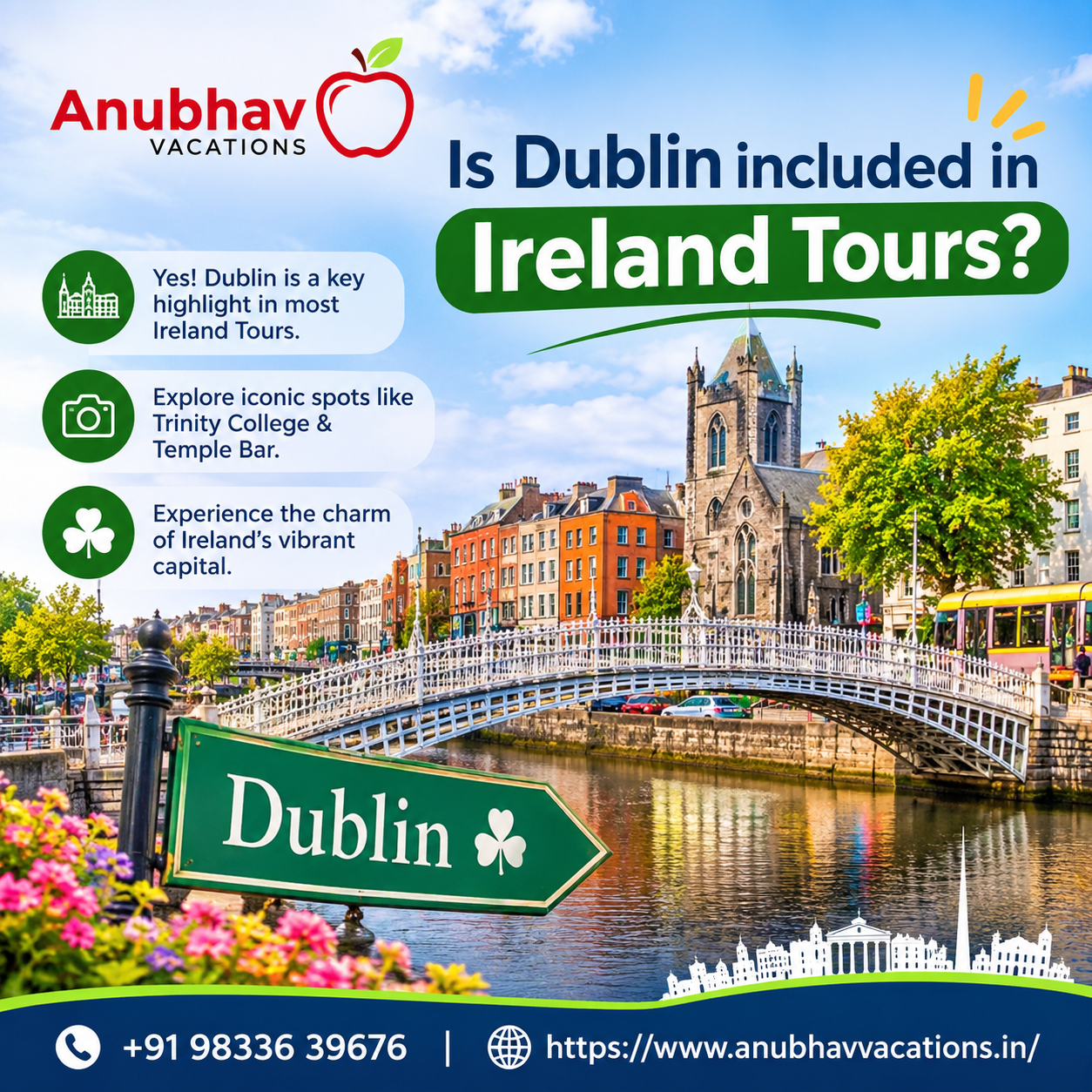
Is Dublin Included in Ireland Tours?
Introduction
Ireland is a beautiful European destination known for its historic cities, charming villages, scenic landscapes, ancient castles, coastal attractions, and rich cultural heritage. Among all the destinations in the country, Dublin holds a special place because it offers a wonderful combination of history, modern attractions, traditional Irish culture, and exciting experiences. For travellers planning an international holiday, exploring the capital city is often one of the most important parts of discovering Ireland.
One common question travellers ask while planning their holidays is whether Dublin is included in Ireland Tours. The answer is yes. Dublin is generally one of the major destinations covered in Ireland travel itineraries. As the capital and a popular tourist hub, the city provides opportunities to explore famous landmarks, museums, historic streets, traditional pubs, shopping areas, and cultural attractions. Whether you are travelling with family, friends, or as a couple, including Dublin in your itinerary allows you to experience the country's urban lifestyle before exploring its beautiful countryside and coastal regions.
Why Is Dublin an Important Part of Ireland Tours?
Dublin is one of the most popular cities in Ireland and serves as an excellent starting point for discovering the country. It combines centuries-old architecture with modern entertainment, making it suitable for different types of travellers.
The city has historical attractions, beautiful public parks, literary landmarks, shopping streets, and traditional Irish experiences. Visitors can spend their time exploring historical buildings, learning about Irish traditions, enjoying local food, and discovering the stories behind the country's development.
For international visitors, Dublin also provides convenient access to several other destinations. Many popular attractions and sightseeing locations can be explored through organised day trips from the city.
Here are some reasons why Dublin deserves a place in an Irish holiday itinerary:
-
It is home to several important historical landmarks.
-
Visitors can experience traditional Irish culture and hospitality.
-
The city offers museums, galleries, and cultural attractions.
-
Shopping streets provide opportunities to explore local products.
-
Its location makes travelling to other Irish destinations convenient.
-
Visitors can enjoy beautiful gardens, parks, and riverside views.
Including Dublin in a travel itinerary helps visitors understand Ireland's history, culture, and modern lifestyle.
Top Attractions to Explore in Dublin
Dublin offers several attractions that make sightseeing enjoyable and memorable. From historical buildings to lively public spaces, the city has something for almost every traveller.
1. Trinity College and the Book of Kells
Trinity College is one of Dublin's most recognised historical institutions. Established in 1592, it is famous for its beautiful campus, impressive architecture, and academic heritage.
One of its most celebrated attractions is the Book of Kells, an illuminated manuscript created by Celtic monks. The manuscript is admired for its detailed illustrations, colourful designs, and historical importance.
Visitors can explore the college grounds and discover the history of this famous educational institution. The Old Library is another highlight, attracting visitors who appreciate literature, architecture, and historical collections.
For travellers interested in education and Irish heritage, Trinity College is an important sightseeing stop.
2. Dublin Castle
Dublin Castle is another significant historical attraction located in the heart of the city. It has played an important role in Ireland's political and administrative history.
The castle complex features beautiful architecture, historic rooms, gardens, and impressive interiors. Visitors can learn about different periods of Irish history while exploring its surroundings.
Its location makes it convenient to include during a city sightseeing tour. Travellers interested in historical monuments and heritage attractions will appreciate spending time here.
3. St. Patrick's Cathedral
St. Patrick's Cathedral is one of the most famous religious landmarks in Ireland. It is known for its impressive Gothic architecture, beautiful interiors, and historical significance.
The cathedral is associated with Saint Patrick, Ireland's patron saint. Visitors can explore its architecture, discover historical memorials, and appreciate the peaceful atmosphere.
The surrounding area also offers opportunities to enjoy a relaxed walk and explore other nearby attractions.
4. Guinness Storehouse
For visitors interested in understanding one of Ireland's most recognised brands, the Guinness Storehouse is a popular attraction.
Located at the historic St. James's Gate Brewery, this visitor experience introduces travellers to the history, production, and cultural significance of Guinness.
Visitors can explore different exhibition areas and learn about the brewing process. The Gravity Bar is another highlight, offering panoramic views across Dublin.
Even travellers who are not particularly interested in beverages may enjoy learning about the company's history and its connection with Irish culture.
5. Temple Bar
Temple Bar is one of Dublin's best-known neighbourhoods. It is famous for its colourful streets, traditional pubs, restaurants, cultural venues, and lively atmosphere.
Visitors can enjoy walking through its narrow streets, discovering local shops, and experiencing traditional Irish music.
The neighbourhood is particularly attractive during the evening when the streets become lively with visitors and entertainment.
Travellers should remember that Temple Bar is also a popular tourist area, so exploring nearby streets and checking individual restaurant options can provide additional experiences.
6. Phoenix Park
Phoenix Park is one of the largest enclosed public parks in any European capital city. It provides a peaceful escape from the busy streets of Dublin.
The park is known for its open green spaces, walking paths, beautiful landscapes, and wildlife. Visitors may also encounter deer in certain areas.
Families, nature lovers, and photography enthusiasts can enjoy spending time here. It is an excellent place to relax after exploring the city's historical attractions.
Does Dublin Offer Experiences Beyond Sightseeing?
Absolutely. Dublin is not just about visiting famous monuments and historical buildings. The city also offers several cultural and recreational experiences that make a holiday more enjoyable.
Experience Traditional Irish Music
Irish music is an important part of the country's cultural identity. Dublin provides opportunities to experience traditional performances in selected pubs and cultural venues.
Visitors can enjoy traditional instruments, folk songs, and lively musical performances. These experiences help travellers understand the local culture beyond regular sightseeing.
Explore Irish Food
Dublin offers a variety of dining experiences, from traditional Irish dishes to international cuisine.
Travellers can explore local restaurants, cafés, bakeries, and food markets. Traditional dishes such as Irish stew, soda bread, and seafood preparations are worth discovering.
Food enthusiasts can also explore different neighbourhoods to experience the city's diverse culinary culture.
Enjoy Shopping in Dublin
Shopping is another enjoyable activity for visitors. Grafton Street is one of the city's popular shopping destinations, featuring international brands, local stores, cafés, and street performers.
Henry Street is another well-known shopping area where visitors can explore different retail outlets.
Travellers looking for souvenirs can discover Irish crafts, locally designed products, clothing, and traditional gifts.
Discover Dublin's Literary Heritage
Dublin has a strong connection with literature and is associated with several internationally recognised writers.
Literature enthusiasts can explore museums, historical locations, libraries, and places connected with famous Irish authors.
The city's literary heritage adds another interesting dimension to its cultural attractions.
Can You Explore Other Irish Destinations Along with Dublin?
Yes. One of the biggest advantages of planning Ireland Tours is the opportunity to explore Dublin along with other beautiful destinations across the country.
While Dublin provides an excellent introduction to Irish culture and history, other regions offer completely different experiences. Travellers can discover dramatic coastal landscapes, peaceful countryside, historic castles, and charming villages.
Depending on the duration of the holiday, visitors can include several destinations in their itinerary.
1. Galway
Galway is a charming city located on Ireland's western coast. It is known for its colourful streets, traditional music, cultural festivals, and welcoming atmosphere.
Visitors can explore the Latin Quarter, enjoy local cafés, and discover the city's artistic culture.
Galway also serves as an excellent base for exploring nearby natural attractions, including the Cliffs of Moher and the scenic landscapes of Connemara.
For travellers who want to experience a different side of Ireland beyond the capital, Galway is an excellent destination.
2. Cliffs of Moher
The Cliffs of Moher are among Ireland's most famous natural attractions. Located along the western coastline, these dramatic cliffs offer breathtaking views of the Atlantic Ocean.
The towering rock formations, walking paths, and spectacular coastal scenery make this destination especially popular among nature lovers and photographers.
Visitors can enjoy the viewpoints, learn about the region's natural environment, and capture beautiful photographs.
The Cliffs of Moher are particularly appealing to travellers looking for scenic experiences during their Irish holiday.
3. Killarney
Killarney is a beautiful town in County Kerry, famous for its lakes, mountains, national park, and picturesque surroundings.
Killarney National Park is one of its major attractions. Visitors can explore beautiful landscapes, walking trails, gardens, and historical sites.
The town is also an excellent starting point for discovering the Ring of Kerry, one of Ireland's most scenic driving routes.
Families, couples, and nature enthusiasts can enjoy the peaceful atmosphere of this destination.
4. Cork
Cork is another important Irish city known for its history, food culture, architecture, and attractive surroundings.
Visitors can explore the English Market, historic streets, museums, and nearby attractions.
The city also provides access to places such as Blarney Castle, where visitors can discover the famous Blarney Stone and beautiful castle gardens.
Adding Cork to an itinerary provides an opportunity to explore another important part of Irish culture.
5. Ring of Kerry
The Ring of Kerry is a scenic circular route in County Kerry. It is famous for its coastal views, mountains, lakes, traditional villages, and beautiful countryside.
Travellers can enjoy several viewpoints and discover the natural beauty of southwestern Ireland.
The route is particularly attractive for people who enjoy photography, scenic drives, and outdoor experiences.
Including this destination along with Dublin creates a balanced holiday experience combining city exploration with natural beauty.
How Many Days Should You Spend in Dublin?
The ideal duration depends on your travel preferences, sightseeing interests, and overall holiday schedule.
For most first-time visitors, spending two to three days in Dublin provides sufficient time to explore its major attractions without making the sightseeing experience too rushed.
Here is an example of how travellers can organise their time.
Day 1: Historical and Cultural Attractions
Start your Dublin exploration with Trinity College and the Book of Kells. Continue towards Dublin Castle and St. Patrick's Cathedral.
Spend the afternoon discovering the city's historical streets, museums, and nearby attractions.
In the evening, visit Temple Bar to experience the neighbourhood's lively atmosphere and traditional Irish culture.
Day 2: Parks, Food, and Shopping
Begin the day with a relaxing visit to Phoenix Park. Enjoy its open green spaces and natural surroundings.
Later, explore the Guinness Storehouse and discover its history and visitor experiences.
Spend the evening shopping around Grafton Street or Henry Street. You can also explore local restaurants and cafés to experience Dublin's food culture.
Day 3: Additional Experiences or Day Trips
If you have an additional day, consider visiting attractions outside central Dublin.
Depending on your interests, you can explore nearby coastal areas, historic sites, or other destinations accessible through organised excursions.
This additional time makes the holiday more flexible and enjoyable.
Is Dublin Suitable for Family Holidays?
Yes. Dublin is a family-friendly destination offering a combination of educational, recreational, cultural, and outdoor attractions.
Families travelling with children can explore museums, public parks, historical buildings, and interactive visitor attractions.
Phoenix Park provides open spaces where children can enjoy outdoor activities. Dublin Zoo, located within the park, is another popular family attraction.
Older family members can appreciate the city's architecture, cultural experiences, and historical landmarks.
Families can also enjoy relaxed dining experiences and shopping opportunities. Planning sightseeing with sufficient breaks helps make the journey comfortable for travellers of different age groups.
When organising an international holiday, families should consider attraction timings, walking distances, transportation arrangements, and accommodation locations.
What Is the Best Time to Visit Dublin?
Dublin can be visited throughout the year, but the experience changes depending on the season.
Spring: March to May
Spring is a pleasant period to explore Dublin. The weather gradually becomes milder, and gardens and public spaces begin looking greener.
Visitors can enjoy sightseeing, walking tours, and outdoor experiences.
March is particularly popular because of St. Patrick's Day celebrations, which bring cultural events and festivities to the city.
Summer: June to August
Summer is one of the busiest travel seasons in Ireland. Longer daylight hours provide more time for sightseeing and exploring different destinations.
Visitors can enjoy outdoor attractions, coastal locations, walking trails, and day trips.
However, popular tourist areas may become crowded, so advance planning is helpful.
Autumn: September to November
Autumn brings beautiful seasonal colours and a relatively relaxed sightseeing atmosphere.
Travellers can explore historical attractions, museums, countryside locations, and cultural experiences.
September and October can be appealing for visitors who prefer exploring without the peak summer crowds.
Winter: December to February
Winter offers a different experience, with festive decorations, seasonal markets, and a cosy atmosphere across Dublin.
The days are shorter, and temperatures are generally colder. Travellers should carry warm clothing and plan outdoor sightseeing according to weather conditions.
Is Transportation Convenient for Exploring Dublin?
Dublin offers several transportation options that make exploring the city relatively convenient.
Visitors can choose from buses, trams, trains, taxis, and walking routes depending on their destinations and preferences.
The Luas tram system connects several important areas of the city, while Dublin Bus provides services across different neighbourhoods.
The DART suburban rail network is useful for travelling towards certain coastal destinations.
Walking is also a practical way to explore central Dublin because many popular attractions are located within accessible distances of one another.
For travellers planning sightseeing outside the city, organised excursions or suitable private transportation arrangements can make the journey easier.
Before travelling, visitors should check public transport routes, operating schedules, and ticket options.
What Should Indian Travellers Know Before Visiting Dublin?
Travellers from India should consider a few important details before planning their holiday.
1. Visa Requirements
Indian passport holders generally require an appropriate visa to visit Ireland. Travellers should check the latest Irish immigration requirements and apply through the official process before departure.
2. Currency
Ireland uses the Euro. Visitors should plan their currency requirements and understand international card usage before travelling.
3. Weather and Clothing
Irish weather can change throughout the day. Carrying comfortable clothing, a waterproof jacket, and suitable walking shoes is recommended.
4. Food Preferences
Dublin offers different international food options, including Indian restaurants. Travellers with specific dietary preferences should research suitable dining options before arrival.
5. Travel Insurance
International travel insurance can help provide financial protection against eligible unexpected travel-related situations.
6. Local Transportation
Understanding public transportation options can help visitors move around Dublin and explore nearby destinations conveniently.
7. Accommodation Planning
Choosing accommodation based on sightseeing locations and transportation access can make the overall travel experience more comfortable.
How Does an Ireland Holiday Itinerary Include Dublin?
A well-planned Irish holiday generally combines Dublin's major attractions with the country's beautiful natural and historical destinations.
For first-time visitors, beginning the journey in Dublin can be a convenient option. After exploring the capital, travellers can continue towards Galway, the Cliffs of Moher, Killarney, Cork, and other destinations depending on the available travel days.
An itinerary may include:
-
Dublin for historical landmarks, shopping, and cultural experiences.
-
Galway for traditional Irish culture and coastal surroundings.
-
Cliffs of Moher for dramatic natural landscapes.
-
Killarney for lakes, mountains, and national park experiences.
-
Cork for historical attractions and local food experiences.
-
Ring of Kerry for scenic drives and picturesque villages.
Not every itinerary needs to cover all these places. The selection depends on the holiday duration, travel interests, and preferred pace.
A balanced itinerary allows visitors to enjoy both city attractions and Ireland's countryside without spending too much time travelling between destinations.
Why Choose Anubhav Vacations for Planning an Ireland Holiday?
Planning an international holiday involves several important decisions, including destinations, accommodation, transportation, sightseeing, and travel arrangements.
Anubhav Vacations helps travellers explore international holiday opportunities with attention to itinerary planning and travel preferences.
When considering Ireland Tours, travellers can look for an itinerary that includes Dublin's important attractions along with other popular destinations across the country.
A thoughtfully planned holiday can help visitors make better use of their available time while enjoying different experiences.
Here are some important aspects to consider while planning your journey:
-
Destination Selection: Choose attractions according to your interests and holiday duration.
-
Sightseeing Arrangements: Include important historical, cultural, and natural attractions.
-
Accommodation Planning: Select suitable accommodation based on the itinerary.
-
Transportation: Consider convenient travel arrangements between different destinations.
-
Travel Assistance: Understand important travel requirements before departure.
-
Flexible Experiences: Allow enough time to enjoy sightseeing without rushing through every attraction.
Whether you are planning a family holiday, a romantic getaway, or a group vacation, selecting the right itinerary can make your Irish experience more enjoyable.
Conclusion
Dublin is undoubtedly one of the most important destinations to include when exploring Ireland Tour Package From India. As the country's capital, it offers an excellent combination of historical landmarks, cultural attractions, traditional experiences, shopping streets, beautiful parks, and modern entertainment.
From discovering the Book of Kells at Trinity College to exploring Dublin Castle, enjoying the atmosphere of Temple Bar, and relaxing in Phoenix Park, visitors can experience several interesting aspects of Irish life.
However, the beauty of Ireland extends far beyond its capital. Destinations such as Galway, the Cliffs of Moher, Killarney, Cork, and the Ring of Kerry offer wonderful opportunities to explore the country's natural landscapes and cultural heritage.
Therefore, travellers planning an Irish holiday should consider including Dublin along with other destinations according to their travel duration and interests. With thoughtful planning and a well-organised itinerary, visitors can enjoy a memorable journey through the country's cities, countryside, and coastal attractions.
Anubhav Vacations can help travellers explore international holiday possibilities and plan an enjoyable Irish travel experience.
Frequently Asked Questions (FAQs)
1. Is Dublin included in Ireland holiday packages from India?
Yes, Dublin is generally included in many Ireland holiday itineraries because it is the country's capital and one of its most popular tourist destinations. Travellers exploring Ireland Tour Packages From India can look for itineraries covering Dublin's historical landmarks, cultural attractions, shopping areas, and nearby sightseeing destinations.
2. How many days are enough to explore Dublin?
Two to three days are generally suitable for exploring Dublin's major attractions, including Trinity College, Dublin Castle, St. Patrick's Cathedral, Phoenix Park, and Temple Bar. Travellers with additional time can also consider nearby day trips.
3. Which other destinations can I visit along with Dublin?
Travellers can explore Galway, the Cliffs of Moher, Killarney, Cork, and the Ring of Kerry along with Dublin. These destinations offer beautiful coastal landscapes, historical attractions, traditional villages, and natural scenery.
4. Is Dublin suitable for family holidays?
Yes, Dublin is suitable for family holidays because it offers historical attractions, museums, public parks, Dublin Zoo, shopping areas, and family-friendly experiences. Families can plan sightseeing activities according to the interests and comfort of different age groups.
5. What is the best time to visit Dublin?
May to September is generally a popular period to visit Dublin because the weather is relatively mild and daylight hours are longer. However, spring, autumn, and winter also offer different experiences depending on sightseeing preferences and travel interests.
Read Our Previous Blog ---------------> Can a Turkish Night experience be included in Turkey Tours?

 English
 Arabic
 French
 Spanish
 Portuguese
 Deutsch
 Turkish
 Italiano
 Russian
 Romaian
 Portuguese (Brazil)
 Greek
