


Why Smart Locker Systems Are Essential for Businesses in Egypt
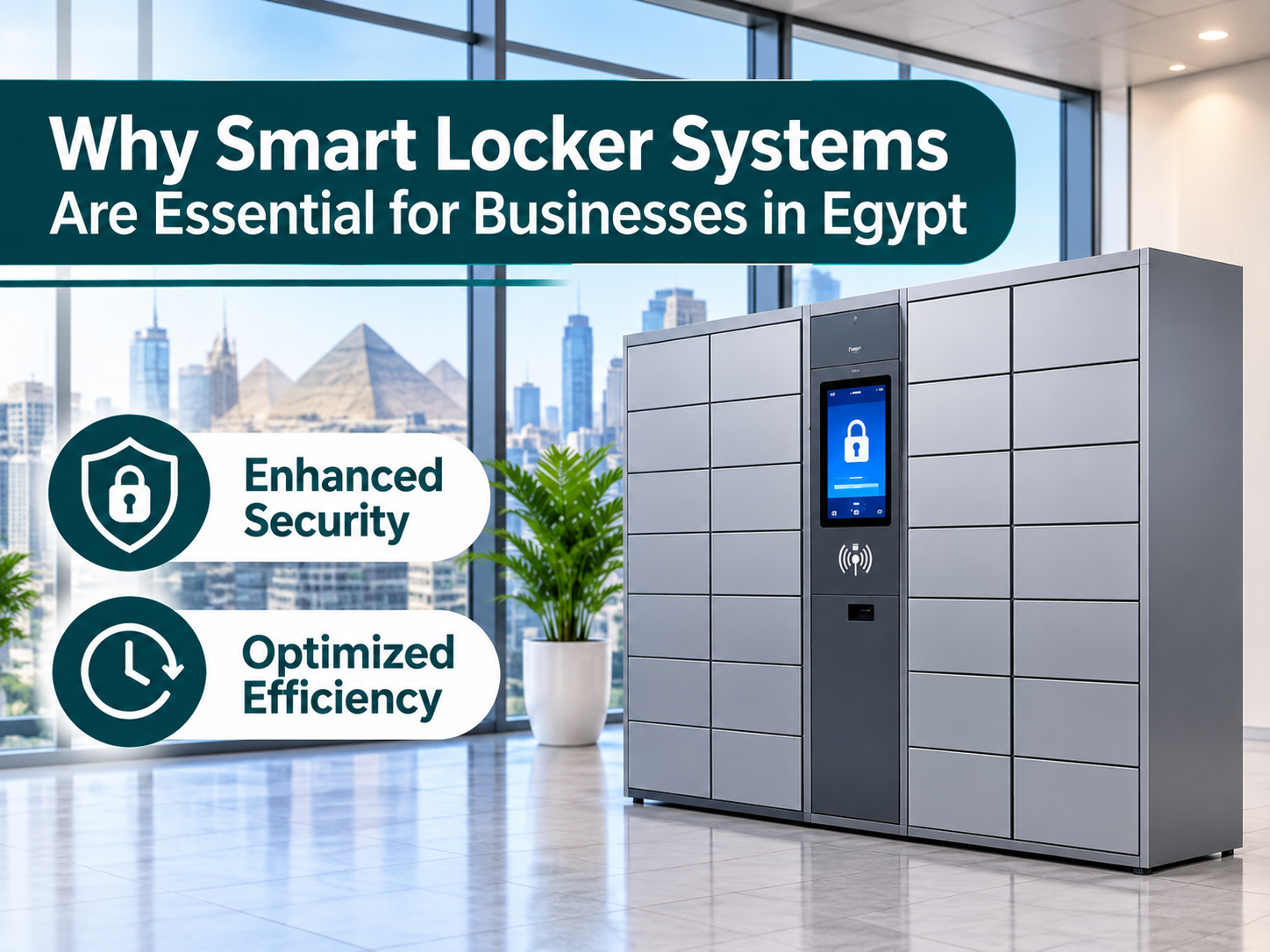
A reliable Smart Locker System has become essential for Egyptian businesses that handle people, parcels, and valuables every day. Shops, offices, universities, hospitals, and factories all need safe storage without queues, lost keys, or paper registers. This article explains the business case in four outcomes and shows how to put it into practice.
Part One: The Business Case in Four Outcomes
The first outcome is time. Staff who hand out keys, hold bags, and chase parcels spend hours every week on tasks that a door and a code can handle. The second is loss, because missing items cost money and trust. The third is income, since storage can earn rent. The fourth is reputation, because customers notice well run spaces.
Egyptian businesses are growing and modernizing under Egypt Vision 2030, with new commercial areas, online shopping, and digital services. Storage that is fast, secure, and recorded fits naturally into that change.
Part Two: Where Businesses Feel the Pain
Retail floors fill with shopping bags and parcels. Offices struggle with shared desks and personal belongings. Universities and hospitals need safe places for bags and devices, and factories need tool and equipment control. In every case, manual storage depends on people, which means mistakes.
Cairo traffic and rising online orders add another pressure. Customers want to collect parcels at a time that suits them, not when a counter happens to be open, and businesses that cannot offer this lose them to those that can.
Part Three: How the Technology Works
Smart Locker Systems for Shopping Malls show the idea clearly. A bank of strong doors sits at an entrance or food court, shoppers store bags with a phone code, and tenants use the same doors for click and collect orders. One dashboard manages every door in the building.
The Hardware
An Electronic Locker System replaces mechanical keys with electronic locks and a touch screen or mobile link. Doors open only when a valid credential is shown, and sensors confirm whether a door is closed, so staff always know the real status of every compartment.
The Credentials
A Digital Locker System gives each user a digital credential instead of a key. A QR code on a phone, a one time code by message, or a mobile pass opens only the assigned door, and the credential expires automatically when the booking ends.
Face Recognition Locker Access adds a fast, touch free option for staff and members. A user looks at the screen, the system matches the face to an enrolled record, and the right door opens. Clear consent rules and strong privacy controls protect the data.
Many Egyptian business owners begin by studying practical secure storage solutions for Egyptian businesses to see which setup suits their own premises.
The Brain
Locker Management Software controls every door and user. Administrators set rules, assign compartments, send alerts, and view usage by hour, location, and door size. Cloud management lets a head office oversee many branches without visiting each one.
The Platform
TekLocker brings the doors, the credentials, and the software together into one managed platform. It connects with staff directories, student records, and parcel carriers, so the right person receives the right credential automatically and removing a user closes their access at once.
Part Four: Designing for Egyptian Premises
A Locker System should suit the place where it stands. Clear signs in Arabic and English, a simple screen, and a mix of compartment sizes make the experience easy for staff and visitors, and a few large doors cope with bags, parcels, and equipment.
Place banks where people already walk, such as entrances, reception areas, and corridors. Include low units that wheelchair users can reach, and add backup batteries so doors still open during power cuts.
Think about heat and dust as well. Choose hardware that tolerates high temperatures and keep indoor units in shaded, ventilated areas, so the system stays reliable through the Egyptian summer.
Part Five: Security, Privacy, and Return
Strong panels, tamper alarms, and a full log of every opening protect the contents, and repeated failed attempts raise an alert. Privacy rules matter too: collect only the data that is needed, keep it for a limited time, and let users withdraw consent easily.
Returns come from saved staff time, fewer lost items, rent from storage, and extra visits from click and collect customers. Compare total cost over five years and not only the purchase price, because reliable hardware and good support often cost less over time.
Part Six: Egyptian Rules and Authorities
User data is personal data. The Personal Data Protection Law, Law Number 151 of 2020, sets duties on consent, purpose, and storage, and Law Number 175 of 2018 addresses cybercrime. The Supreme Cybersecurity Council and the Ministry of Communications and Information Technology guide national digital practice.
The Information Technology Industry Development Agency supports the sector, the Central Bank of Egypt guides banks, and the Civil Protection Authority sets rules for exits and fire safety. Suppliers with ISO 27001 aligned practices add confidence for business owners.
Part Seven: Lockers Across Egypt
A Smart Locker System Egypt plan should work for every branch of a business, with shared policies, one credential style, and central reports. Owners can then compare sites on equal terms, train staff once, and move equipment between locations as needs change.
Smart Locker System Cairo projects often serve malls such as Cairo Festival City and Mall of Arabia, offices in the New Administrative Capital and Smart Village, and universities across Greater Cairo. Heavy traffic and long opening hours call for fast screens and sturdy doors.
Smart Locker System Alexandria projects often serve seaside shopping centers, port related offices, and universities along the Mediterranean coast. Humidity and salt air call for corrosion resistant hardware and sealed enclosures.
Part Eight: Common Mistakes to Avoid
The most common mistake is too few large doors, which frustrates users who carry bags and parcels. Another is poor placement, with units hidden in corners where nobody looks, and a third is no named owner for the system.
Other mistakes include unclear signs, no rule for abandoned items, and no plan for power cuts. A short-written policy and a trained administrator prevent most of these problems before they begin.
Part Nine: Proof Points That Build Trust
Ask every supplier for a site survey, installation drawings, tested software, staff training, a privacy statement, and a support agreement with clear response times. Experience in malls, universities, hospitals, and offices shows practical knowledge, and references from similar sites give extra confidence.
A short assessment is the best first step, and a storage needs review for businesses in Egypt will show how many doors and which sizes are really needed.
Part Ten: Getting Started and Measuring
List who needs storage, what they store, and when. Start with one site and one-use case, train staff, place clear signs, and track door usage, fault reports, and queue times for the first month. Then adjust compartment sizes and rules before expanding.
Report a few numbers every month: share of doors in use, average storage time, fault reports, and user satisfaction. When owners see fewer lost items, shorter queues, and happier staff, they are more willing to fund further improvements.
When you are ready to compare options, explore modern contactless storage technology for Egypt and match each feature to your timetable and budget.
Conclusion
A reliable Smart Locker System is essential for Egyptian businesses that want faster service, fewer losses, and safer storage. Smart Locker Systems for Shopping Malls work best when every Locker System, whether an Electronic Locker System or a Digital Locker System, follows one design. TekLocker joins Face Recognition Locker Access and Locker Management Software into one platform that is easy to run. A planned Smart Locker System Egypt rollout, including Smart Locker System Cairo and Smart Locker System Alexandria sites, keeps records consistent and secure. Contact Tektronix today to arrange your storage assessment.

 English
 French
 Spanish
 Portuguese
 Deutsch
 Turkish
 Dutch
 Italiano
 Russian
 Romaian
 Portuguese (Brazil)
 Greek
